 en
 中文简体
 русский
 Español
 Deutsch
 Polskie
 REQUEST A QUOTE

 Home / Author / Yuting Mbatha — Technical Customer Support Specialist / Advanced Cold Chain Insulation Box Molds for Reliable Rotomolded Containers
Advanced Cold Chain Insulation Box Molds for Reliable Rotomolded Containers
Content
- 1 1. The Role of the Mold in Cold Chain Box Manufacturing
- 2 2. Why Forged 6061T6 Aluminum Is a Preferred Mold Material
- 3 3. Mirror-Finished Cavities and Demolding Performance
- 4 4. Product Categories Supported by Advanced Insulation Box Molds
- 5 5. Advanced Mold Manufacturing Process
- 5.1 5.1 Product Concept and Technical Review
- 5.2 5.2 Design Optimization for Rotational Molding
- 5.3 5.3 Three-Dimensional Engineering and Mold Structure
- 5.4 5.4 CNC Machining of 6061T6 Aluminum
- 5.5 5.5 Welding, Assembly, and Structural Reinforcement
- 5.6 5.6 Mirror Finishing and Surface Treatment
- 5.7 5.7 Trial Production and Validation
- 6 6. Temperature Control and Its Effect on Mold Quality
- 7 7. Advantages Over Conventional or Lower-Quality Tooling
- 8 8. Integrated Manufacturing Strengths of Jiangsu Zhroto Mould Co., Ltd.
- 9 9. Quality Control for Cold Chain Insulation Box Molds
- 10 10. Selecting the Right Cold Chain Insulation Box Mold
- 11 11. Maintenance Recommendations
- 12 12. Environmental and Energy Considerations
- 13 13. Frequently Asked Questions
- 13.0.1 Q1: What material is used for the cold chain insulation box mold?
- 13.0.2 Q2: Why is aluminum suitable for rotational molding tools?
- 13.0.3 Q3: What is the benefit of a mirror-finished mold cavity?
- 13.0.4 Q4: Can the mold produce seamless cold chain boxes?
- 13.0.5 Q5: Can the mold be used with electric-heated rotational molding machines?
- 13.0.6 Q6: What types of products can be made with this mold?
- 13.0.7 Q7: How does temperature control affect product quality?
- 13.0.8 Q8: Can the mold be customized for handles, ribs, locks, and stacking features?
- 13.0.9 Q9: How long does it take to manufacture a mold?
- 13.0.10 Q10: What information should be provided when requesting a quotation?
- 13.0.11 Q11: What services does Jiangsu Zhroto Mould Co., Ltd. provide?
- 13.0.12 Q12: Does the company manufacture only molds?
- 14 Conclusion
- 15 References
- 16 Product: Cold chain insulation box mold
Cold chain transportation depends on packaging that can protect temperature-sensitive products during storage, handling, and delivery. Food, pharmaceuticals, biological materials, medical supplies, seafood, prepared meals, and specialty chemicals may all require stable thermal conditions throughout the logistics process. A cold chain insulation box must therefore provide more than basic containment. It must offer dependable insulation, structural strength, dimensional stability, impact resistance, hygienic surfaces, and consistent performance over repeated use.
The manufacturing quality of the box is strongly influenced by the mold used to produce it. A well-engineered cold chain insulation box mold supports uniform plastic distribution, accurate dimensions, efficient demolding, smooth external surfaces, and repeatable production. By contrast, an unsuitable mold can lead to uneven wall thickness, incomplete fusion, distortion, surface defects, difficult demolding, and inconsistent thermal performance. For this reason, mold material, cavity finishing, structural design, heating behavior, cooling strategy, and inspection standards must be considered together.
Forged 6061T6 aluminum is an effective material for this application. It combines high mechanical strength with good thermal responsiveness, corrosion resistance, weldability, and suitability for precision machining. When the cavity is mirror-finished, the mold can provide a smooth surface that supports efficient release and premium product appearance. When these material advantages are combined with rotational molding expertise, CNC machining, mold trial validation, and modern electric-heating technology, manufacturers can develop insulation box tooling for both general and highly demanding cold chain applications.
This article examines the structure, advantages, manufacturing process, temperature-control requirements, quality considerations, and application value of advanced cold chain insulation box molds. It also explains how an integrated mold manufacturer can help customers move from product concept to stable mass production.
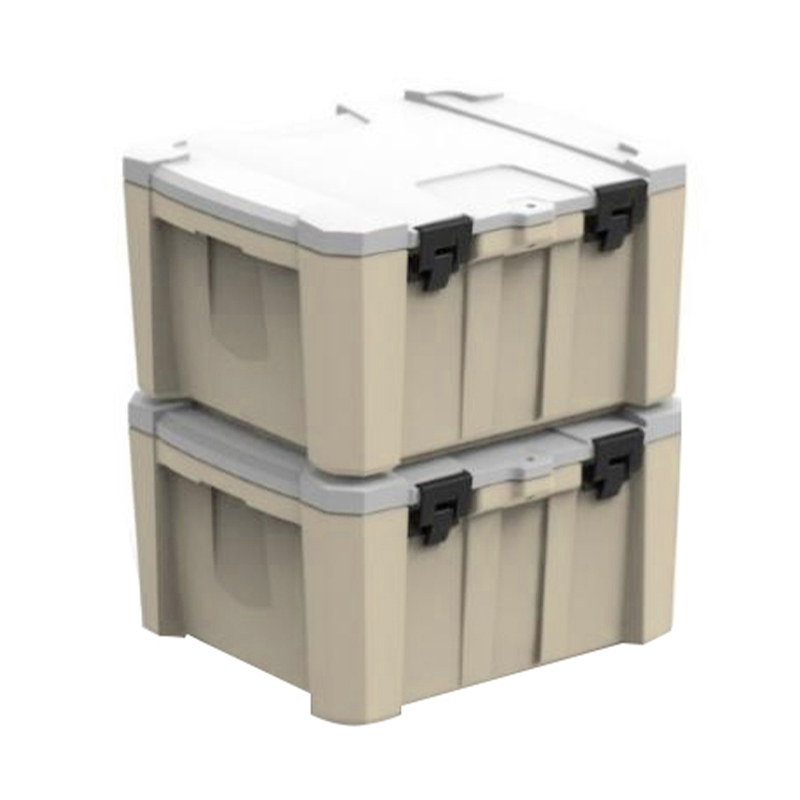
Cold chain insulation box mold
1. The Role of the Mold in Cold Chain Box Manufacturing
A cold chain insulation box is commonly produced through rotational molding. In this process, polymer powder is placed inside a hollow mold, the mold is closed, and the assembly rotates around two axes while it is heated. As the powder melts, it coats the internal surface of the mold. Continued rotation helps the molten material distribute across the cavity. The mold is then cooled while rotation continues, allowing the plastic layer to solidify into a seamless hollow product.
This process is particularly suitable for insulated boxes because it can create one-piece products without conventional weld seams. Seamless construction can reduce potential weak points and provide a continuous shell around the insulation structure. It also allows designers to incorporate rounded corners, reinforced ribs, handles, openings, locking features, and other geometric details into a single molded body.
However, rotational molding does not automatically guarantee a high-quality result. The mold must be designed to support even powder distribution and predictable heat transfer. The cavity must maintain its shape through repeated thermal cycles. Corners and deep sections must receive enough heat for complete melting, while exposed areas must not experience excessive thermal degradation. The mold must also release the finished product without damaging the plastic surface.
For cold chain products, these requirements are especially important. A small defect in the plastic shell may affect durability, hygiene, insulation protection, or water resistance. Inconsistent dimensions can create problems with lids, gaskets, stacking systems, or internal fittings. Uneven wall thickness may reduce impact resistance or create areas with weaker thermal protection. Therefore, the mold is a central component of the entire product quality system.
1.1 Supporting Thermal Performance
The mold does not provide the insulation itself, but it determines the shape and consistency of the plastic shell and the space available for insulation materials. A precise mold helps maintain the intended relationship between the outer wall, insulation layer, inner liner, lid, and internal storage area. If the cavity shape varies from one production cycle to another, the insulation thickness and assembly fit may also vary.
A stable mold can help manufacturers produce boxes with consistent internal volume and predictable wall structures. This is valuable for customers who need repeatable loading capacity, standardized packaging dimensions, or compatibility with pallets, racks, vehicles, and automated handling systems.
1.2 Supporting Product Hygiene
Cold chain boxes are frequently used in environments where cleanliness is essential. Food transport containers must be easy to wash and resistant to contamination. Pharmaceutical and medical logistics products may require smooth internal surfaces that minimize dirt retention and simplify inspection. A polished mold cavity helps create a smoother plastic surface, reducing the number of surface irregularities that could collect residues.
Although final hygiene performance also depends on the selected plastic, product design, cleaning procedure, and manufacturing environment, mold quality remains an important foundation. A well-finished cavity supports cleaner product surfaces and more consistent visual quality.
1.3 Supporting Long-Term Production
Rotational molding tools are repeatedly heated, cooled, opened, closed, handled, and inspected. A mold for commercial cold chain products may complete many production cycles during its service life. It must therefore resist distortion, corrosion, mechanical damage, and surface deterioration.
Forged 6061T6 aluminum provides a strong foundation for long-term service. Its strength helps the mold maintain its geometry, while its corrosion resistance is beneficial in production environments where moisture, cleaning agents, and thermal cycling are present. If localized repair is required during manufacturing, its weldability can provide additional flexibility.
2. Why Forged 6061T6 Aluminum Is a Preferred Mold Material
Material selection affects mold performance, production efficiency, maintenance requirements, and product quality. Forged 6061T6 aluminum is widely recognized as a practical material for rotational molding tools because it combines several properties that are valuable in cold chain box production.
2.1 High Strength and Structural Stability
The T6 temper condition provides 6061 aluminum with improved strength compared with softer aluminum conditions. This strength helps the mold withstand clamping forces, handling loads, thermal expansion, and repeated production cycles. It also supports the creation of robust flanges, reinforcement areas, hinges, mounting features, and other structural details.
Structural stability is important because even a small change in cavity geometry can affect the final product. Distortion around the lid interface, corner radius, base, or handle area may cause assembly problems or reduce product consistency. A strong mold structure helps preserve critical dimensions throughout the mold's working life.
2.2 Effective Heat Transfer
Aluminum transfers heat efficiently, which is valuable in rotational molding. During the heating stage, the mold must deliver heat to the polymer powder so that it melts and coats the cavity. During cooling, heat must be removed in a controlled manner so that the plastic solidifies without excessive distortion.
Good thermal responsiveness can help shorten cycle times and improve process control. It also helps reduce the risk of severe temperature differences between the outer surface, corners, ribs, and recessed sections of the mold. However, aluminum conductivity alone is not enough. The mold design, wall thickness, heating equipment, rotation speed, cooling method, and process parameters must be matched to the product geometry.
2.3 Corrosion Resistance
Cold chain box molds may be exposed to moisture, condensation, cleaning operations, and production chemicals. 6061T6 aluminum has useful resistance to oxidation and corrosion, helping it maintain surface quality under normal manufacturing conditions. Proper storage, cleaning, and maintenance remain necessary, but the material provides a strong baseline for durable service.
Corrosion resistance is particularly beneficial for molds with polished cavities. A damaged or corroded cavity can create marks on the product, increase friction during demolding, and complicate cleaning. Maintaining the cavity surface can therefore help preserve both production efficiency and finished product appearance.
2.4 Weldability and Repairability
During mold development, engineering changes or localized repairs may occasionally be necessary. 6061T6 aluminum offers useful weldability when the appropriate procedures and filler materials are selected. This can allow manufacturers to repair certain areas, modify features, or restore structural integrity without discarding the complete mold.
Any welding operation must be followed by suitable machining, inspection, and surface restoration. The goal is to ensure that repaired areas do not affect cavity accuracy, product release, or thermal behavior. When managed correctly, repairability can reduce downtime and support more flexible product development.
2.5 Suitability for Precision Machining
Aluminum is well suited to CNC machining. Complex curved surfaces, rounded corners, ribs, recessed areas, mounting details, and customized product features can be produced with a high level of dimensional control. This is important for cold chain boxes that require ergonomic handles, locking systems, drainage areas, stacking features, or specialized internal structures.
Precision machining also makes it possible to produce matched mold sections and accurate parting lines. A well-controlled parting line can reduce flash on the finished plastic product and simplify trimming. It can also improve the fit between mold components, supporting more predictable processing.
3. Mirror-Finished Cavities and Demolding Performance
The internal surface of a cold chain insulation box mold has a direct influence on the surface of the finished product. A mirror-finished cavity can provide a smooth and refined appearance while reducing friction during demolding. This is particularly useful for products with deep cavities, narrow radii, integrated handles, or complex recessed areas.
During demolding, the cooled plastic contracts slightly. If the mold surface is rough, damaged, or poorly finished, the product may resist release. Excessive release force can deform the product, damage edges, or increase cycle time. A smooth cavity reduces these risks and supports more consistent production.
Surface finishing also contributes to inspection and maintenance. A polished cavity makes it easier to identify scratches, contamination, oxidation, or other defects. Operators can clean and inspect the mold more effectively, helping prevent minor surface problems from becoming repeated product defects.
Mirror finishing must be applied with attention to the entire cavity rather than only large visible areas. Corners, ribs, handle recesses, lid interfaces, and other difficult sections should receive suitable finishing treatment. Inconsistent finishing can create localized demolding problems even when the main cavity appears smooth.
3.1 Relationship Between Surface Finish and Product Appearance
Cold chain boxes are often used in commercial environments where appearance affects customer perception. A smooth and uniform product surface communicates quality and can support brand presentation. It also reduces the visibility of minor contamination and makes routine washing more practical.
For premium thermal containers, appearance may be as important as thermal performance and strength. The mold should therefore be engineered to provide accurate external curves, clean edges, stable logos or markings where required, and consistent surface texture across production cycles.
3.2 Relationship Between Surface Finish and Cleaning
In food and pharmaceutical logistics, cleaning efficiency is a major consideration. Smooth surfaces generally have fewer areas where residues can accumulate. This does not replace an approved sanitation procedure, but it can simplify washing and visual inspection.
The final product material must also be selected for the intended cleaning chemicals, temperature range, and usage environment. Mold design and surface treatment should support the product's hygiene requirements from the beginning rather than being treated as an afterthought.
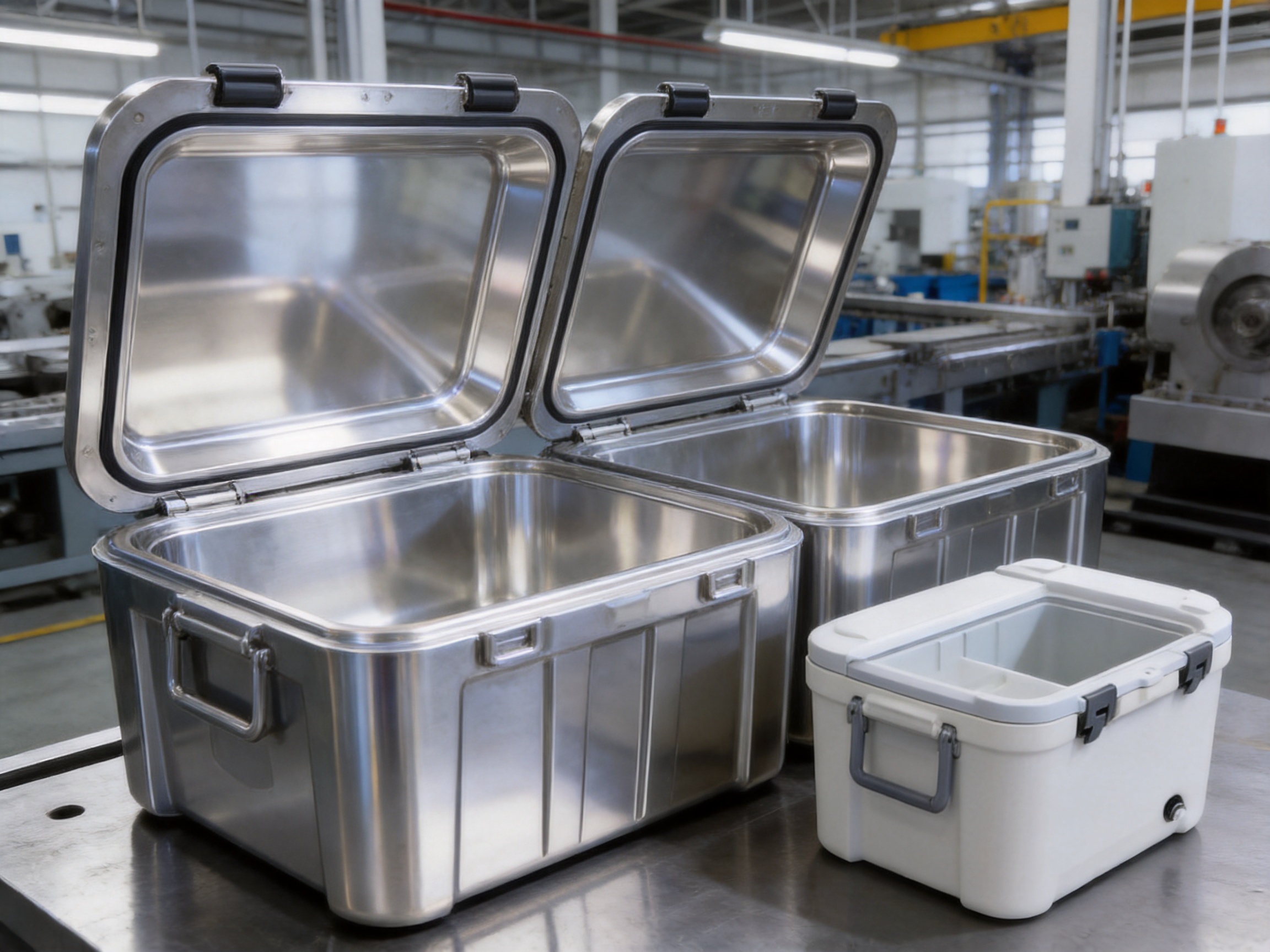
4. Product Categories Supported by Advanced Insulation Box Molds
Cold chain insulation box molds can be designed for several product categories. Each category has different priorities, and the mold must be adapted accordingly.
4.1 Standard Rotomolded Insulation Box Molds
Standard insulation box molds are intended for general food transport, outdoor storage, catering, seafood distribution, portable cold storage, and everyday cold chain logistics. They normally emphasize production flexibility, balanced cost, dependable durability, and straightforward maintenance.
The mold should support uniform heating across the base, side walls, corners, and lid interface. It should also allow the product to be removed efficiently without damaging the edges. Common design features include reinforced bases, rounded corners, integrated handles, simple stacking geometry, and openings for drain plugs or accessories.
For these applications, 6061T6 aluminum provides a practical balance of performance and manufacturing efficiency. The mold can be customized to different volumes, external dimensions, insulation arrangements, and handling requirements. It can also be adapted for conventional gas-heated rotational molding machines or modern electric-heated equipment.
- Suitable for food delivery, catering, outdoor activities, and general storage.
- Supports seamless one-piece rotational molding.
- Allows customization of handles, ribs, corners, openings, and stacking features.
- Provides a durable cavity for repeated production.
- Can be engineered for different rotational molding machine configurations.
4.2 High-Performance Thermal Container Molds
High-performance thermal container molds are developed for applications where thermal consistency, dimensional accuracy, and product appearance are especially important. Typical uses include pharmaceutical logistics, professional food distribution, biological material transport, specialized reusable packaging, and temperature-controlled commercial delivery.
These molds often require more precise control of cavity geometry and heat transfer. The product may contain complex insulation arrangements, carefully defined wall thicknesses, gasket locations, locking systems, and internal compartments. Even small variations may affect the fit of accessories or the thermal performance of the completed container.
Electric-heated rotational molding systems can be particularly useful for this category. Independent heating zones allow the process to be adjusted for areas with different thermal requirements. For example, a deep corner, thick base, or reinforced handle region may need different treatment from a broad flat wall. A carefully engineered mold can work with the heating system to improve repeatability.
4.3 Heavy-Duty Ice Chest and Commercial Storage Molds
Heavy-duty ice chest molds are designed for frequent handling, outdoor exposure, commercial use, fishing, industrial food storage, events, and other demanding conditions. The finished product may need to withstand impact, stacking, temperature variation, rough transport, and repeated opening and closing.
The mold may incorporate reinforced corners, thicker structural zones, integrated handles, locking features, protective ribs, wheel housings, and other durability-focused details. At the same time, the cavity must maintain a smooth surface and accurate dimensions so that the product remains practical to manufacture and easy to demold.
Heavy-duty geometry can create additional thermal challenges. Thick or reinforced areas may heat and cool differently from thin walls. If process conditions are not properly controlled, these regions may show inconsistent fusion or distortion. Mold design, rotation speed, powder loading, heating time, and cooling conditions must therefore be evaluated together.
4.4 Specialized Medical and Pharmaceutical Containers
Medical and pharmaceutical cold chain containers may require controlled internal volume, secure lids, reliable seals, cleanable surfaces, and compatibility with temperature-monitoring devices or insulated inserts. The mold must support accurate interfaces for these components.
In this category, dimensional variation can affect gasket compression, lid closure, and protection against environmental exposure. Mold trial validation should include measurement of critical sealing areas and verification of repeatability across multiple samples.
| Product category | Primary priority | Typical application | Important mold features |
| Standard insulation box | Flexible and reliable production | Food delivery and outdoor storage | Balanced structure, smooth cavity, practical customization |
| High-performance thermal container | Thermal and dimensional consistency | Professional and pharmaceutical logistics | Precise geometry, controlled heat transfer, accurate interfaces |
| Heavy-duty ice chest | Impact resistance and service life | Commercial, fishing, and outdoor use | Reinforced corners, ribs, handles, and robust construction |
| Specialized medical container | Cleanability and secure closure | Medical and biological transport | Smooth cavity, controlled tolerances, seal and accessory compatibility |
5. Advanced Mold Manufacturing Process
A reliable cold chain insulation box mold should be developed through a controlled engineering workflow. The objective is not merely to copy a product shape, but to create tooling that supports efficient rotational molding and stable long-term production.
5.1 Product Concept and Technical Review
The process begins with a review of the product concept. Engineers examine the overall dimensions, internal volume, wall structure, insulation arrangement, lid design, handles, hinges, locking features, ribs, drainage points, stacking requirements, and intended operating environment.
At this stage, the manufacturer should also review the customer's production equipment and expected output. Mold design may vary depending on machine size, heating method, rotation arms, loading arrangement, cooling system, and available workspace. Early communication can prevent avoidable changes after machining has started.
The product's intended use should also be documented. A box for indoor food delivery may have different requirements from an ice chest used on fishing vessels or a pharmaceutical container used in controlled logistics. Impact conditions, cleaning methods, temperature range, loading weight, and expected service life should all influence the design.
5.2 Design Optimization for Rotational Molding
Not every product shape is automatically suitable for rotational molding. Sharp internal corners, severe undercuts, deep narrow recesses, and abrupt wall transitions can interfere with powder distribution and demolding. Engineers should optimize these areas before finalizing the mold.
Rounded corners generally support better material flow and reduce stress concentration in the finished product. Suitable draft or release considerations may be incorporated where necessary. Ribs should be designed so they receive adequate material without creating excessive powder accumulation. Handles and mounting areas should be evaluated for both structural performance and mold accessibility.
Insulation requirements must also be considered. The outer and inner shell geometry should provide appropriate space for insulation materials while maintaining the intended external dimensions. Interfaces for lids, gaskets, inserts, and accessories require particular attention because they often contain tight tolerances.
5.3 Three-Dimensional Engineering and Mold Structure
After product optimization, engineers develop a three-dimensional model of the mold. The model defines the cavity, parting line, flanges, hinges, clamps, vents, mounting areas, reinforcement structures, and other details required for manufacturing and operation.
Three-dimensional design allows engineers to identify interference, check wall thickness, review tool accessibility, and evaluate whether the mold can be opened and closed efficiently. It also supports communication between the customer, design team, machining department, and quality inspectors.
For complex products, digital analysis can help review heat-sensitive regions, potential demolding challenges, and the relationship between product geometry and mold structure. Early identification of these issues can reduce the need for expensive modifications later.
5.4 CNC Machining of 6061T6 Aluminum
Once the design is approved, forged 6061T6 aluminum is prepared for precision machining. CNC equipment is used to create the main cavity and external structures according to the engineering model. Complex curved surfaces require careful tool selection, controlled cutting strategies, and accurate positioning.
Machining quality affects both dimensional accuracy and surface preparation. Critical areas such as lid interfaces, parting lines, mounting features, and deep cavity sections should be measured and inspected throughout production. Allowances for polishing and final surface treatment must be considered during the machining stage.
The manufacturing process may include rough machining, semi-finishing, finishing, drilling, tapping, trimming, assembly preparation, and final surface treatment. Each stage should be controlled so that the final cavity meets the required dimensions and surface condition.
5.5 Welding, Assembly, and Structural Reinforcement
Some mold designs require welded components, reinforcement plates, support brackets, hinges, or customized mounting structures. Welding must be performed with suitable procedures to avoid excessive distortion or damage to critical surfaces.
After welding, the affected areas should be machined or finished as necessary. Assembly checks should confirm that the mold opens smoothly, closes securely, aligns correctly, and can be installed on the intended rotational molding machine. Venting and clamping components must also be evaluated before the trial stage.
5.6 Mirror Finishing and Surface Treatment
After machining and structural assembly, the cavity is prepared for final surface treatment. The finishing level depends on the customer's product requirements, polymer selection, release characteristics, and appearance expectations. A mirror-finished cavity is often selected for premium cold chain boxes because it supports smooth demolding and a refined product surface.
Surface treatment should be consistent across broad walls, corners, ribs, recesses, and difficult-to-reach sections. The cavity should be cleaned carefully before trial production so that polishing residues, chips, or contaminants do not affect the first samples.
5.7 Trial Production and Validation
Mold trials are essential because they provide practical information that cannot always be obtained from drawings alone. During a trial, engineers evaluate powder distribution, heating behavior, cooling response, demolding, surface quality, wall consistency, dimensions, flash, and product assembly.
Trial samples may be measured against the approved product drawings. Critical areas such as lid fit, gasket grooves, handle attachment points, base flatness, and stacking interfaces should be inspected carefully. If necessary, the mold or process parameters can be adjusted before formal acceptance.
Trial validation should also consider production repeatability. A single acceptable sample is not always sufficient. Multiple cycles can reveal thermal variation, progressive release problems, or dimensional changes that are not visible during the first cycle.
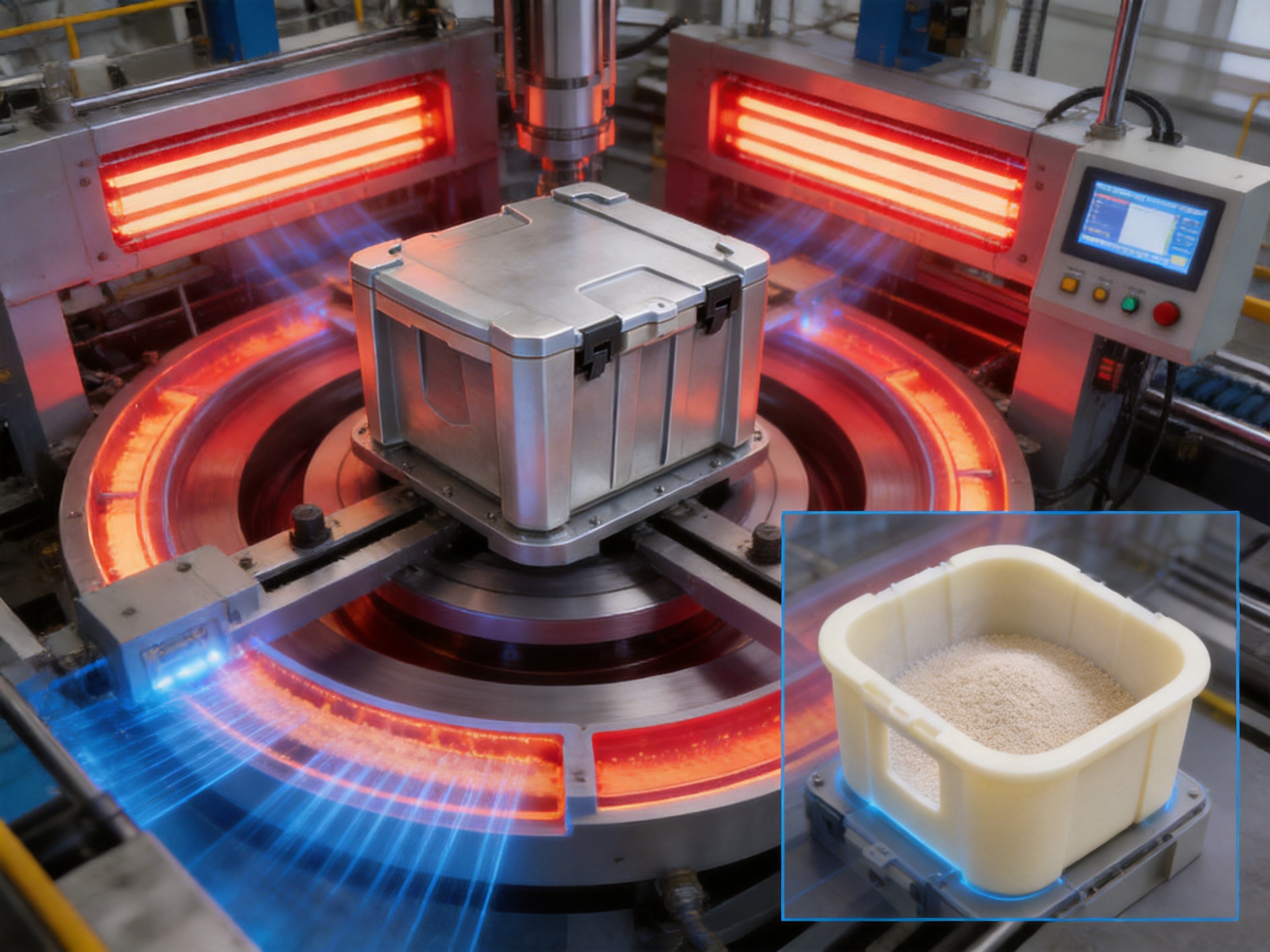
6. Temperature Control and Its Effect on Mold Quality
Temperature control is one of the most important factors in rotational molding. It affects how the polymer melts, how the material distributes across the cavity, how the product cools, and how accurately the final shape is maintained.
6.1 Heating Stage
During heating, polymer powder gradually softens and melts. The mold rotates so that the material contacts different areas of the cavity. Uniform heat transfer helps the polymer form a consistent layer across flat walls, corners, ribs, and recessed sections.
If the temperature is too low or the heating time is insufficient, the powder may not fully fuse. This can produce weak areas, pinholes, rough surfaces, or incomplete corners. If the temperature is too high or the exposure is excessive, the polymer may degrade, discolor, create gas-related defects, or lose desired mechanical properties.
The mold's aluminum construction can support responsive heat transfer, but the heating profile must still be matched to the product. Large boxes, thick structural areas, and complex geometries may require different heating times from smaller or simpler containers.
6.2 Cooling Stage
Cooling must remove heat at a controlled rate. Excessively rapid cooling may cause internal stress, warpage, sink marks, or dimensional instability. Insufficient cooling can make demolding difficult and may allow the product to deform under its own weight.
Cooling conditions can also affect the relationship between the plastic shell and insulation components. If the outer shell contracts unevenly, assembly or sealing may become more difficult. A controlled cooling strategy helps maintain the intended shape and supports repeatable production.
6.3 Temperature Differences Across the Mold
Complex cold chain box molds often contain regions with different thermal behavior. Thick bases, reinforced corners, deep recesses, and large flat walls may not heat at the same rate. These differences can influence wall thickness and surface quality.
Electric-heated rotational molding systems can provide independent heating zones, allowing operators to adjust energy input according to the product geometry. More precise temperature management can help reduce variation and improve process repeatability, particularly for high-performance thermal containers.
6.4 Reported Electric Heating Capabilities
Jiangsu Zhroto Mould Co., Ltd. has expanded its capabilities for electric-heated rotational molding since 2023. The company reports temperature-control accuracy of approximately plus or minus 1 to 2 degrees Celsius, thermal efficiency above 95 percent, and potential energy reductions of 30 to 50 percent under suitable production conditions.
Actual results depend on product design, polymer type, mold size, machine configuration, production settings, and operating conditions. Nevertheless, these capabilities demonstrate the direction of modern rotational molding: more accurate control, improved energy management, and greater consistency across production cycles.
7. Advantages Over Conventional or Lower-Quality Tooling
Customers comparing cold chain insulation box molds should evaluate more than the initial purchase price. A lower-cost mold may appear attractive, but hidden costs can arise from longer cycle times, difficult demolding, frequent repairs, inconsistent products, high scrap rates, or limited service life.
7.1 Improved Dimensional Consistency
Precision-machined aluminum molds help maintain important product dimensions over repeated cycles. Accurate interfaces support better lid fit, gasket compression, stacking, and accessory installation. Consistent dimensions also simplify downstream assembly and quality inspection.
7.2 Better Surface Quality
A mirror-finished cavity can produce a cleaner and more attractive product surface than a rough or poorly finished cavity. It can also reduce release resistance and help minimize marks created during demolding. This advantage is particularly valuable for visible commercial products and hygienic applications.
7.3 Longer Working Life
Forged 6061T6 aluminum provides strength and corrosion resistance for repeated thermal cycling. With proper maintenance, it can offer a long working life while preserving cavity accuracy and surface condition. Durable tooling can reduce the frequency of replacement and support stable product supply.
7.4 Greater Design Flexibility
CNC machining and customized aluminum construction allow manufacturers to develop product-specific shapes rather than forcing the design to conform to a limited standard mold. Customers can specify volume, external dimensions, handles, ribs, openings, stacking systems, locking mechanisms, and specialized internal features.
7.5 Efficient Repair and Modification
The weldability of 6061T6 aluminum can support selected repairs and design changes. If a prototype requires an adjustment to a handle, flange, reinforcement, or mounting detail, the manufacturer may be able to modify the mold rather than starting again from the beginning.
7.6 Compatibility With Modern Production Systems
Advanced molds can be engineered for both conventional gas-heated machines and electric-heated rotational molding systems. This allows customers to select equipment according to production volume, energy strategy, factory layout, and process-control requirements.
8. Integrated Manufacturing Strengths of Jiangsu Zhroto Mould Co., Ltd.
Jiangsu Zhroto Mould Co., Ltd. is a professional enterprise specializing in rotational molding mold design, rotomolded product processing, and integrated technical solutions. The company was founded in 2015 and moved to a modern facility in Jiangyan District, Taizhou City, in 2021.
The facility covers approximately 18,000 square meters, including more than 12,000 square meters of standardized production workshops. This provides space for mold machining, assembly, trial production, product processing, inspection, and technical support. An organized production environment can help improve workflow coordination and reduce delays between engineering, manufacturing, and validation stages.
The company reports an annual capacity of more than 800 mold sets and 3,600 tons of plastic products. This combination of tooling and product-processing capability provides practical value to customers that need more than a standalone mold. The manufacturer can support the transition from design to sample production and from sample approval to repeat manufacturing.
8.1 One-Stop Engineering Support
The company's services cover product evaluation, structural optimization, three-dimensional engineering, mold design, precision CNC manufacturing, material recommendations, mold testing, dimensional inspection, production guidance, and maintenance advice. This integrated workflow allows potential production issues to be addressed earlier.
For cold chain products, early engineering support is especially useful because insulation, shell thickness, sealing, handles, and thermal performance are closely connected. A change to one feature may affect several others. Coordinated engineering can help reduce redesign and avoid tooling that is difficult to operate.
8.2 Experience Across Multiple Industries
The company's products are used in hydrogen energy storage and transportation, automotive parts, industrial equipment, agricultural machinery, water treatment, outdoor facilities, and other fields. Experience across different industries can contribute to broader knowledge of structural design, durability, corrosion resistance, large-format molding, and production reliability.
Cold chain insulation boxes benefit from this cross-industry experience because they often combine several requirements: impact resistance from industrial products, cleanability from food equipment, dimensional accuracy from automotive components, and lightweight efficiency from outdoor products.
8.3 Quality Management Certifications
Jiangsu Zhroto Mould Co., Ltd. has obtained ISO 9001:2015, ISO 14001:2015, and ISO 45001:2018 management system certifications. These certifications relate to quality management, environmental management, and occupational health and safety. While certification does not replace product-specific inspection, it indicates that the company has established formal management systems for important operational areas.
8.4 Support for Gas-Heated and Electric-Heated Equipment
The company provides solutions for conventional gas-heated machines and electric-heated rotational molding systems. This flexibility is valuable because customers may have different investment plans and production conditions. Some factories may prioritize familiar equipment and straightforward operation, while others may seek improved temperature precision and energy efficiency through electric heating.
By considering the mold and machine as an integrated system, the manufacturer can help customers select suitable mold structures, mounting arrangements, heating strategies, and trial parameters.
9. Quality Control for Cold Chain Insulation Box Molds
Quality control should be performed throughout the mold project rather than only at final delivery. Each stage contributes to the performance of the finished tool.
9.1 Material Verification
The aluminum material should be verified against the agreed specification. Material documentation, dimensions, and condition should be reviewed before machining begins. This helps ensure that the mold is produced from the intended 6061T6 material rather than an unsuitable substitute.
9.2 Dimensional Inspection
Critical dimensions should be inspected during machining and after assembly. These may include cavity length, width, height, corner radii, lid interfaces, gasket areas, mounting features, parting lines, and product-specific reference points.
Inspection equipment and methods should be selected according to the required tolerance and product complexity. Three-dimensional measurement can be particularly useful for large curved surfaces and complex cavity geometries.
9.3 Surface Inspection
The mirror-finished cavity should be checked for scratches, dents, machining marks, contamination, and inconsistent polish. Surface inspection should include difficult areas that may be overlooked during a quick visual review.
9.4 Assembly and Operation Checks
The mold should open and close smoothly. Hinges, clamps, locks, flanges, vents, and mounting components should be checked for proper operation. The assembled mold should be suitable for installation on the customer's rotational molding equipment.
9.5 Trial Sample Evaluation
Trial samples should be evaluated for dimensions, wall consistency, surface appearance, flash, fusion quality, demolding behavior, and assembly fit. If the product includes insulation, lids, gaskets, or accessories, these components should be tested together where possible.
Feedback from trial production can be used to adjust mold details or process parameters. This validation stage reduces the risk of transferring an unresolved problem to mass production.

10. Selecting the Right Cold Chain Insulation Box Mold
Customers should define their requirements before requesting a quotation or approving a mold design. Important considerations include product capacity, external dimensions, internal volume, insulation thickness, material type, expected production quantity, machine configuration, operating temperature, cleaning method, and required service life.
10.1 Product Geometry
The product should be reviewed for corner radii, wall transitions, handles, ribs, openings, hinges, locking features, drainage points, and stacking arrangements. Features that are not optimized for rotational molding may increase manufacturing difficulty or reduce product quality.
10.2 Production Volume
Expected production volume influences the required mold durability, surface treatment, inspection level, and maintenance plan. A prototype mold may have different requirements from a high-volume commercial tool that will operate for many years.
10.3 Heating Equipment
The mold should be compatible with the available heating system. Gas-heated and electric-heated equipment may require different mounting arrangements, thermal strategies, and process settings. If the customer plans to upgrade equipment in the future, this should be discussed during design.
10.4 Product Environment
A box used for pharmaceutical delivery may need different design details from one used for seafood, outdoor recreation, industrial transport, or catering. Handling frequency, impact risk, cleaning chemicals, exposure to sunlight, and loading method should all be considered.
10.5 Maintenance and Spare Parts
The manufacturer should provide guidance on mold cleaning, storage, inspection, lubrication, and repair. Customers may also ask about replacement clamps, hinges, vents, fasteners, or other components. A clear maintenance plan helps preserve cavity quality and reduce unexpected downtime.
11. Maintenance Recommendations
Proper maintenance extends mold life and protects product quality. After each production run, operators should remove residual polymer, dust, release-agent buildup, and other contaminants using methods that do not damage the cavity surface.
The mold should be inspected for scratches, dents, corrosion, loose hardware, damaged hinges, blocked vents, and parting-line wear. Any problem that could affect product release or dimensions should be documented and addressed promptly.
When the mold is not in use, it should be stored in a clean and dry environment. The cavity should be protected from impact and unnecessary contact with abrasive tools. If the mold is stored for an extended period, suitable protective measures should be applied according to the manufacturer's recommendations.
Maintenance records should include production cycles, repairs, surface treatment, trial results, and recurring defects. These records can help identify trends and support preventive maintenance rather than emergency repair.
12. Environmental and Energy Considerations
Modern manufacturers are increasingly evaluating the environmental impact of mold production and rotational molding. Aluminum molds can provide long service life, reducing the need for frequent replacement. Their durability also supports consistent production and can help limit material waste caused by defective parts.
Electric-heated rotational molding systems may provide improved energy control compared with less precise heating arrangements. Independent heating zones can direct energy where it is needed and reduce unnecessary heat loss. Under suitable production conditions, the reported energy reduction potential of 30 to 50 percent may contribute to lower operating costs and a reduced environmental burden.
Environmental performance depends on the complete process, including polymer selection, powder management, cycle time, cooling method, equipment efficiency, product lifetime, and end-of-life handling. Mold design contributes by supporting repeatable production, reducing scrap, and helping products achieve a longer useful life.
13. Frequently Asked Questions
Q1: What material is used for the cold chain insulation box mold?
The mold is primarily manufactured from forged 6061T6 aluminum alloy. This material offers high strength, useful corrosion resistance, good thermal responsiveness, smooth finishing capability, and practical weldability for selected repairs or modifications.
Q2: Why is aluminum suitable for rotational molding tools?
Aluminum transfers heat efficiently, can be precision-machined into complex shapes, and is relatively lightweight compared with many alternative mold materials. These characteristics support responsive heating, manageable mold handling, customized cavity geometry, and repeatable rotational molding.
Q3: What is the benefit of a mirror-finished mold cavity?
A mirror-finished cavity can improve product appearance, reduce friction during demolding, support smoother surfaces, and simplify mold inspection and cleaning. It is particularly useful for premium insulation boxes and products with deep or complex cavities.
Q4: Can the mold produce seamless cold chain boxes?
Yes. When used with rotational molding, the mold can support seamless one-piece production of the plastic shell. The finished product is formed as a continuous hollow body rather than being assembled from multiple conventional welded sections.
Q5: Can the mold be used with electric-heated rotational molding machines?
Yes. The mold can be engineered for electric-heated systems as well as conventional gas-heated equipment. Electric heating may provide independent heating zones and more precise process control for complex thermal container geometries.
Q6: What types of products can be made with this mold?
Typical products include food transport boxes, pharmaceutical shipping containers, portable cold-storage boxes, commercial ice chests, seafood containers, catering boxes, outdoor coolers, medical logistics containers, and specialized reusable thermal packaging.
Q7: How does temperature control affect product quality?
Temperature control affects powder melting, material distribution, wall consistency, fusion quality, cooling shrinkage, dimensional stability, surface appearance, and demolding. Stable heating and controlled cooling help reduce variation between production cycles.
Q8: Can the mold be customized for handles, ribs, locks, and stacking features?
Yes. Customized cavity geometry can include integrated handles, reinforced ribs, locking features, drainage points, hinges, stacking structures, protective corners, openings, and other product-specific details.
Q9: How long does it take to manufacture a mold?
Lead time depends on product complexity, mold size, design approval, material availability, machining requirements, finishing level, and trial validation. A complete schedule should be confirmed after receiving the product drawings or three-dimensional model.
Q10: What information should be provided when requesting a quotation?
Customers should provide product drawings or samples, dimensions, expected capacity, material requirements, insulation arrangement, production volume, machine information, heating method, surface expectations, and any special features such as handles, locks, gaskets, or stacking systems.
Q11: What services does Jiangsu Zhroto Mould Co., Ltd. provide?
The company provides product evaluation, structural optimization, three-dimensional engineering, mold design, precision CNC manufacturing, aluminum mold production, surface treatment, trial testing, dimensional inspection, process recommendations, production support, and maintenance guidance.
Q12: Does the company manufacture only molds?
The company specializes in mold design and manufacturing while also providing rotomolded product processing and integrated technical solutions. Its reported capacity includes more than 800 mold sets and 3,600 tons of plastic products annually.
Conclusion
A high-quality cold chain insulation box mold is essential for producing reliable, durable, and thermally consistent containers. The mold must do more than reproduce a basic shape. It must support uniform heating, controlled cooling, accurate dimensions, smooth demolding, hygienic surfaces, structural strength, and repeatable production over many cycles.
Forged 6061T6 aluminum provides a strong material foundation through its strength, thermal responsiveness, corrosion resistance, weldability, and compatibility with precision machining. A mirror-finished cavity further improves release performance and product appearance. When combined with optimized rotational molding geometry, CNC manufacturing, trial validation, and appropriate temperature management, these features provide significant advantages over lower-quality or poorly engineered tooling.
Standard insulation box molds offer flexible and durable production for general logistics. High-performance thermal container molds provide greater control for demanding food, pharmaceutical, and specialized applications. Heavy-duty ice chest molds emphasize impact resistance, reinforced structures, and long-term field use. Each product category requires a mold designed around its specific operating environment and production objectives.
Jiangsu Zhroto Mould Co., Ltd. supports this process through integrated product engineering, mold manufacturing, rotomolded product processing, electric-heating capabilities, quality management systems, and technical service. Its facility, reported annual mold capacity, industry experience, and one-stop workflow provide customers with a practical path from concept development to stable production.
For companies seeking dependable cold chain packaging, the best results come from treating the mold, material, heating system, product structure, insulation design, and validation process as one integrated project. With the right engineering approach, a cold chain insulation box mold can become a long-term production asset that supports quality, efficiency, energy management, and customer satisfaction.
References
1. ISO 9001:2015, Quality Management Systems — Requirements.
2. ISO 14001:2015, Environmental Management Systems — Requirements with Guidance for Use.
3. ISO 45001:2018, Occupational Health and Safety Management Systems — Requirements with Guidance for Use.
4. ASTM B209, Standard Specification for Aluminum and Aluminum-Alloy Sheet and Plate.
5. Rotational Molding Design and Process Engineering Principles, technical manufacturing references.
6. Aluminum Alloy 6061 Material Properties and Heat Treatment Guidelines, engineering reference materials.
7. Cold Chain Packaging and Temperature-Controlled Logistics, technical industry guidance.
8. Polymer Processing, Rotational Molding, and Thermal Cycle Management, manufacturing engineering references.
Product: Cold chain insulation box mold


We provide customers with one-stop services ranging from product design, mold manufacturing to finished product production.
-
 +86-18006248936
-
 ricky.t@zhroto.com
-
 No.9 Jiangyuan Road, Luotang Street, Jiangyan District, Taizhou City,Jiangsu Province, China
Copyright © Jiangsu Zhroto Mould Co., Ltd. Rights Reserved.Custom Rotational Plastic Molding Factory
