 en
 中文简体
 русский
 Español
 Deutsch
 Polskie
 REQUEST A QUOTE

 Home / Author / Yuting Mbatha — Technical Customer Support Specialist / Advanced Sports Equipment Molds for Consistent, Durable Rotational Molding Production
Advanced Sports Equipment Molds for Consistent, Durable Rotational Molding Production
Content
- 1 Why Mold Quality Matters in Sports Equipment Manufacturing
- 2 Product Overview: Customized Sports Equipment Mold Construction
- 3 Material Options for Sports Equipment Mold Production
- 4 Competitive Advantages of the Sports Equipment Mold
- 5 Advanced Manufacturing Process
- 5.1 Project Consultation and Product Evaluation
- 5.2 Product Structure Optimization
- 5.3 Three-Dimensional Modeling and Design Confirmation
- 5.4 Sand Casting or Forged Aluminum Preparation
- 5.5 CNC Machining and Precision Processing
- 5.6 Surface Treatment and Finishing
- 5.7 Assembly, Testing, and Sample Validation
- 5.8 Final Quality Inspection and Delivery
- 6 Application Areas
- 7 Compatibility with Different Heating Systems
- 8 Quality Management and Manufacturing Strengths
- 9 How to Select the Right Sports Equipment Mold
- 10 Environmental and Operational Benefits
- 11 Maintenance Recommendations for Long-Term Mold Performance
- 12 Frequently Asked Questions
- 12.1 What is a sports equipment mold used for?
- 12.2 Which material is best for a dumbbell plate mold?
- 12.3 What is the difference between sand-cast aluminum and forged aluminum alloy?
- 12.4 Can the mold be customized for different dumbbell plate sizes?
- 12.5 How does a mold affect dumbbell plate quality?
- 12.6 Can the tooling be used for large outdoor sports equipment?
- 12.7 Is the mold compatible with electric-heated rotational molding machines?
- 12.8 What information should a customer provide before mold development?
- 12.9 How is mold quality tested before delivery?
- 12.10 Why is integrated technical support important?
- 12.11 What certifications support the manufacturer’s quality system?
- 12.12 How long can a sports equipment mold remain in service?
- 13 Conclusion
- 14 References
- 15 Product: Sports equipment mold
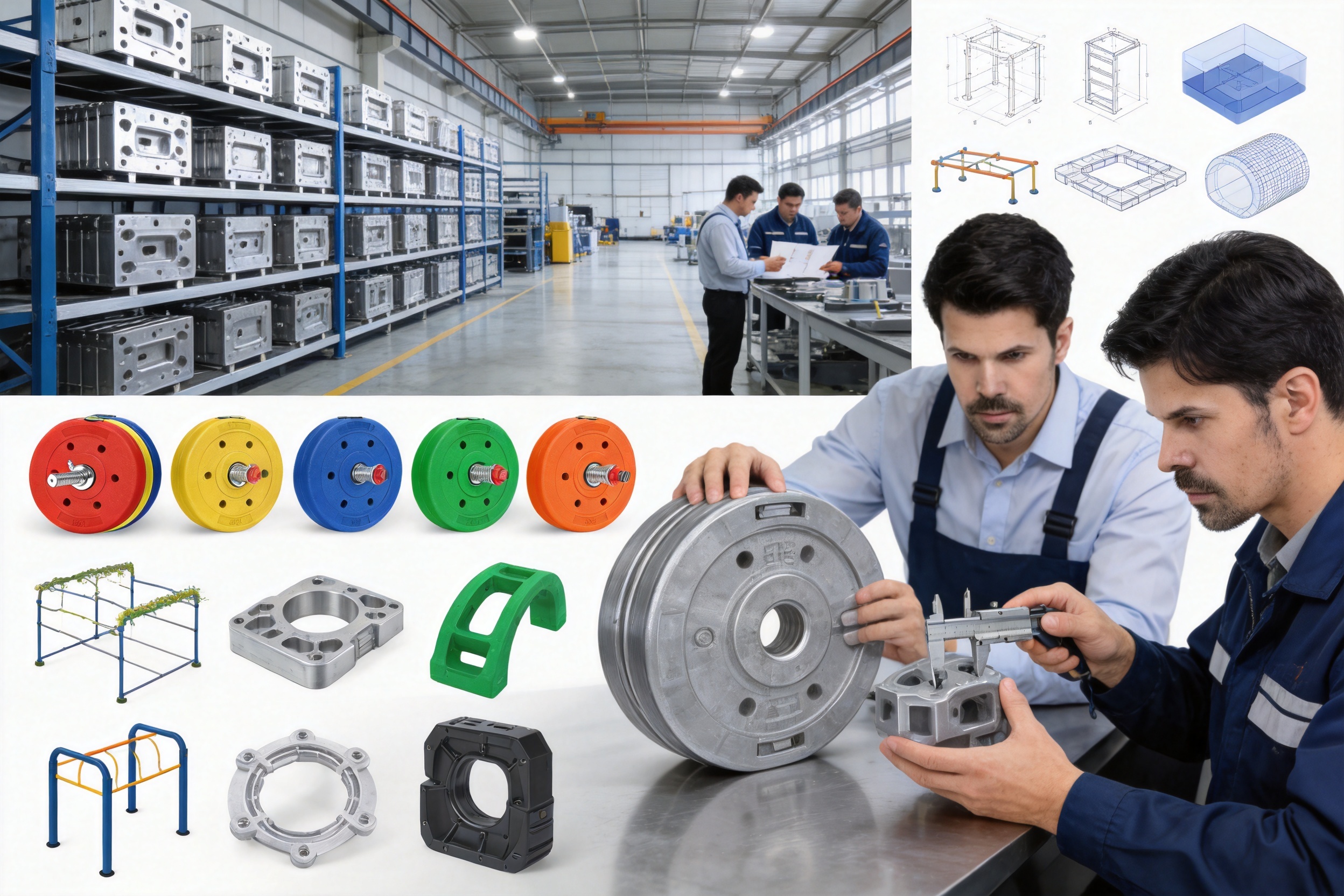
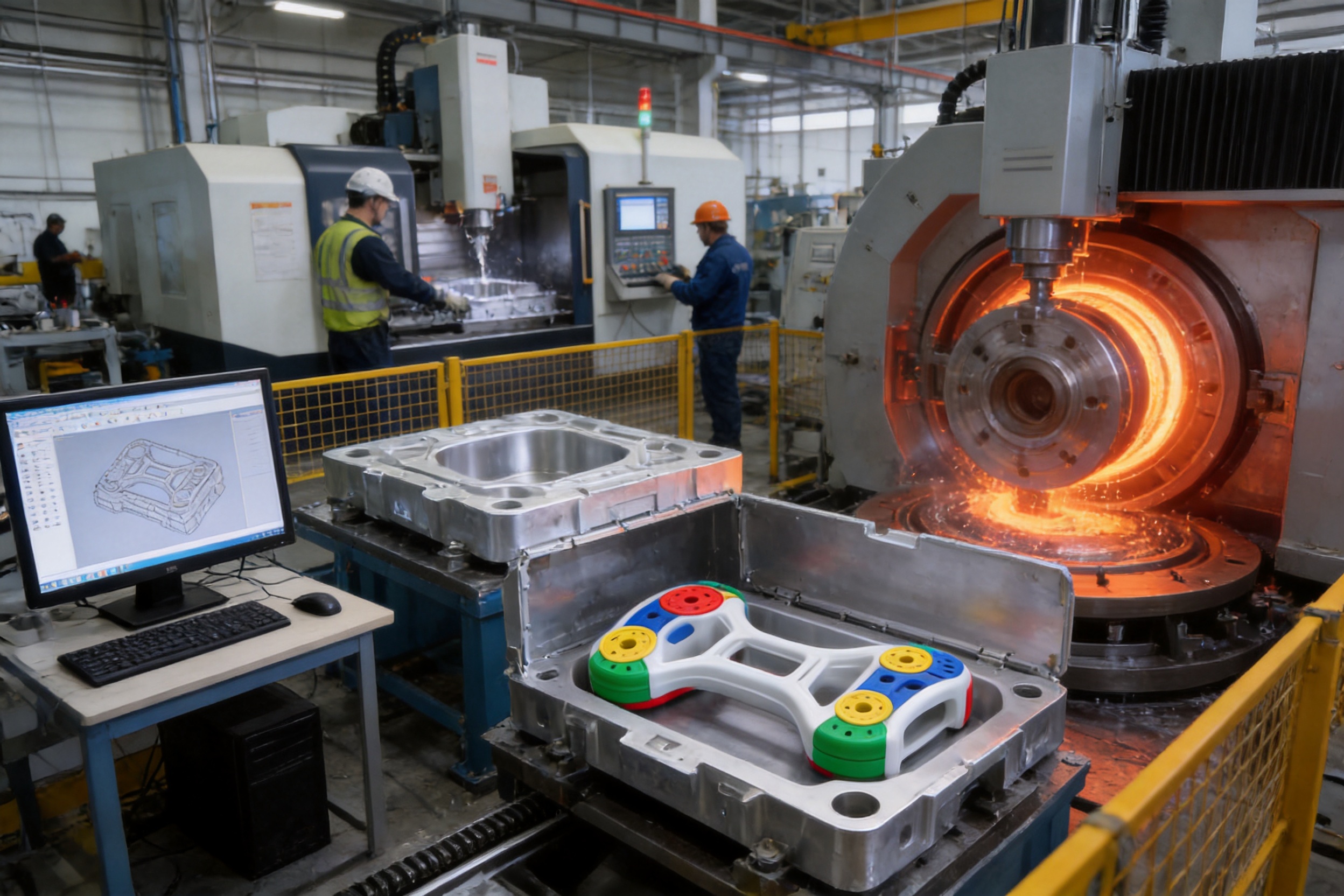
Sports equipment manufacturers operate in a market where product quality, production efficiency, appearance, and cost control directly influence competitiveness. A dumbbell plate, outdoor fitness component, recreational product, or hollow athletic accessory may appear simple after production, but its consistency depends heavily on the quality of the mold used during manufacturing. An inaccurate or poorly engineered mold can create dimensional variation, uneven wall thickness, rough surfaces, difficult demolding, and unnecessary production waste. By contrast, a carefully designed sports equipment mold provides a stable foundation for repeatable product manufacturing.
The sports equipment mold described in this article is developed for manufacturers requiring reliable tooling for dumbbell plates, fitness products, outdoor sporting equipment, playground components, and other rotationally molded plastic products. The tooling uses mature aluminum manufacturing technology, including sand-cast aluminum and forged aluminum alloy options. These materials allow manufacturers to balance weight, heat transfer, customization, durability, machining precision, and investment requirements according to the intended application.
A high-quality mold does more than define the external shape of a product. It affects the finished product’s dimensions, surface finish, wall distribution, structural performance, production cycle, material consumption, and long-term manufacturing stability. For this reason, mold design and material selection should be considered together with product geometry, heating equipment, cooling conditions, production volume, parting-line requirements, inserts, vents, and demolding procedures.
Jiangsu Zhroto Mould Co., Ltd. provides rotational molding mold design, manufacturing, product processing, mold testing, and integrated technical support. Since its establishment in 2015, the company has developed a one-stop workflow covering product concept evaluation, structure optimization, three-dimensional modeling, engineering confirmation, CNC machining, trial molding, sample validation, inspection, delivery, and production assistance. Its modern facility in Jiangyan District, Taizhou City, Jiangsu Province, includes standardized production workshops and supports an annual output of more than 800 mold sets.
This integrated approach gives customers more than a basic cavity or metal tool. It provides a coordinated tooling solution designed around the final product, the selected manufacturing process, and the customer’s production objectives.
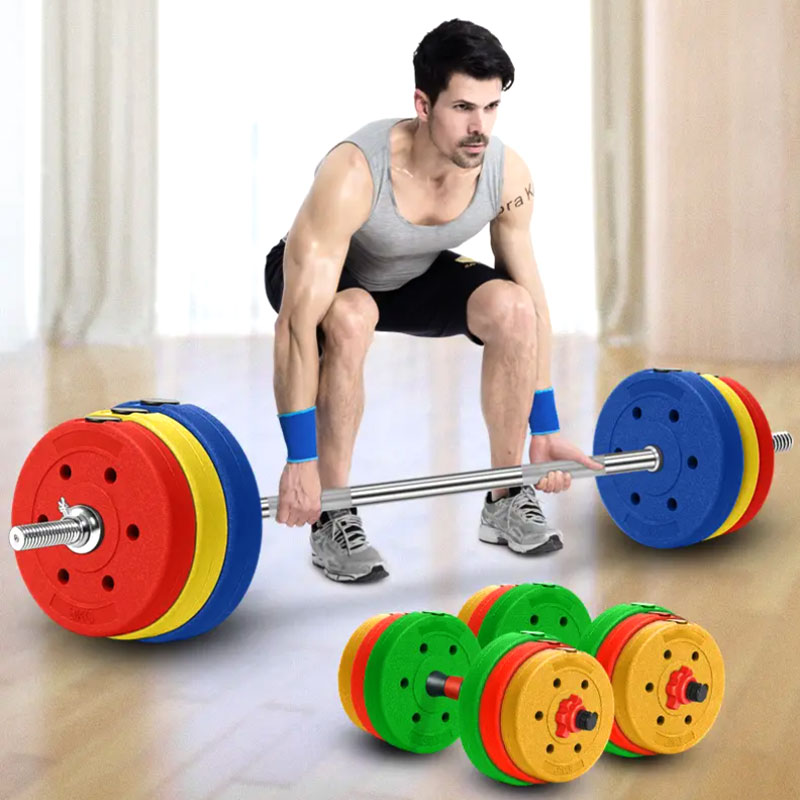
Sports equipment mold
Why Mold Quality Matters in Sports Equipment Manufacturing
Sports equipment is frequently used in demanding environments. Dumbbell plates must maintain stable dimensions and reliable edges. Outdoor fitness products may be exposed to sunlight, moisture, temperature changes, impact, and repeated handling. Playground and recreational components often include large curved surfaces, hollow structures, reinforced areas, and safety-related finishing requirements. Even when the finished products are made from plastic, the mold must withstand repeated heating, cooling, handling, and production cycles.
The mold determines the geometry of the cavity into which the plastic material is distributed. During rotational molding, plastic powder is placed inside the mold, the mold is heated while rotating around multiple axes, and the material gradually melts and coats the internal surfaces. The mold is then cooled while rotation continues, allowing the product to solidify with a hollow structure. Because the plastic material follows the internal shape of the tooling, any defect or inconsistency in the mold may be transferred to every finished product.
For dumbbell plates, dimensional consistency is particularly important. A variation in thickness, diameter, center opening, or edge profile can affect product appearance, assembly, packaging, stacking, and user expectations. The surface should also be sufficiently smooth and uniform to support a clean finish and reduce visible defects. A well-designed mold allows manufacturers to control these characteristics from the beginning of the production process.
For larger sporting and recreational products, the engineering challenge becomes more complex. Large molds must be strong enough to maintain their geometry during heating and cooling while remaining manageable for installation and handling. Curved surfaces must transition smoothly, parting lines must be positioned carefully, and vents must be designed to support stable pressure control. Reinforcement may be needed to prevent distortion, especially when the mold has a large unsupported area or complex geometry.
As a result, sports equipment mold quality influences several key production outcomes:
- Finished product dimensional accuracy.
- Repeatability from one production batch to the next.
- Surface smoothness and appearance.
- Wall thickness distribution and structural consistency.
- Ease of demolding and reduction of production damage.
- Heating and cooling efficiency.
- Tooling service life and maintenance requirements.
- Overall production cost and material utilization.
Manufacturers that invest in suitable tooling can establish a more stable production process and reduce the risk of repeated defects. This is especially valuable when a product is intended for retail distribution, commercial fitness facilities, outdoor installations, or large-volume orders.
Product Overview: Customized Sports Equipment Mold Construction
The sports equipment mold uses aluminum-based tooling technology to support customized production for different product dimensions, shapes, and performance requirements. The mold can be developed from product drawings, three-dimensional models, samples, or preliminary concepts. Engineering review is used to confirm whether the proposed product structure is suitable for rotational molding before the manufacturing process begins.
For dumbbell plates, the mold can be formed as an integrated structure using mature sand-casting aluminum technology. This construction method is suitable for customized sizes and product configurations. It allows the manufacturer to create tooling for different plate diameters, thicknesses, center openings, edge profiles, and decorative features. The mold can then be machined and finished to achieve the required dimensional accuracy and surface condition.
Customers seeking a higher-performance material option may select forged aluminum alloy. Forged aluminum can offer a robust material structure and may be appropriate when the mold is expected to withstand demanding production conditions, frequent thermal cycling, repeated handling, or higher precision requirements. The final selection should be made after considering production volume, mold geometry, operating conditions, expected service life, and budget.
The tooling solution can be customized in several areas:
- Overall product size and cavity dimensions.
- Product thickness and structural transitions.
- Center holes, mounting areas, and functional openings.
- Parting-line location and mold opening method.
- Vent design and air-release arrangements.
- Surface texture, polishing, and finishing requirements.
- Reinforcement for large or complex cavities.
- Compatibility with gas-heated or electric-heated rotational molding machines.
This degree of flexibility provides a practical advantage over standardized tooling. A standard mold may be suitable for a limited product specification, but it may not provide the correct dimensions, surface treatment, or structural features for a customized product program. A purpose-designed mold allows the manufacturer to develop a product that better matches its target market, packaging requirements, branding strategy, and application environment.
Material Options for Sports Equipment Mold Production
Sand-Cast Aluminum for Practical and Flexible Tooling
Sand-cast aluminum is a mature choice for many sports equipment mold applications. It is particularly suitable for dumbbell plates and other products that require customized shapes and sizes. The casting process allows the mold body to be formed as an integrated structure, reducing the need for multiple assembled sections in applications where a one-piece cavity is practical.
One of the principal benefits of sand-cast aluminum is its balance between production practicality and performance. Aluminum is lighter than many alternative mold materials, making installation, removal, inspection, and storage easier. This is important in production environments where operators must regularly change tooling for different sizes or product models.
Aluminum also offers useful thermal conductivity. During rotational molding, effective heat transfer helps the plastic material melt and distribute across the cavity surface. When the mold is designed correctly, its thermal behavior can contribute to more uniform processing and efficient production cycles. The actual cycle time and heating performance will depend on mold thickness, machine configuration, product geometry, plastic material, heating method, and production parameters, but the mold material remains an important part of the overall system.
Sand-cast aluminum is also adaptable to customized surface finishing. After casting, the mold can undergo machining, surface treatment, polishing, or other finishing operations according to the product’s appearance and release requirements. For dumbbell plates and fitness products, a suitable surface condition can help achieve a clean external appearance and reduce unwanted marks on the finished product.
Compared with heavier tooling options, sand-cast aluminum can reduce the physical effort required for mold handling. It may also help lower the demands placed on mold storage systems, lifting equipment, and machine loading procedures. These benefits are especially relevant for small and medium-sized manufacturers, product developers, and companies producing multiple product variations.
Forged Aluminum Alloy for Higher-Performance Requirements
Forged aluminum alloy is an alternative for customers who place greater emphasis on material quality, strength, and dimensional stability. Forging can create a more robust material structure, which may be beneficial for tooling exposed to repeated thermal cycling, mechanical handling, and demanding production schedules.
The choice between sand-cast aluminum and forged aluminum should not be based only on initial purchase price. A complete evaluation should consider the mold’s expected service life, production volume, product complexity, required precision, operating temperature, handling frequency, and maintenance conditions. In some projects, the additional investment in forged aluminum may be justified by the desired durability and production stability.
Forged aluminum alloy can be especially useful for high-quality fitness equipment tooling where product dimensions must remain consistent across many production batches. It can support detailed machining and finishing, allowing the manufacturer to achieve controlled cavity geometry and a refined surface condition. This is important when the finished product is positioned as a premium fitness or sporting product.
Forged aluminum may also be considered when the mold has demanding structural requirements. Large cavities, deep features, narrow transitions, and complex profiles can place additional stress on the tooling. Through appropriate engineering, material selection, reinforcement, and machining, the mold can be designed to maintain stable performance during repeated production.
Engineered Aluminum for Large Outdoor Equipment
Large outdoor sports equipment and recreational products require a broader tooling assessment. The mold may have a substantial cavity volume, long curved sections, large flat areas, or multiple structural features. Engineered aluminum can provide a useful combination of manageable weight, heat transfer, machinability, and adaptability to complex shapes.
Large molds must be designed with careful attention to thickness, reinforcement, parting lines, lifting points, and operator access. A mold that is too heavy may complicate installation and increase handling risk. A mold that is insufficiently reinforced may distort during heating, cooling, or clamping. The objective is to create a tooling structure that is strong enough for the operating conditions while remaining practical for the customer’s equipment and workflow.
Applications may include outdoor fitness components, playground structures, hollow recreational products, large sporting accessories, equipment housings, and other products manufactured through rotational molding. Each application requires individual engineering because product geometry, loading conditions, surface requirements, and production methods can differ significantly.
Competitive Advantages of the Sports Equipment Mold
High Customization for Different Product Programs
A major advantage of this sports equipment mold solution is its high degree of customization. Customers are not limited to a single standard size or fixed cavity design. Tooling can be developed according to product drawings, physical samples, three-dimensional files, dimensional requirements, and production objectives.
This flexibility is valuable for manufacturers serving different market segments. A fitness equipment company may need several dumbbell plate sizes for home exercise, commercial gyms, rehabilitation programs, or strength-training facilities. An outdoor equipment manufacturer may require a family of products with related shapes but different dimensions. Customized tooling allows these product variations to be developed without compromising the overall design concept.
Customization can also support product differentiation. Manufacturers may introduce distinct surface patterns, edge treatments, logos, functional openings, mounting features, or ergonomic profiles. Instead of competing only on price, they can create products designed for specific customer requirements and application environments.
Consistent Dimensions and Product Appearance
Tooling accuracy is directly connected to finished-product consistency. A carefully machined sports equipment mold helps maintain the intended size and shape of each product. Stable dimensions are important for assembly, packaging, stacking, transportation, installation, and user confidence.
Surface quality is equally important. A well-finished cavity can help produce smoother surfaces and more consistent visual results. This is particularly valuable for fitness products, where customers often associate clean edges, uniform texture, and attractive finishing with overall product quality.
By controlling the mold geometry and surface condition, manufacturers can reduce variation between production batches. This supports quality inspection and makes it easier to establish repeatable production parameters. When a product is manufactured in large quantities, even a small reduction in variation can create meaningful savings by reducing rework, sorting, customer complaints, and material waste.
Lightweight Handling and Practical Maintenance
Aluminum tooling is generally easier to handle than heavier mold materials. This can simplify installation, removal, inspection, and storage. Operators can change molds more efficiently, which may reduce downtime when production switches between different product models.
Lightweight handling can also support safer factory operations. Molds can be designed with suitable lifting points and handling arrangements to match the customer’s equipment. Maintenance personnel can access the tooling more easily for cleaning, inspection, surface checks, and minor repairs.
Although aluminum molds still require proper care, their practical handling characteristics can be an important competitive advantage. A mold that is easier to maintain is more likely to receive regular inspection and timely servicing, supporting stable long-term operation.
Thermal Performance for Rotational Molding
Aluminum’s heat transfer characteristics make it widely used in rotational molding tooling. During the heating stage, the mold must transfer heat to the plastic material so that the powder melts and coats the cavity surface. During cooling, the mold must release heat in a controlled manner to support product solidification and dimensional stability.
The mold material is only one part of thermal management. Mold wall thickness, cavity geometry, heating equipment, rotation speed, cooling method, plastic type, and product wall requirements all influence the final result. However, a properly engineered aluminum mold provides a useful foundation for managing these factors.
For electric-heated rotational molding systems, thermal consistency becomes even more important. Zoned heating and precise temperature control require the mold to respond predictably across different areas. Engineering review can help identify potential hot spots, cold areas, thick sections, and complex geometry that may require special attention.
Adaptability to Complex Shapes
Sports and recreational products increasingly use curved, ergonomic, and multifunctional designs. These shapes may be difficult to produce with simple tooling. Aluminum can be machined and finished to support complex cavity geometry, smooth transitions, recessed features, and large curved surfaces.
Complex-shape adaptability allows manufacturers to produce more distinctive products while maintaining the benefits of rotational molding. This can be useful for playground components, outdoor fitness equipment, protective housings, flotation products, and large hollow sporting accessories.
The design must still consider demolding. A shape that looks attractive on a computer model may be difficult to remove from the mold if it includes excessive undercuts, sharp internal transitions, or unsuitable parting lines. The engineering team therefore evaluates product structure, mold opening direction, draft requirements, inserts, and release conditions during the early development stage.
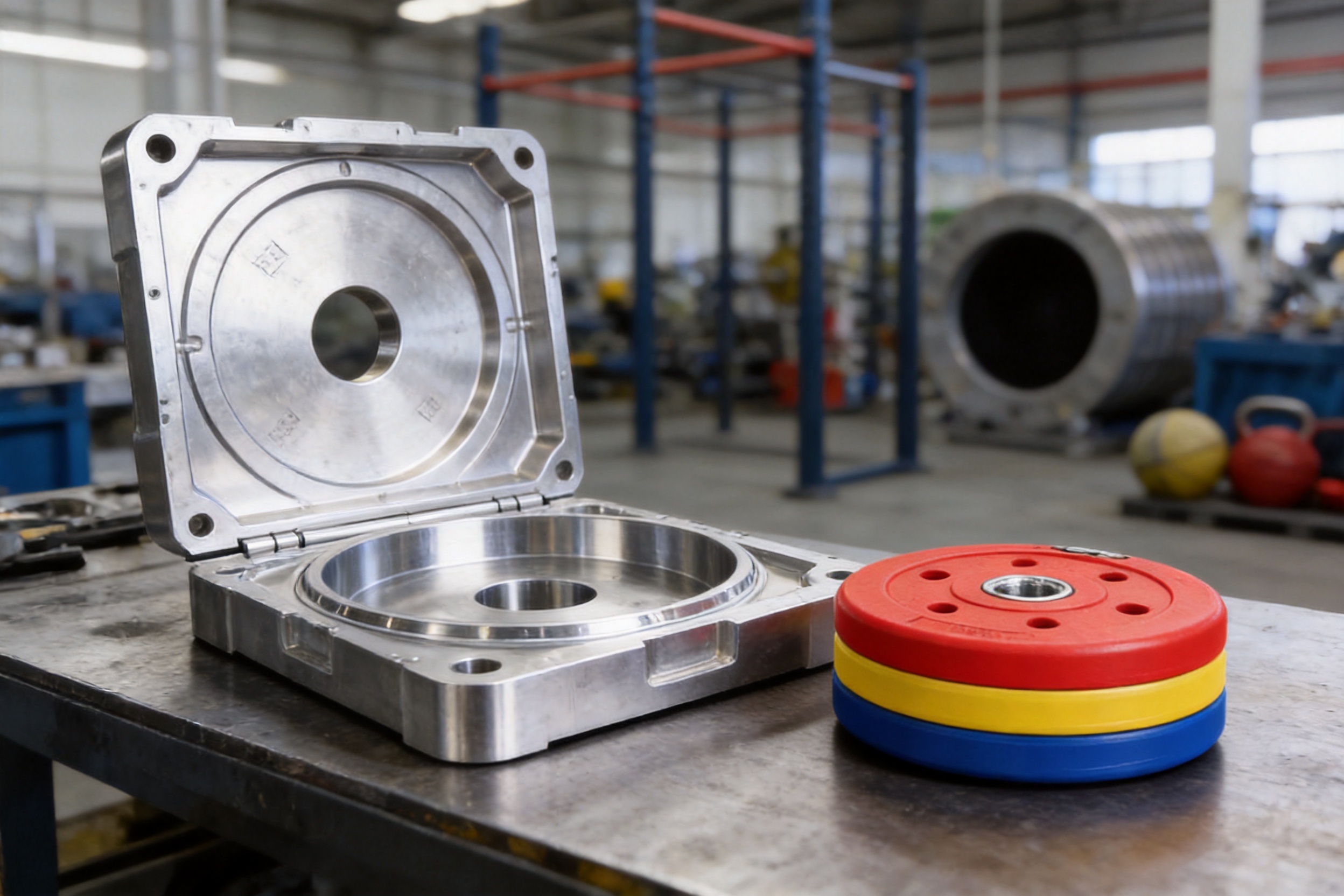
Advanced Manufacturing Process
Project Consultation and Product Evaluation
The manufacturing process begins with an understanding of the customer’s product and production objectives. The customer may provide a drawing, three-dimensional file, sample, product concept, or dimensional specification. Engineers review the product’s intended function, material, size, structural features, production volume, and target market.
For sports equipment, the review may include questions about impact resistance, surface requirements, weight, center openings, mounting areas, outdoor exposure, installation conditions, and expected service life. For dumbbell plates, the focus may be on diameter, thickness, central hole accuracy, edge profile, stacking stability, and surface appearance. For larger outdoor products, the review may focus on cavity size, wall distribution, reinforcement, parting lines, vents, and handling requirements.
This early evaluation helps identify potential manufacturing problems before tooling investment begins. It also allows the customer and engineering team to discuss whether sand-cast aluminum, forged aluminum alloy, or another engineered solution is most appropriate.
Product Structure Optimization
After the product requirements are confirmed, the structure is optimized for rotational molding. The design team examines areas that may affect material flow, heating, cooling, demolding, and final product strength. Sharp transitions may be modified, wall requirements may be reviewed, and the position of openings or inserts may be adjusted.
Product structure optimization can improve both mold performance and finished-product quality. A well-balanced design reduces the risk of uneven material accumulation, air entrapment, incomplete coating, excessive shrinkage, or difficult release. It may also reduce the need for later modifications to the mold.
For large products, structural optimization may include the addition of ribs, reinforced areas, support features, or carefully designed transitions. These elements must be evaluated for their effect on material distribution and cooling. The goal is to support product strength without creating unnecessary production complexity.
Three-Dimensional Modeling and Design Confirmation
Three-dimensional modeling allows the product and mold to be reviewed before manufacturing. The model can show cavity dimensions, parting lines, openings, inserts, lifting areas, vent positions, and mold assembly details. It provides a common reference for the customer, design team, machining department, and quality personnel.
Design confirmation is an important control point. Changes can be made digitally before raw material is processed or machining begins. This helps reduce the risk of expensive rework and ensures that the customer understands the proposed tooling structure.
During this stage, the engineering team can also consider machine compatibility. The mold must be suitable for the available rotational molding machine, including its clamping system, arm arrangement, heating method, cooling system, maximum dimensions, and loading capacity.
Sand Casting or Forged Aluminum Preparation
When sand-cast aluminum is selected, the mold body is prepared according to the approved design. The casting process creates the basic integrated form, after which the mold undergoes further machining and finishing. The casting must be controlled carefully to provide sufficient material allowance for precision operations.
When forged aluminum alloy is selected, the material is prepared according to the required tooling dimensions and engineering specifications. Forged material may be chosen for applications where greater structural performance, long-term stability, or demanding machining and finishing requirements are expected.
Regardless of the selected material, the material decision should be connected to the final product and operating conditions. The purpose is not simply to select the most expensive option, but to select the material that provides the most appropriate combination of performance, durability, production efficiency, and value.
CNC Machining and Precision Processing
Precision CNC machining establishes the detailed cavity geometry and functional features of the sports equipment mold. This process can achieve controlled dimensions for openings, edges, transitions, mounting areas, and other important features.
CNC manufacturing also supports repeatability between related mold sets. When a customer develops multiple sizes of a product family, digital design data and controlled machining procedures can help maintain consistency across the tooling range.
Machining accuracy is especially important for dumbbell plate molds. The central hole, outer diameter, edge geometry, and thickness-related surfaces must correspond closely to the approved design. Inaccurate features may affect product assembly, balance, stacking, packaging, and visual quality.
For large outdoor equipment molds, machining may involve complex curved surfaces and large working areas. The process requires suitable equipment, stable workholding, careful tool-path planning, and inspection at appropriate stages. The result should be a cavity that accurately reflects the intended product geometry.
Surface Treatment and Finishing
Surface treatment is selected according to the product’s appearance, release, and functional requirements. The cavity may be polished, textured, or otherwise finished to achieve the desired result on the finished plastic product.
A suitable surface condition can support clean demolding and help reduce unwanted marks. It can also contribute to the product’s visual identity. For fitness products, manufacturers may request a smooth, professional appearance. For outdoor equipment, a controlled texture may be preferred to improve visual consistency or reduce the appearance of minor handling marks.
Surface finishing must be carried out consistently across the cavity. Uneven treatment may create variations in gloss, texture, or product appearance. Inspection is therefore used to confirm that the mold meets the approved requirements before trial production.
Assembly, Testing, and Sample Validation
After machining and finishing, the mold is assembled and prepared for testing. The testing stage evaluates whether the mold opens and closes correctly, whether the parting line is properly aligned, and whether the mold is compatible with the customer’s production equipment.
Trial molding is used to produce sample parts. These samples are inspected for dimensions, surface quality, wall distribution, release performance, and overall appearance. If necessary, the mold or process parameters can be adjusted before final acceptance.
Sample validation is particularly valuable for customized sports equipment. A product may meet the digital drawing but still require practical adjustment after the first production trial. Trial molding reveals how the plastic material behaves under actual heating, rotation, and cooling conditions.
The validation process may include dimensional measurement, visual inspection, weight checking, functional review, and comparison with approved samples. For dumbbell plates, attention may be given to the center opening, external diameter, thickness, flatness, edge condition, and stacking behavior. For large outdoor products, inspection may include overall dimensions, wall thickness, curved areas, connection points, and surface uniformity.
Final Quality Inspection and Delivery
Before delivery, the mold is inspected against the approved design and project requirements. The inspection may cover dimensional accuracy, surface condition, assembly, moving or removable components, vents, parting lines, lifting points, and general workmanship.
Documentation and production support can also be provided according to the project scope. This may include mold drawings, operating recommendations, sample information, inspection results, and maintenance guidance.
The company’s one-stop service extends from initial consultation through delivery and technical assistance. This reduces communication gaps between separate design, tooling, and production suppliers. It also gives the customer a clear technical contact throughout the project lifecycle.
Application Areas
The sports equipment mold platform can support many types of products produced through rotational molding. Dumbbell plates are a central application because their dimensions, balance, surface condition, and repeated production requirements make mold accuracy especially important.
Other potential applications include hollow fitness accessories, outdoor exercise components, recreational equipment, playground products, protective housings, sports storage units, training equipment components, and specialized athletic products.
For outdoor and recreational equipment, the mold may be developed for large curved products with hollow interiors. These products often require robust tooling and careful control of wall distribution. The mold must accommodate product size while remaining manageable during installation and production.
Rotational molding solutions from the company also cover broader industries, including outdoor facilities, amusement equipment, tanks, containers, vehicle components, agricultural equipment, water treatment products, and industrial products. This cross-industry experience can be useful when sports equipment requires large-scale tooling, complex geometry, specialized inserts, or demanding production conditions.
| Product or Tooling Type | Typical Material Option | Application | Main Production Benefit |
| Dumbbell Plate Mold | Sand-cast aluminum | Weight plates and compact fitness products | Customization, manageable weight, and practical thermal performance |
| Premium Fitness Mold | Forged aluminum alloy | High-quality fitness and athletic equipment | Strength, precision, and dimensional stability |
| Outdoor Equipment Mold | Engineered aluminum | Large outdoor fitness and recreational products | Adaptability to large curved shapes and easier handling than heavier tooling |
| Playground Product Mold | Reinforced aluminum construction | Large hollow playground components | Structural support, repeatability, and surface consistency |
Compatibility with Different Heating Systems
The sports equipment mold can be developed for conventional gas-heated rotational molding machines or electric-heated systems. The correct design approach depends on the customer’s existing equipment and production objectives.
Gas-heated machines are widely used in rotational molding production. The mold must support effective heat transfer while allowing the plastic material to melt and distribute evenly. Mold thickness, geometry, rotation, and heating exposure all influence the final result.
Electric-heated systems offer more controlled heating and may use different heating zones. This can improve temperature management, but it also places greater emphasis on the mold’s thermal behavior. The engineering team must consider how heat reaches different sections of the cavity and whether complex geometry may create uneven heating.
When a customer is developing a new mold for electric heating, thermal management should be discussed during the design stage rather than after manufacturing. Proper planning can help reduce hot spots, cold areas, incomplete fusion, and inconsistent wall distribution.
Machine compatibility also includes mold size, weight, mounting, rotation clearance, opening method, and operator access. The mold should be designed to work safely and efficiently within the customer’s available production system.
Quality Management and Manufacturing Strengths
Jiangsu Zhroto Mould Co., Ltd. has built its production capabilities around rotational molding mold design, manufacturing, product processing, and integrated technical solutions. Its modern facility covers approximately 18,000 square meters, including more than 12,000 square meters of standardized production workshops.
The company’s annual output exceeds 800 mold sets, demonstrating experience with different product types, mold sizes, and production requirements. Its service scope includes product design assistance, mold development, CNC manufacturing, trial production, sample validation, inspection, delivery, and technical support.
The company has obtained ISO 9001:2015 quality management certification, ISO 14001:2015 environmental management certification, and ISO 45001 occupational health and safety certification. These systems provide a structured framework for quality control, environmental responsibility, and workplace safety.
Quality management is important because mold production involves many connected operations. A defect introduced during design may affect machining. A machining deviation may affect sample production. A surface problem may affect product appearance and demolding. Coordinated procedures help ensure that each stage is reviewed before the next stage begins.
The company’s capabilities in product processing are also valuable for customers who want to evaluate the complete manufacturing process rather than only purchase an empty mold. By understanding both tooling and finished-product production, the engineering team can provide recommendations that connect mold design with material behavior, heating conditions, cooling, product structure, and quality inspection.
How to Select the Right Sports Equipment Mold
Manufacturers should consider several factors before selecting a mold material or approving a tooling design. The most appropriate solution depends on the product and production conditions rather than on material reputation alone.
Product Dimensions and Geometry
Product size, depth, curvature, wall requirements, openings, and structural details influence the mold design. Small dumbbell plates may require accurate central openings and stable edge profiles. Large outdoor products may require reinforcement, specialized lifting arrangements, and careful parting-line placement.
Expected Production Volume
A prototype or limited production project may have different tooling priorities from a high-volume commercial program. Production volume affects the desired service life, material choice, maintenance plan, and acceptable tooling investment.
Required Dimensional Accuracy
Products used in assembly, stacking, packaging, or modular installation may require tight dimensional control. The mold material, machining process, inspection method, and production validation should be selected accordingly.
Surface Finish
The desired product appearance should be defined before tooling begins. Smooth, textured, matte, or specialized finishes may require different surface treatment and inspection standards.
Heating and Cooling Conditions
The heating method, machine type, rotation speed, cooling system, and plastic material all influence mold performance. A mold designed for one production system may require modification for another system, particularly when switching between gas heating and electric heating.
Handling and Maintenance
Mold weight, lifting points, opening method, storage conditions, cleaning requirements, and repair access should be considered. A practical mold is easier to use consistently and maintain over its service life.
Environmental and Operating Conditions
Outdoor equipment may face ultraviolet exposure, rain, humidity, temperature changes, and repeated impact during use. The mold itself must support consistent production of products designed for these conditions. Product material selection and final product testing remain important, but suitable tooling is the first step toward repeatable quality.
Environmental and Operational Benefits
Rotational molding can support efficient production of hollow plastic products with relatively low material waste compared with some alternative processes. Because the process forms the product directly against the mold cavity, it can produce large, complex, hollow shapes without requiring extensive assembly.
Aluminum molds may contribute to practical production efficiency through manageable handling and useful thermal response. Efficient heating and cooling can help reduce unnecessary energy consumption, although actual energy performance depends on machine design, production parameters, insulation, cycle management, and operator practices.
The company’s ISO 14001 environmental management certification reflects a structured approach to environmental responsibilities. Environmental performance in mold manufacturing includes material use, machining waste, energy management, surface treatment, workshop practices, and production planning.
Long-lasting tooling also provides an operational benefit. A durable mold that remains accurate for many production cycles reduces the need for frequent replacement and helps avoid the environmental and financial cost associated with repeated tooling manufacture.
Maintenance Recommendations for Long-Term Mold Performance
Even a high-quality sports equipment mold requires proper maintenance. After each production cycle, operators should inspect the parting line, vents, inserts, fasteners, lifting points, and surface condition. Any plastic residue should be removed using methods that do not damage the aluminum surface.
Operators should avoid careless impacts, uncontrolled scraping, and unsuitable cleaning chemicals. Damage to the cavity may be transferred to future products and may be difficult to repair if it affects a detailed or polished area.
Vents should remain clear so that air can escape and pressure can be controlled during heating and cooling. Blocked or damaged vents may contribute to production defects. The mold should also be stored in a dry and protected environment when it is not in use.
Periodic inspection should include dimensional checks, parting-line alignment, surface condition, cracks, distortion, loose components, and signs of excessive wear. For molds used frequently or under demanding conditions, a planned maintenance schedule can help identify problems before they affect large production batches.
Maintenance records should include production cycles, repairs, surface treatments, sample results, and inspection dates. This information helps the manufacturer evaluate mold performance and plan future tooling improvements.
Frequently Asked Questions
What is a sports equipment mold used for?
A sports equipment mold is used to form products such as dumbbell plates, fitness accessories, outdoor exercise components, playground products, recreational equipment, and other athletic products. In rotational molding, plastic material is heated and distributed against the internal cavity of the mold to create a hollow or shaped finished product.
Which material is best for a dumbbell plate mold?
Sand-cast aluminum is a practical choice for many dumbbell plate molds because it supports integrated construction, customization, manageable weight, and useful heat transfer. Forged aluminum alloy may be more appropriate when the customer requires higher material performance, demanding production conditions, or enhanced dimensional stability.
What is the difference between sand-cast aluminum and forged aluminum alloy?
Sand-cast aluminum is formed through a casting process and offers a practical balance of customization, weight, thermal performance, and tooling cost. Forged aluminum alloy is produced through a forging process that can provide a more robust material structure and may be selected for higher-performance or more demanding applications. The correct choice depends on product geometry, production volume, precision requirements, service conditions, and budget.
Can the mold be customized for different dumbbell plate sizes?
Yes. The mold can be designed according to the required diameter, thickness, center opening, edge profile, surface finish, and other product specifications. Multiple molds can also be developed for a product family with different sizes or related configurations.
How does a mold affect dumbbell plate quality?
The mold affects the finished product’s dimensions, shape, edge condition, center opening, surface smoothness, wall distribution, and repeatability. An accurately designed and machined mold helps reduce variation and supports stable product quality across production batches.
Can the tooling be used for large outdoor sports equipment?
Yes. Aluminum tooling can be designed for large outdoor fitness products, playground components, recreational equipment, and other large hollow products. These applications require careful evaluation of mold thickness, reinforcement, parting lines, vents, handling, surface finishing, and machine compatibility.
Is the mold compatible with electric-heated rotational molding machines?
The mold can be engineered for electric-heated rotational molding systems as well as conventional gas-heated machines. Electric heating requires particular attention to thermal management, zoned heating, heat transfer, cavity geometry, and production parameters. Compatibility should be confirmed during the design stage.
What information should a customer provide before mold development?
Useful information includes product drawings, three-dimensional files, samples, dimensions, material requirements, expected production volume, heating method, available machine specifications, surface finish requirements, inserts, packaging conditions, and intended application environment. The more complete the technical information, the more accurately the mold can be designed.
How is mold quality tested before delivery?
The mold may be checked for dimensional accuracy, assembly, parting-line alignment, surface condition, vents, lifting points, and machine compatibility. Trial molding is then used to evaluate finished product dimensions, appearance, surface quality, wall distribution, and demolding performance. Necessary adjustments can be completed before final acceptance.
Why is integrated technical support important?
Tooling performance is closely connected to product structure, material behavior, heating, rotation, cooling, and inspection. An integrated supplier can evaluate these factors together, reducing communication gaps and helping the customer solve design or production issues earlier in the project.
What certifications support the manufacturer’s quality system?
Jiangsu Zhroto Mould Co., Ltd. has obtained ISO 9001:2015 quality management certification, ISO 14001:2015 environmental management certification, and ISO 45001 occupational health and safety certification. These certifications support structured quality, environmental, and safety management practices.
How long can a sports equipment mold remain in service?
Service life depends on the selected material, product geometry, production frequency, heating and cooling conditions, handling, maintenance, surface treatment, and repair practices. Proper design, regular inspection, suitable operating parameters, and careful maintenance can help extend tooling service life.
Conclusion
A sports equipment mold is a core production asset that influences more than the external shape of a product. It affects dimensional accuracy, surface quality, material distribution, cycle efficiency, demolding, maintenance, and long-term manufacturing stability. For dumbbell plates and other fitness products, the mold must provide precise geometry and consistent performance. For large outdoor equipment, it must also address structural support, thermal management, handling, and complex curved surfaces.
Sand-cast aluminum provides a flexible and practical solution for many customized dumbbell plate molds. Forged aluminum alloy offers an alternative for customers seeking higher material performance and dimensional stability. Engineered aluminum construction can support large outdoor sports and recreational products while maintaining manageable handling and useful thermal characteristics.
The competitive value of this tooling comes from the combination of material options, customized design, precision CNC machining, surface finishing, trial molding, sample validation, and technical support. Jiangsu Zhroto Mould Co., Ltd. combines these capabilities with a modern manufacturing facility, standardized workshops, certified management systems, experience across multiple industries, and an annual capacity of more than 800 mold sets.
For manufacturers developing new fitness products, expanding a product range, or improving an existing rotational molding program, the best tooling decision should be based on the complete production system. Product geometry, mold material, heating method, production volume, surface requirements, machine compatibility, maintenance, and future service conditions should all be reviewed together.
When these factors are coordinated from the beginning, a sports equipment mold can provide reliable production support, repeatable quality, efficient handling, and long-term value for manufacturers competing in the fitness, athletic, outdoor, and recreational equipment markets.
References
1. ASTM International. Standards and guidance related to plastics manufacturing, dimensional inspection, and material testing.
2. Association of Rotational Molders. Technical principles of rotational molding, mold design, processing, heating, cooling, and product development.
3. International Organization for Standardization. ISO 9001:2015, Quality Management Systems—Requirements.
4. International Organization for Standardization. ISO 14001:2015, Environmental Management Systems—Requirements with Guidance for Use.
5. International Organization for Standardization. ISO 45001, Occupational Health and Safety Management Systems—Requirements with Guidance for Use.
6. Modern Plastics Handbook. General principles of polymer processing, mold design, material distribution, and production quality control.
7. Rotational Molding Technology and Materials Engineering. Technical references concerning aluminum tooling, heat transfer, product geometry, and mold maintenance.
Product: Sports equipment mold


We provide customers with one-stop services ranging from product design, mold manufacturing to finished product production.
-
 +86-18006248936
-
 ricky.t@zhroto.com
-
 No.9 Jiangyuan Road, Luotang Street, Jiangyan District, Taizhou City,Jiangsu Province, China
Copyright © Jiangsu Zhroto Mould Co., Ltd. Rights Reserved.Custom Rotational Plastic Molding Factory
