 en
 中文简体
 русский
 Español
 Deutsch
 Polskie
 REQUEST A QUOTE

 Home / Author / Saskia Wen — Regional Sales Executive / Custom Rotational Molding Solutions for High-Performance Yacht Seats
Custom Rotational Molding Solutions for High-Performance Yacht Seats
Content
- 1 Understanding the Yacht Seat Mold
- 2 Why Rotational Molding Is Suitable for Yacht Seating
- 3 Design Advantages of a Custom Yacht Seat Mold
- 4 Advanced Manufacturing Process
- 5 Advantages Compared with Competing Mold Solutions
- 6 Material and Performance Considerations
- 7 Applications Beyond a Single Seat Design
- 8 From Concept to Finished Yacht Seat
- 9 Key Technical Factors for Purchasing Decisions
- 10 Maintenance and Long-Term Mold Value
- 11 Why Choose an Integrated Rotational Molding Partner
- 12 Frequently Asked Questions
- 12.1 What is a rotational molding yacht seat mold?
- 12.2 Why is rotational molding suitable for yacht seats?
- 12.3 Can the yacht seat mold be customized?
- 12.4 How does mold design affect wall thickness?
- 12.5 Can the mold include mounting and drainage features?
- 12.6 What materials can be used for rotationally molded yacht seats?
- 12.7 How is mold quality verified?
- 12.8 Does the supplier provide only the mold?
- 12.9 What production capacity does the company have?
- 12.10 Which management certifications does the company hold?
- 12.11 Can the company support future changes to the yacht seat design?
- 13 Conclusion
- 14 References
- 15 Product: Yacht seat mold
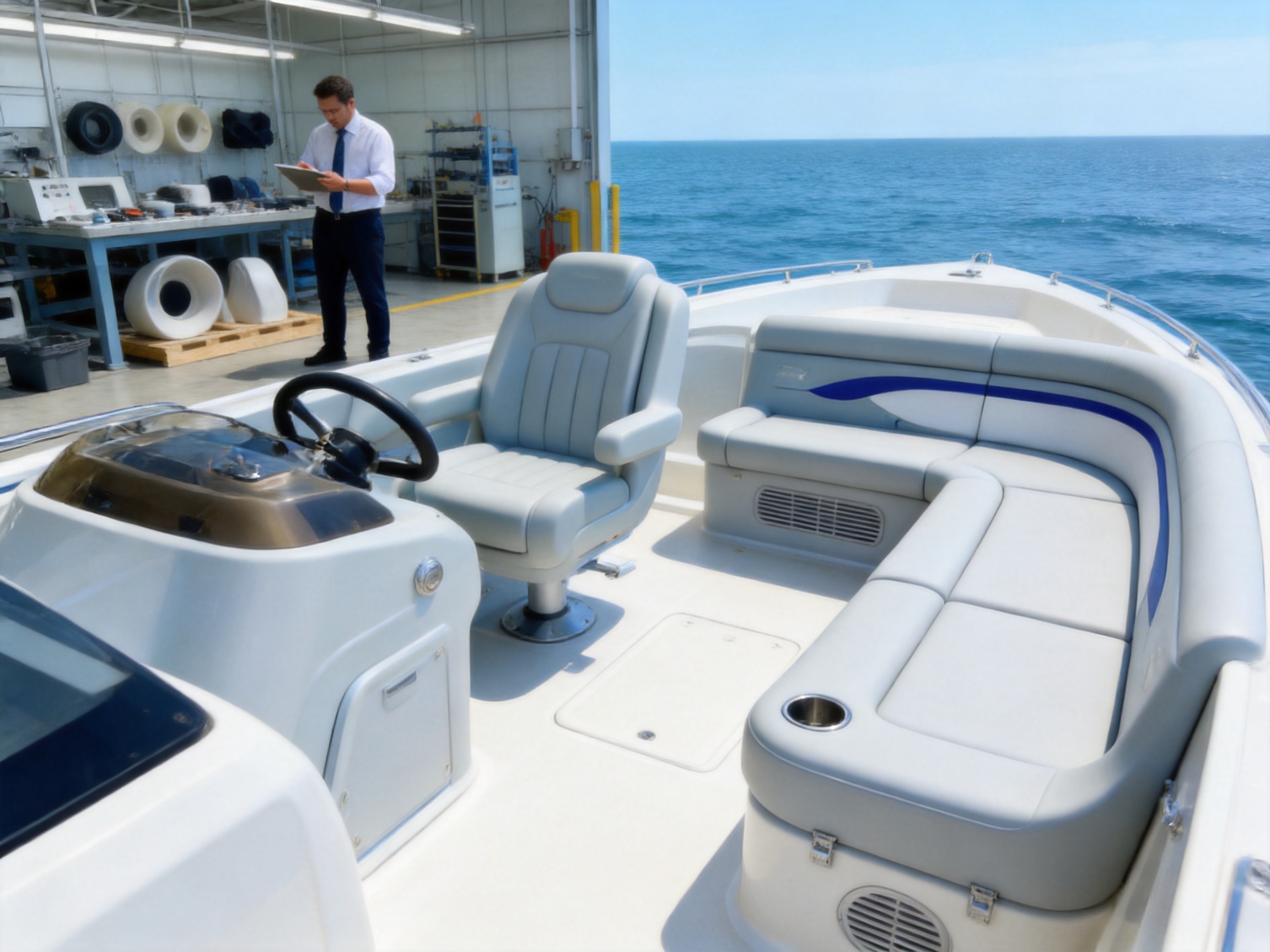
Yacht seating must combine comfort, durability, visual appeal, and resistance to demanding marine conditions. Unlike ordinary indoor furniture, a yacht seat is exposed to salt spray, humidity, sunlight, temperature changes, vibration, repeated use, and limited installation space. The mold used to manufacture the seat therefore has a direct influence on the final product’s quality, service life, dimensional consistency, and appearance. A well-designed yacht seat mold is not simply a cavity that creates a shape. It is an engineered production tool that must support reliable material distribution, smooth filling, easy demolding, stable production, and efficient customization.
Rotational molding is particularly suitable for producing durable plastic yacht seats and related marine components. The process can create strong, seamless, hollow or semi-hollow structures with relatively even wall thicknesses and complex shapes. When supported by a properly designed mold, rotational molding enables manufacturers to produce lightweight seats that are resistant to impact, corrosion, moisture, and long-term outdoor exposure. It also allows different yacht builders and marine equipment manufacturers to develop unique seat forms without being restricted to standardized designs.
Jiangsu Zhroto Mould Co., Ltd. specializes in the design and manufacture of rotational molding molds, rotomolded products, and integrated technical solutions. Its yacht seat mold offering is developed around the structural requirements of marine seating and the material-flow characteristics of rotational molding. The company provides a complete service covering product design, mold manufacturing, rotational molding production, and finished-product support. This integrated capability helps customers move from an initial concept to stable series production with fewer coordination difficulties and better control over quality.
Understanding the Yacht Seat Mold
A yacht seat mold is a specialized tool used to form the external geometry and functional structure of a seat through the rotational molding process. It may be designed for a driver’s seat, passenger seat, helm seat, lounge seat, foldable seat, raised observation seat, or another customized marine seating application. Depending on the product design, the mold can include contours for cushions, backrests, arm supports, mounting areas, drainage features, reinforcement zones, and connection points.
The mold must reproduce the intended dimensions accurately while also allowing plastic powder or resin to move through the cavity during heating and rotation. Since rotational molding does not use high-pressure injection to force material into every corner, the design must be carefully adapted to encourage uniform coating and complete melting. Corners, ribs, recesses, transitions, and narrow sections require particular attention. Poorly considered geometry can result in thin areas, excessive material accumulation, incomplete coverage, or difficult demolding.
For marine applications, the mold must also support the production of a clean, attractive surface. Yacht interiors and exterior seating areas are often designed as visible elements of the vessel. Uneven surfaces, sharp parting lines, distortion, or inconsistent texture can reduce the perceived quality of the entire yacht. A carefully manufactured mold contributes to a more refined finished product and helps manufacturers maintain a consistent appearance across production batches.
Why Rotational Molding Is Suitable for Yacht Seating
Rotational molding offers a combination of design freedom and structural performance that is valuable for yacht seat production. During the process, a measured quantity of polymer material is placed inside the mold. The mold is then heated and rotated around multiple axes. As the material melts, it gradually coats the internal surfaces of the mold. After cooling, the finished component is removed from the mold.
One of the most important benefits is the ability to produce seamless forms. A rotationally molded yacht seat can often be manufactured as a single integrated shell rather than as several pieces joined together. Reducing the number of seams and joints can lower the risk of water entry, surface cracking, corrosion around fasteners, and long-term structural weakness. A seamless shell can also be easier to clean, which is important for marine environments where salt residue, moisture, sunscreen, and dirt may accumulate.
The process is also capable of producing lightweight components with practical strength. A yacht seat should not add unnecessary weight to the vessel, especially on smaller boats where weight distribution affects handling and fuel efficiency. Rotational molding makes it possible to create hollow structures with engineered wall thicknesses and integrated reinforcement features. The result can provide a favorable balance between weight, rigidity, impact resistance, and ease of installation.
Another advantage is material flexibility. Depending on the design and required performance, suitable rotational molding materials may include various grades of polyethylene and other compatible polymers. Material selection can be considered alongside color, ultraviolet resistance, impact performance, chemical resistance, low-temperature behavior, and surface requirements. This gives yacht manufacturers greater freedom to match the seat with the vessel’s intended operating environment.
Rotational molding is also well suited to customized production. Compared with some high-volume molding technologies, it can offer a more practical path for producing specialized shapes, limited production runs, and multiple design variations. Yacht manufacturers frequently require distinctive seating styles for different models, cabin layouts, deck arrangements, and customer preferences. A custom rotational molding tool can support these differences without forcing every product into one standard configuration.
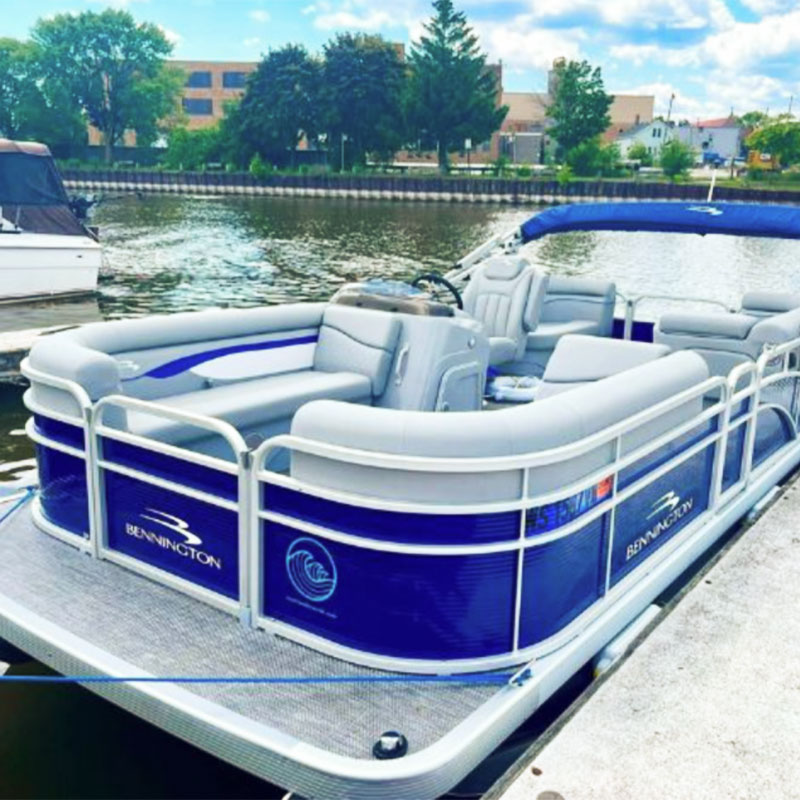
Yacht seat mold
Design Advantages of a Custom Yacht Seat Mold
The main advantage of a custom yacht seat mold is that it begins with the actual requirements of the seat rather than with a generic mold platform. A yacht seat may need to fit a specific deck structure, maintain clearance around steering controls, provide support at a particular seating angle, or accommodate cushions and upholstery. Custom mold development allows these requirements to be considered before manufacturing begins.
Geometry Designed for Marine Comfort
Comfort is influenced by the seat’s back angle, sitting depth, side support, leg clearance, armrest position, and compatibility with cushions. A mold design team can translate these functional requirements into controlled three-dimensional geometry. The result is a seat shell that supports the intended ergonomic arrangement and provides a reliable foundation for upholstery or padding.
For helm and pilot seats, the design may emphasize posture, visibility, stability, and access to controls. For passenger or lounge seating, the priorities may include relaxed support, smooth contours, and efficient use of available space. Because the yacht seat mold is developed around the application, the final product can be better matched to its position on the vessel.
Controlled Wall Thickness
Uniform wall thickness is a critical consideration in rotational molding. During heating and rotation, plastic powder must melt and adhere to the mold surface evenly. The mold’s shape, corner radii, transitions, and internal features affect the way material accumulates. A properly developed yacht seat mold helps promote a balanced material layer and reduces the possibility of weak or excessively heavy areas.
Uniformity does not mean that every point of the product must have exactly the same thickness regardless of function. Certain zones may require additional strength or reinforcement. Instead, the objective is to create a controlled thickness distribution that supports the seat’s structural needs while avoiding unnecessary material use. This approach can improve consistency, reduce weight, and make production more predictable.
Integrated Functional Features
A custom mold can incorporate mounting bosses, recesses, drainage paths, cable clearances, ventilation features, and other details required by the seat assembly. Integrating suitable features into the molded shell may reduce the number of secondary operations. It can also simplify installation and improve repeatability during final assembly.
Drainage is especially important in marine seating. Water should not remain trapped in enclosed areas or low points where it could contribute to odor, staining, or long-term material stress. Mold geometry can be planned to support practical drainage and cleaning. Similarly, fastening areas can be designed to distribute loads and maintain reliable connections with the vessel structure.
Appearance and Surface Quality
The mold surface has a direct effect on the visible finish of the yacht seat. Texture, gloss level, edge definition, and transition quality can all be considered during mold development. A high-quality tool helps create a consistent appearance across production runs and minimizes cosmetic defects that might otherwise require extensive finishing work.
For yacht manufacturers, consistent appearance is more than an aesthetic preference. Seating is often part of a coordinated interior or exterior design language. The seat may need to match surrounding panels, consoles, storage units, or trim components. A mold capable of producing stable dimensions and repeatable surfaces supports better integration across the vessel.
Advanced Manufacturing Process
The quality of a yacht seat mold depends on the entire manufacturing process, from initial design review to final inspection. Jiangsu Zhroto Mould Co., Ltd. combines mold design, manufacturing, and rotational molding experience to develop tools that are practical for production rather than merely acceptable as prototypes.
Requirement Analysis and Product Review
The process begins with an understanding of the customer’s product objectives. Important information may include the seat’s overall dimensions, installation location, expected load, preferred material, color, surface texture, cushion arrangement, production quantity, and intended operating conditions. Reviewing these requirements early helps identify possible design conflicts before the mold enters manufacturing.
The company’s mold design team can assess whether the proposed seat geometry is suitable for rotational molding. Areas such as sharp internal corners, deep undercuts, narrow openings, and uneven transitions may require modification. By addressing these issues during development, the team can improve material flow, simplify demolding, and reduce the risk of production problems.
Three-Dimensional Mold Design
Three-dimensional design tools are used to define the product geometry and mold structure. The design process may include the parting line, mold sections, flange arrangement, hinges, locks, vents, inserts, and other components required for safe and repeatable operation. The design must balance the product’s appearance with the practical needs of heating, cooling, rotation, and removal.
Parting-line planning is particularly important for a yacht seat. The selected line should support clean separation of mold sections while reducing visible marks on important surfaces. It should also enable the finished product to be removed without damaging side supports, recessed features, or integrated details. A carefully positioned parting line can reduce finishing work and improve the overall appearance of the molded shell.
Fabrication and Assembly
After the design is confirmed, the mold is fabricated using suitable metalworking and forming methods. The manufacturing approach depends on the size, geometry, material, production volume, and required surface quality of the tool. Fabrication accuracy is important because dimensional errors in the mold are transferred to the molded product.
Mold sections must be assembled carefully so that the cavity maintains the intended shape. Flanges and connection points should provide adequate sealing and alignment during production. Vents and other process features must be positioned to support reliable molding without creating unwanted marks or weak points on the product.
The mold’s surface is prepared to meet the required finish. Smooth transitions and properly treated areas can help the plastic release from the mold and can reduce the likelihood of surface defects. For visible yacht seat surfaces, attention to finishing is especially important because even small inconsistencies can become noticeable on the final component.
Trial Molding and Process Verification
A mold should be verified through trial molding before regular production. Trial runs allow the design and production teams to observe how the material behaves during heating, rotation, and cooling. They can check coverage in corners, transitions, recesses, and reinforcement zones. The trial product can also be evaluated for dimensions, surface appearance, wall thickness, demolding performance, and assembly compatibility.
If adjustment is needed, the mold or process parameters can be refined before volume production begins. This may include changes to material loading, heating time, rotation speed, cooling conditions, venting, or localized mold details. The purpose is to establish a repeatable process that produces stable results rather than relying on trial-and-error during customer production.
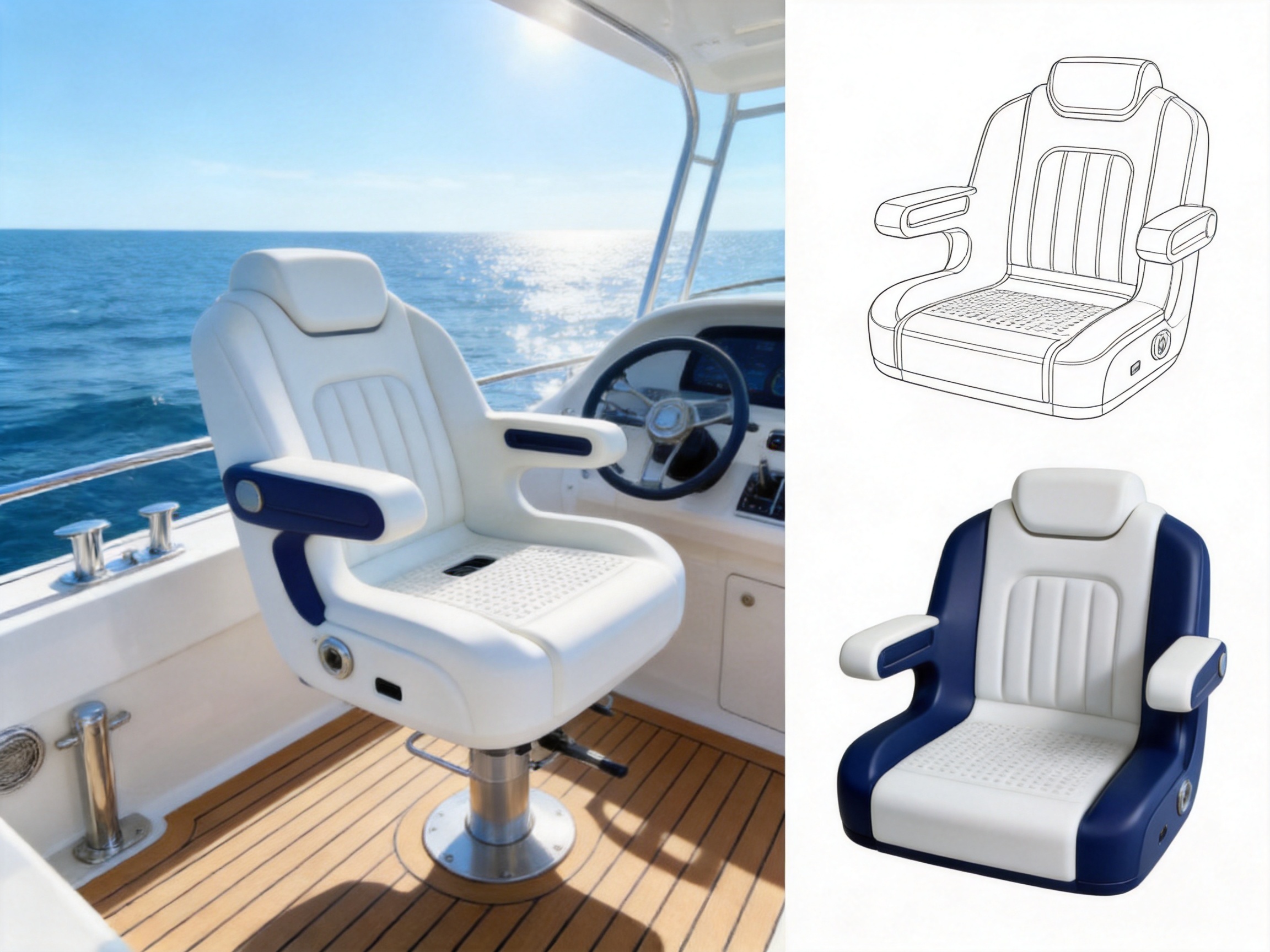
Advantages Compared with Competing Mold Solutions
Customers evaluating yacht seat molds often compare suppliers based on more than the initial quotation. Tool price is important, but the total value of a mold also includes design reliability, product consistency, service responsiveness, process support, maintenance requirements, and the ability to handle future modifications. A lower-cost mold can become expensive if it produces unstable parts, requires excessive hand finishing, or cannot adapt to production changes.
Product-Specific Engineering
One advantage of a specialized rotational molding supplier is the ability to design around the actual behavior of the process. A general metalworking supplier may be able to manufacture a cavity, but may not have the same depth of experience in material distribution, rotational heating, demolding, and production troubleshooting. A mold developed by a team familiar with both tooling and rotomolded products is more likely to support a reliable production cycle.
For yacht seats, this process knowledge helps address the relationship between form and function. The design must look attractive, fit the vessel, and remain practical during rotational molding. Product-specific engineering reduces the risk of receiving a tool that matches a drawing but performs poorly on the production floor.
Customization Without Losing Process Stability
Some suppliers focus on standard tools that require the customer to adapt the product. A custom yacht seat mold takes the opposite approach by adapting the tool to the customer’s design and production objectives. This is valuable when the seat must match a particular yacht model or brand identity.
Customization does not have to mean unpredictable production. When the mold is designed with rotational molding principles in mind, special contours and mounting features can be incorporated while maintaining practical material flow and demolding conditions. The customer receives a more distinctive product without sacrificing the basic stability required for repeat manufacturing.
One-Stop Technical Support
Jiangsu Zhroto Mould Co., Ltd. provides integrated services from product design and mold manufacturing to finished-product production. This one-stop capability can reduce the communication gap between the company ordering the mold and the team using it. Design decisions can be evaluated in the context of actual molded parts, and production feedback can be applied to future tooling improvements.
An integrated supplier can also help customers determine whether a design should be manufactured as one piece or divided into several components. It can advise on material selection, wall thickness, reinforcement, assembly, and production sequence. This type of support is especially useful for customers who are developing their first rotationally molded yacht seat or moving from another molding technology.
Capacity and Manufacturing Infrastructure
The company was founded in 2015 and moved in 2021 to a modern facility in Jiangyan District, Taizhou City. The facility covers approximately 18,000 square meters, including more than 12,000 square meters of standardized production workshops. This infrastructure supports organized mold fabrication, product processing, inspection, and project coordination.
The company reports an annual capacity of more than 800 mold sets and 3,600 tons of plastic products. This capacity indicates that the business is equipped to support both tooling projects and ongoing molded-product production. For yacht seat customers, the ability to obtain the mold and, when required, the molded product from one experienced source can simplify supply-chain planning.
Quality and Environmental Management
Jiangsu Zhroto Mould Co., Ltd. has obtained ISO 9001:2015, ISO 14001:2015, and ISO 45001:2018 certifications. These standards relate respectively to quality management, environmental management, and occupational health and safety. Certification does not replace product-specific inspection, but it demonstrates that the company has established formal systems for managing important operational areas.
Quality management is relevant to mold consistency, documentation, process control, and customer communication. Environmental management is increasingly important as manufacturers consider material use, energy consumption, waste reduction, and responsible production practices. Occupational health and safety support a more controlled manufacturing environment for employees and visitors.
Material and Performance Considerations
The selection of plastic material should be made in relation to the yacht seat’s environment and structural requirements. Marine seating may experience continuous exposure to ultraviolet radiation, salt water, cleaning products, impact, vibration, and changes in temperature. The material should therefore be evaluated for outdoor durability, chemical resistance, impact performance, and compatibility with the intended molding cycle.
Material color is another practical consideration. Light-colored products may reduce heat absorption in direct sunlight, while darker colors can support a particular design concept. Pigment stability and surface performance should be considered together with the vessel’s exposure conditions. If the seat will receive a cushion, upholstery, or coating, the base material must also be compatible with the selected finishing system.
The seat’s structural design and mold design must work together. A plastic shell may serve as the primary load-bearing structure, or it may be combined with a metal frame, mounting plate, cushion, or additional reinforcement. The mold can be adapted to accommodate inserts or fastening areas when these features are required. Proper load transfer is essential because forces are not limited to the user’s weight; the seat may also experience movement caused by waves, vessel acceleration, and repeated entry and exit.
Thermal behavior should also be considered. Yacht seats may be installed in areas exposed to intense sunlight or rapid temperature changes. The product design should allow for practical dimensional stability and should avoid creating unnecessary stress concentrations. A suitable mold and controlled process help maintain consistent geometry under normal production conditions.
Applications Beyond a Single Seat Design
The rotational molding approach used for a yacht seat mold can be adapted to a broad range of marine seating products. Manufacturers may require different widths, heights, backrest profiles, armrest configurations, or mounting systems for various vessel categories. The same design and engineering principles can support seats for recreational yachts, fishing boats, patrol vessels, workboats, ferries, and other marine platforms.
Rotational molding can also be used for related marine components, including consoles, storage boxes, protective housings, buoyancy structures, covers, tanks, and deck accessories. A customer developing a family of products may benefit from working with a supplier that understands the broader rotational molding process rather than only one individual tool.
Because the company serves industries including hydrogen energy storage and transportation, automotive parts, industrial equipment, agricultural machinery, water treatment, and outdoor facilities, its experience extends beyond marine seating. Knowledge gained from these applications can be useful when a yacht seat requires unusual strength, complex hollow geometry, specialized mounting, or environmental resistance.
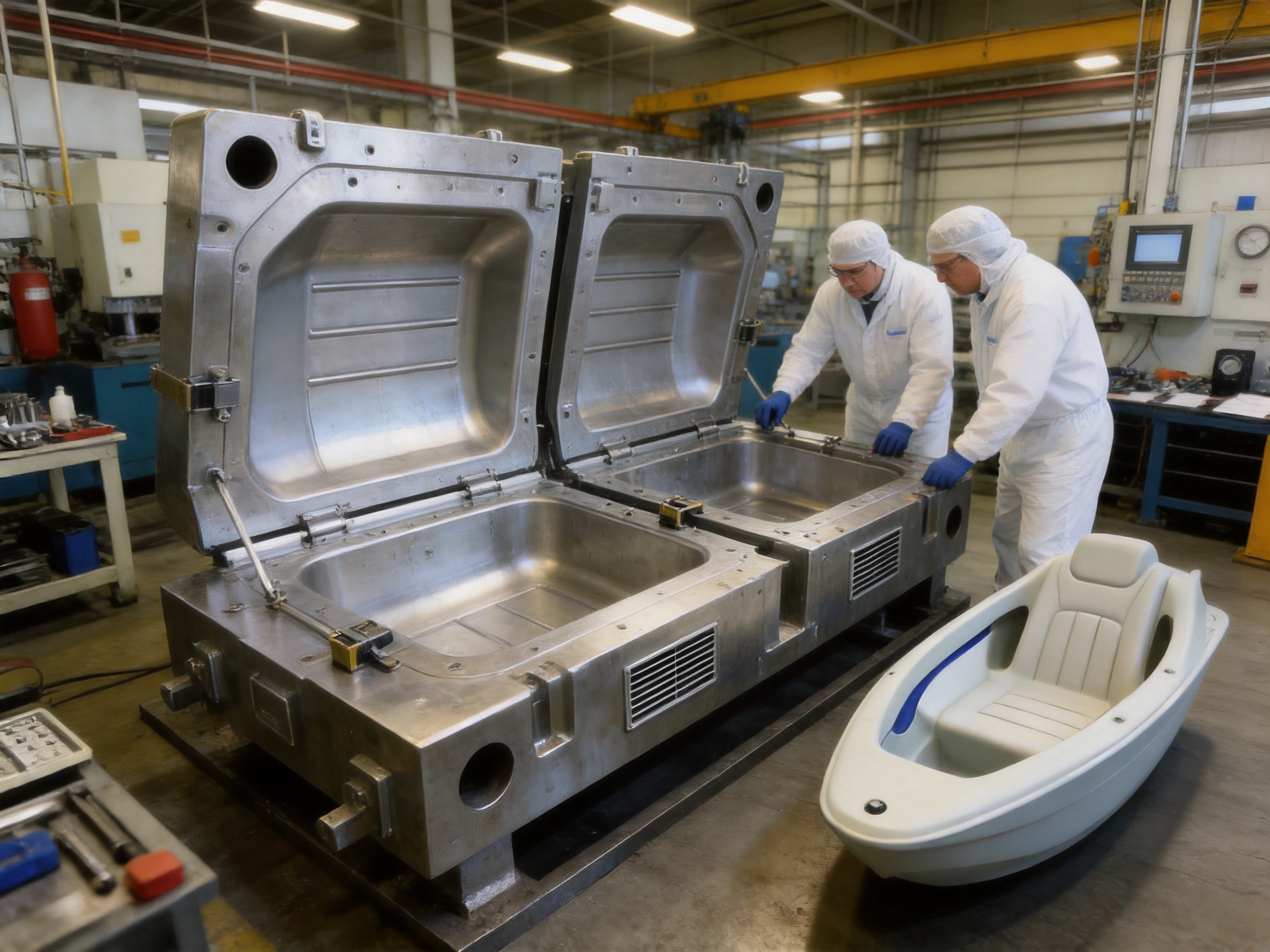
From Concept to Finished Yacht Seat
A successful project normally begins with clear technical communication. The customer can provide drawings, three-dimensional files, sketches, reference samples, target quantities, or installation information. The supplier can then review the concept for rotational molding suitability and identify areas that may influence tool cost, production time, or finished-product performance.
During the design stage, the two parties should confirm key decisions such as product dimensions, material, color, surface texture, allowable tolerances, mold parting lines, inserts, drainage, fastening, and inspection requirements. Early agreement helps prevent changes after mold fabrication has started.
After design approval, the mold is manufactured and trial molded. The first sample provides an opportunity to check the product against the customer’s requirements. Dimensional inspection may include overall length, width, height, mounting positions, and critical clearances. Visual inspection can focus on surface uniformity, parting lines, corners, color, and visible defects. Functional checks may include assembly, drainage, cushion fit, and load-related features.
Once the product is approved, the supplier can support regular production according to the agreed process. Continued communication remains valuable because yacht manufacturers may introduce new vessel models, update interior styling, or request additional seat variants. A supplier with design, mold, and product-processing capabilities can respond more efficiently to these changes.
Key Technical Factors for Purchasing Decisions
| Evaluation Area | What to Review | Value to the Customer |
|---|---|---|
| Product Design | Seat geometry, ergonomics, mounting, drainage, and assembly requirements | Ensures that the molded shell fits the vessel and supports intended use |
| Mold Engineering | Parting line, wall-thickness control, corner design, vents, and demolding | Improves production stability and reduces defects |
| Material Selection | Impact resistance, ultraviolet performance, chemical resistance, color, and temperature behavior | Supports reliable service in marine environments |
| Surface Quality | Texture, gloss, transitions, flange marks, and visible finish | Improves appearance and reduces secondary finishing |
| Trial Production | Sample molding, inspection, process adjustment, and customer approval | Confirms that the tool performs before volume production |
| Manufacturing Capacity | Workshop infrastructure, mold output, product-processing capability, and scheduling | Helps support both prototype and continuing production needs |
| Management Systems | Quality, environmental, and occupational safety procedures | Provides a more controlled and responsible supply environment |
| Technical Service | Design assistance, process guidance, modifications, and after-sales support | Reduces project risk and simplifies future improvements |
Maintenance and Long-Term Mold Value
A rotational molding tool is a long-term production asset. Proper care can help preserve its dimensional accuracy and surface condition over many production cycles. Maintenance practices may include cleaning residual material, inspecting flanges and fasteners, checking vents, examining hinges or locks, and monitoring areas subject to wear.
The mold should be handled carefully during storage and movement. Uncontrolled impacts can deform flanges, damage visible cavity surfaces, or affect alignment. A suitable storage environment can reduce exposure to moisture, contamination, and unnecessary temperature extremes. Maintenance records can help identify recurring issues before they interrupt production.
As the yacht seat design evolves, the mold may require modification or a related variant may be developed. A supplier with detailed design records and manufacturing knowledge can make these changes more efficiently. This is another reason to evaluate a mold supplier based on long-term support rather than only the initial tool price.
Why Choose an Integrated Rotational Molding Partner
Choosing an integrated supplier can create advantages throughout the product lifecycle. During design, the customer gains access to specialists who understand both the intended seat and the production process. During tooling, communication is streamlined because product requirements and mold construction are handled within one technical framework. During trial production, the supplier can evaluate the actual part and make informed adjustments. During volume production, the same organization can continue to support process stability and product consistency.
Jiangsu Zhroto Mould Co., Ltd. combines rotational molding mold manufacturing with rotomolded product processing. Its facility, production capacity, certifications, and industry experience support projects that require more than a basic mold fabrication service. For yacht seat manufacturers, this means the company can participate in decisions involving product design, material behavior, tooling details, process parameters, and finished-product quality.
The company’s customization capability is particularly relevant to the yacht industry. Yacht builders often distinguish their models through unique styling, carefully planned cabin layouts, and tailored user experiences. A custom rotational molding solution can help preserve that individuality while delivering a durable, practical, and repeatable seat product.
Frequently Asked Questions
What is a rotational molding yacht seat mold?
It is a specialized mold used to manufacture a plastic yacht seat through the rotational molding process. The mold defines the seat’s external shape and may include features for mounting, drainage, reinforcement, cushions, arm supports, and other functional requirements.
Why is rotational molding suitable for yacht seats?
Rotational molding can produce seamless, lightweight, durable plastic structures with complex shapes. The process is suitable for marine applications because the finished product can offer resistance to moisture, impact, corrosion, and outdoor exposure while allowing substantial design flexibility.
Can the yacht seat mold be customized?
Yes. The mold can be customized according to the seat’s size, shape, mounting arrangement, surface requirements, material, and production objectives. Customization allows the seat to match different yacht models and different installation environments.
How does mold design affect wall thickness?
Wall thickness is influenced by the mold geometry, material loading, heating cycle, rotation pattern, and cooling conditions. Properly designed corners, transitions, recesses, and reinforcement areas help the plastic distribute more evenly during molding.
Can the mold include mounting and drainage features?
Yes. Mounting bosses, fastening areas, drainage paths, clearances, and other functional details can be considered during product and mold design. These features should be planned in relation to the vessel structure and the final assembly method.
What materials can be used for rotationally molded yacht seats?
Material selection depends on the product design, environmental exposure, impact requirements, color, temperature conditions, and finishing method. Suitable rotational molding polymers may include different grades of polyethylene and other compatible materials recommended for the specific application.
How is mold quality verified?
Mold quality can be evaluated through design review, dimensional inspection, surface inspection, assembly checks, and trial molding. The trial product is examined for material coverage, dimensions, appearance, demolding performance, and compatibility with cushions or mounting components.
Does the supplier provide only the mold?
Jiangsu Zhroto Mould Co., Ltd. provides mold design and manufacturing as well as rotomolded product processing and integrated technical solutions. This allows customers to request tooling only or discuss a broader project that includes finished-product production.
What production capacity does the company have?
The company reports an annual capacity of more than 800 mold sets and 3,600 tons of plastic products. Its modern facility includes approximately 18,000 square meters, with more than 12,000 square meters of standardized production workshops.
Which management certifications does the company hold?
The company has obtained ISO 9001:2015 for quality management, ISO 14001:2015 for environmental management, and ISO 45001:2018 for occupational health and safety management.
Can the company support future changes to the yacht seat design?
Its integrated design and manufacturing capabilities can support product updates, related mold variants, and process adjustments. Early communication about future models or design changes helps the supplier plan an efficient modification or new-tooling strategy.
Conclusion
A high-quality yacht seat mold is the foundation of a durable and attractive rotationally molded seating product. It must accommodate ergonomic requirements, marine exposure, material behavior, wall-thickness control, mounting, drainage, appearance, and repeatable production. When these factors are addressed during the design stage, the finished seat can provide a stronger balance of comfort, reliability, weight control, and customization than a generic solution.
Jiangsu Zhroto Mould Co., Ltd. offers customized rotational molding expertise supported by product design, mold manufacturing, rotomolded product processing, modern production facilities, certified management systems, and experience across multiple industries. Its yacht seat mold solutions are developed to support uniform material flow, complete melting, reliable demolding, consistent surface quality, and long service life.
For yacht manufacturers and marine equipment developers, the value of this approach extends beyond the mold itself. A carefully engineered tool can reduce production risk, improve product consistency, simplify future customization, and support a more efficient path from concept to finished seat. By combining specialized mold engineering with integrated rotational molding services, the company provides a practical foundation for producing high-performance yacht seating adapted to different vessels and customer requirements.
References
1. ISO 9001:2015, Quality Management Systems—Requirements.
2. ISO 14001:2015, Environmental Management Systems—Requirements with Guidance for Use.
3. ISO 45001:2018, Occupational Health and Safety Management Systems—Requirements with Guidance for Use.
4. Association of Rotational Molders, Principles and Practices of Rotational Molding.
5. Crawford, R. J., Plastics Engineering and Rotational Molding Technology.
6. Rosato, D. V., Rosato, M. G., and Rosato, D. V., Injection Molding Handbook and Polymer Processing References.
7. ASTM International, Standards and Guidance for Plastics, Polymer Materials, and Outdoor Product Evaluation.
Product: Yacht seat mold


We provide customers with one-stop services ranging from product design, mold manufacturing to finished product production.
-
 +86-18006248936
-
 ricky.t@zhroto.com
-
 No.9 Jiangyuan Road, Luotang Street, Jiangyan District, Taizhou City,Jiangsu Province, China
Copyright © Jiangsu Zhroto Mould Co., Ltd. Rights Reserved.Custom Rotational Plastic Molding Factory
