 en
 中文简体
 русский
 Español
 Deutsch
 Polskie
 REQUEST A QUOTE

 Home / Author / Saskia Wen — Regional Sales Executive / Custom Rotational Molds for High-Performance Floor Washing Machines
Custom Rotational Molds for High-Performance Floor Washing Machines
Content
- 1 Understanding Floor Washing Machine Molds
- 2 Why Rotational Molding Is Suitable for Floor Cleaning Equipment
- 3 Key Components Produced with Floor Washing Machine Molds
- 4 Advantages Over Competing Manufacturing Approaches
- 5 Manufacturing Process for Custom Floor Washing Machine Molds
- 6 Technical Strengths of an Integrated Mold Manufacturer
- 7 Design Considerations for Better Mold Performance
- 8 Material and Service Environment Considerations
- 9 Applications Beyond Standard Floor Scrubbers
- 10 Benefits for OEM and Replacement-Part Customers
- 11 How to Evaluate a Floor Washing Machine Mold Supplier
- 12 Recommended Project Workflow
- 13 Operational and Environmental Considerations
- 14 Maintenance of Molds and Finished Components
- 15 Why Customization Matters in Commercial Cleaning Equipment
- 16 Frequently Asked Questions
- 16.1 What is a floor washing machine mold?
- 16.2 Why is rotational molding suitable for scrubber tanks?
- 16.3 Can the mold be customized for different machine models?
- 16.4 What parts besides tanks can be rotomolded?
- 16.5 How does rotational molding compare with welded plastic assemblies?
- 16.6 Can a rotational mold support medium-volume production?
- 16.7 What information should be provided when requesting a quotation?
- 16.8 How are molded tanks checked for quality?
- 16.9 Does the mold supplier also produce finished plastic parts?
- 16.10 How long can a rotomolding mold remain usable?
- 16.11 What makes a good floor cleaning machine enclosure?
- 16.12 Can custom molds be used for replacement parts?
- 17 Conclusion
- 18 References
- 19 Product: Floor washing machine mold
Floor washing machines are essential tools for maintaining cleanliness in commercial, industrial, institutional, and public environments. Behind every reliable scrubber, however, is a carefully engineered set of structural components that must contain water, withstand repeated impacts, protect electrical controls, and preserve dimensional accuracy throughout years of service. The mold used to produce these components has a direct influence on the finished machine’s durability, appearance, performance, and production cost.
Floor washing machine molds manufactured through rotational molding technology provide an effective solution for producing large, hollow, seamless components. This process is particularly suitable for fresh water tanks, waste water tanks, joystick covers, instrument panels, protective housings, and other parts used in commercial floor cleaning equipment. Instead of assembling several panels through welding or mechanical fastening, rotational molding can create a continuous part with consistent wall coverage and a smooth, enclosed structure.
Jiangsu Zhroto Mould Co., Ltd. specializes in the design and manufacture of rotational molding molds and the processing of rotomolded plastic products. The company supports customers requiring custom tooling, replacement components, and complete technical solutions for cleaning equipment and other industrial applications. Its capabilities combine product design, mold manufacturing, rotational molding production, and quality management within one integrated operation.
With a modern facility in Jiangyan District, Taizhou City, Jiangsu Province, the company serves a wide range of sectors, including hydrogen energy storage and transportation, automotive parts, industrial equipment, agricultural machinery, water treatment, and outdoor facilities. Its experience across these industries contributes to a practical understanding of complex hollow products, demanding service conditions, and the importance of repeatable production.
Understanding Floor Washing Machine Molds
A floor washing machine mold is a dedicated tool used to form plastic components for scrubber-dryers, ride-on floor scrubbers, walk-behind machines, and related cleaning equipment. The mold defines the exterior geometry of a component while also influencing wall thickness, surface finish, mounting locations, draft angles, openings, ribs, and other functional features.
Unlike a simple decorative shell, a floor cleaning machine component must often perform several duties at the same time. A tank must hold water without leakage, resist chemical exposure, tolerate vibration, and fit accurately into the machine frame. A control housing must protect switches, displays, joysticks, and wiring from impact and moisture. A cover or enclosure must be lightweight while remaining sufficiently rigid for frequent handling and service access.
These requirements make mold design especially important. The tooling must account for the flow and distribution of polymer powder during heating and rotation. It must also allow the finished part to be removed without damage. Features that appear simple on a drawing may create production challenges if they include sharp internal corners, insufficient draft, uneven transitions, or inaccessible areas.
Rotational molding addresses many of these challenges by forming a hollow product inside a mold that rotates around multiple axes. Polymer material is introduced into the mold, the mold is heated while rotating, and the polymer gradually coats the interior surface. Once the required layer has formed, the mold is cooled while rotation continues. The finished part is then removed, trimmed, inspected, and prepared for assembly.
Why Rotational Molding Is Suitable for Floor Cleaning Equipment
Commercial floor washing machines frequently require large plastic parts with complex shapes and relatively low to medium production volumes. Traditional manufacturing methods may require multiple sections, extensive joining, or expensive high-volume tooling. Rotational molding offers a balanced alternative by combining design flexibility, low tooling complexity compared with some competing processes, and the ability to produce large seamless structures.
The most important advantage is the continuous construction of the part. A fresh water tank or waste water tank produced as one hollow unit has fewer potential leak paths than a tank assembled from several welded panels. The absence of weld seams can also improve appearance and reduce the number of secondary operations required after molding.
Rotational molding is also well suited to thick-walled products. Commercial cleaning machines operate in environments where equipment may encounter door frames, walls, shelving, loading ramps, cleaning chemicals, and repeated vibration. A properly designed rotomolded component can provide impact resistance and structural durability without adding unnecessary metal brackets or reinforcing assemblies.
Another advantage is the freedom to create integrated shapes. Mounting bosses, recessed areas, curved surfaces, access openings, protective edges, and equipment-specific contours can be incorporated into the mold design. This allows the plastic component to follow the architecture of the machine rather than forcing the machine to accommodate a simple rectangular container.
For manufacturers offering several machine models, rotational molding can support a family of related product geometries. Different mold designs may be developed for different tank capacities, control layouts, or frame configurations. This flexibility is valuable for OEMs that need customized parts but do not want to commit to extremely high production volumes.
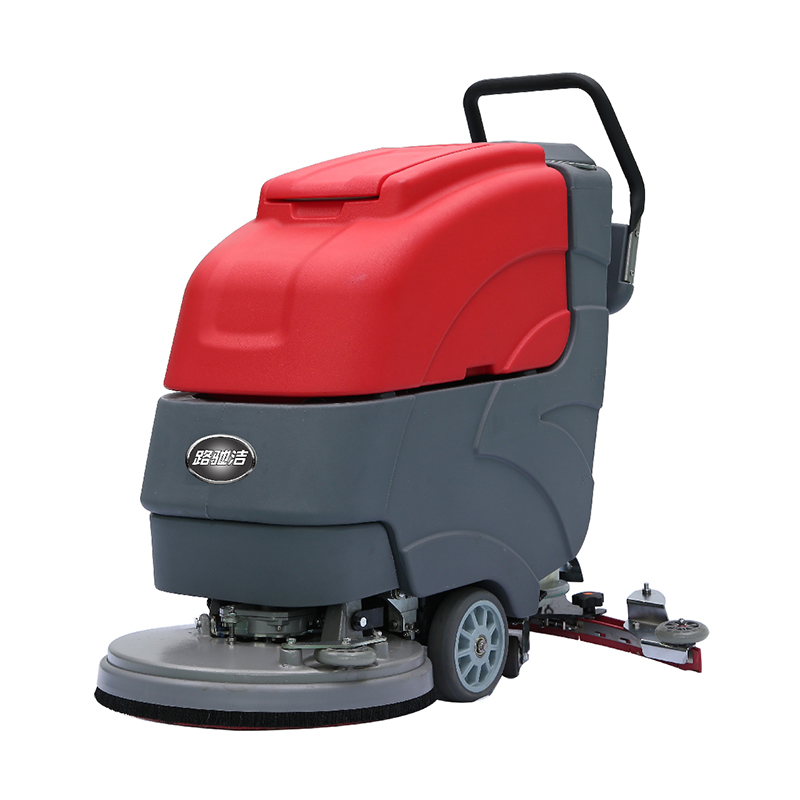
Floor washing machine mold
Key Components Produced with Floor Washing Machine Molds
Fresh Water Tanks
Fresh water tanks supply the solution used to wet and clean the floor. They must maintain a reliable seal and preserve their shape when filled, emptied, transported, or exposed to temperature variation. The tank’s geometry must also accommodate hose connections, fill openings, caps, level sensors, drain points, and mounting features.
A rotationally molded fresh water tank can be designed with a smooth internal cavity and rounded transitions that help reduce residue accumulation. External features can be shaped to fit the machine frame while maintaining access to service points. Proper mold engineering supports consistent wall formation around corners, recesses, and connection areas.
Tank design also influences machine balance. The location and shape of the water reservoir affect the center of gravity, handling characteristics, and stability of the equipment. A custom mold enables the tank to be adapted to the available space instead of relying on a standard container that may waste capacity or interfere with other components.
Waste Water Tanks
Waste water tanks collect the liquid recovered from the floor after scrubbing. They may contain water mixed with dirt, cleaning chemicals, detergents, and debris. As a result, the tank must be durable, easy to drain, and compatible with the expected operating environment.
The internal shape can be developed to support efficient drainage and cleaning. Sloped sections, rounded corners, inspection openings, and carefully positioned outlets help reduce stagnant areas. The exterior can include reinforced regions or mounting structures that support installation while keeping the overall component lightweight.
Because waste tanks are often opened and cleaned frequently, the mold design should consider the user’s access requirements. Large openings, removable covers, and integrated sealing surfaces can be incorporated into the component design. Consistent dimensions are especially important where the tank interfaces with gaskets, latches, filters, hoses, vacuum systems, or machine frames.
Joystick Covers and Control Housings
Joystick covers protect operator controls from impact, dust, splashing water, and general wear. They must provide a comfortable and intuitive interface while maintaining sufficient clearance for movement. The mold needs to reproduce smooth contours and accurately locate openings for joysticks, buttons, indicators, displays, and cable routing.
Rotational molding allows manufacturers to develop ergonomic control housings with curved surfaces and integrated protective forms. These components can be adapted to different operator positions and machine layouts. A well-designed housing also simplifies assembly by defining the location of control modules and supporting the use of fasteners, inserts, seals, or secondary components.
Instrument Panels
Instrument panels are both functional and visible. They house controls, status indicators, battery information, operating switches, and other interfaces. Their appearance affects the perceived quality of the entire machine, while their structural performance affects protection and service life.
A custom mold can provide a clean exterior finish, accurate openings, and a consistent interface with electronic components. The panel may be shaped with recessed control areas, raised protective borders, and smooth surfaces that are easy to wipe down. Mold construction must support repeatable dimensions so that displays and switches fit correctly from one production batch to the next.
Protective Enclosures and Covers
Floor cleaning machines contain motors, pumps, batteries, wiring, filters, drive systems, and other equipment that may require protection from water, dirt, and accidental contact. Rotomolded covers can be designed as robust enclosures that shield internal components while allowing access for maintenance.
These covers can include hinges, latches, ventilation zones, inspection ports, and reinforced mounting points. Since the product is formed as a hollow component, the design can achieve a favorable balance between weight and stiffness. The rounded geometry commonly used in rotational molding also helps reduce stress concentrations and improves resistance to impact.
Advantages Over Competing Manufacturing Approaches
Seamless Construction
One of the clearest advantages of rotational molding is the ability to manufacture hollow parts without conventional weld seams. Welded assemblies can be effective when carefully produced, but every joint introduces another area requiring inspection and potential maintenance. A seamless rotomolded tank reduces the number of structural and sealing interfaces.
This benefit is particularly important for water-containing components. Fewer joints can simplify leak testing and improve long-term reliability. A continuous shell also creates a clean appearance and can reduce the need for additional seam finishing, grinding, or protective treatment.
Lower Tooling Complexity for Customized Parts
Floor washing machine manufacturers often require customized parts rather than extremely high-volume standardized products. Rotational molding molds can be an economical choice for these applications because the tooling approach is well suited to large parts, design variations, and moderate production quantities.
When compared with processes that require complex multi-part tooling, specialized injection systems, or extensive assembly fixtures, rotational molding can provide a practical route to production. The exact cost advantage depends on geometry, quantity, material, finishing requirements, and cycle conditions, but the method is frequently attractive for large hollow components.
Large-Part Capability
Many components in commercial cleaning equipment are too large or too geometrically complex to manufacture efficiently using some conventional methods. Rotational molding can produce large-format tanks, housings, and covers with relatively uniform construction across the part.
The process is not limited to simple boxes or cylinders. Curved forms, deep cavities, and complex external profiles can be developed when the mold includes suitable draft, access, and rotation considerations. This allows designers to use available machine space more effectively.
Design Flexibility
Rotational molding supports frequent product changes and customer-specific adaptations. A manufacturer may request a different tank capacity, a revised panel layout, a new mounting arrangement, or a modified protective enclosure. The tooling and production plan can be developed around the actual design requirements instead of forcing the product into a fixed standard.
This flexibility helps OEMs differentiate their equipment. A customized component may improve ergonomics, increase water capacity, reduce machine width, simplify service, or create a distinctive appearance. It can also support replacement-part programs in which older or specialized machines require components unavailable from general suppliers.
Efficient Material Use
Rotational molding forms the part directly against the mold surface, with no runner system or gate network comparable to many other plastic processes. Material is placed inside the mold and distributed during heating and rotation. This can support efficient use of polymer for suitable product geometries.
Material efficiency is not only a cost consideration. A properly engineered part can achieve the required durability while avoiding excessive mass. Lower component weight may improve machine handling, transportation, and energy efficiency, especially for walk-behind equipment or battery-powered scrubbers.
Reduced Assembly Requirements
When features are integrated into a molded shell, the number of separate components may be reduced. Fewer panels, welds, brackets, and joining operations can simplify manufacturing. Reduced assembly can also lower the risk of misalignment and improve consistency between machines.
Integrated design must be carefully controlled. Not every bracket or feature should be molded into the part, and some components still require inserts or secondary operations. However, a coordinated mold and product design review can identify opportunities to consolidate parts without compromising maintenance access or structural performance.
Manufacturing Process for Custom Floor Washing Machine Molds
Product Requirement Review
The process begins with a review of the intended component and its operating environment. Important information includes overall dimensions, expected capacity, material requirements, wall thickness, loading conditions, mounting locations, openings, service access, surface finish, production quantity, and compatibility with the final machine assembly.
For tanks, the review should address liquid type, operating temperature, filling and draining methods, sensor locations, pressure conditions, and cleaning procedures. For housings and covers, the review should include impact zones, access frequency, control interfaces, fastening methods, and protection requirements.
A detailed requirement review reduces the risk of designing a mold that produces a visually acceptable part but performs poorly during assembly or operation. It also helps establish realistic expectations for tolerances, secondary operations, inspection, and production cycle time.
Design and Engineering
After requirements are defined, the product geometry is developed with rotational molding principles in mind. Designers consider draft angles, wall transitions, corner radii, parting lines, mold access, venting, demolding, and the movement of polymer powder during the cycle.
Sharp internal corners can create uneven material distribution or stress concentrations. Smooth transitions generally support more consistent coating and improve the durability of the finished product. The location of the parting line must also be selected carefully because it affects trimming, appearance, sealing, and access to secondary features.
Mounting bosses and other functional details should be designed with adequate support. If the feature is too tall, too narrow, or poorly connected to the surrounding wall, it may not form reliably or may become vulnerable to loading. Engineering review helps determine whether a feature should be molded directly, supported by an insert, or added during a secondary operation.
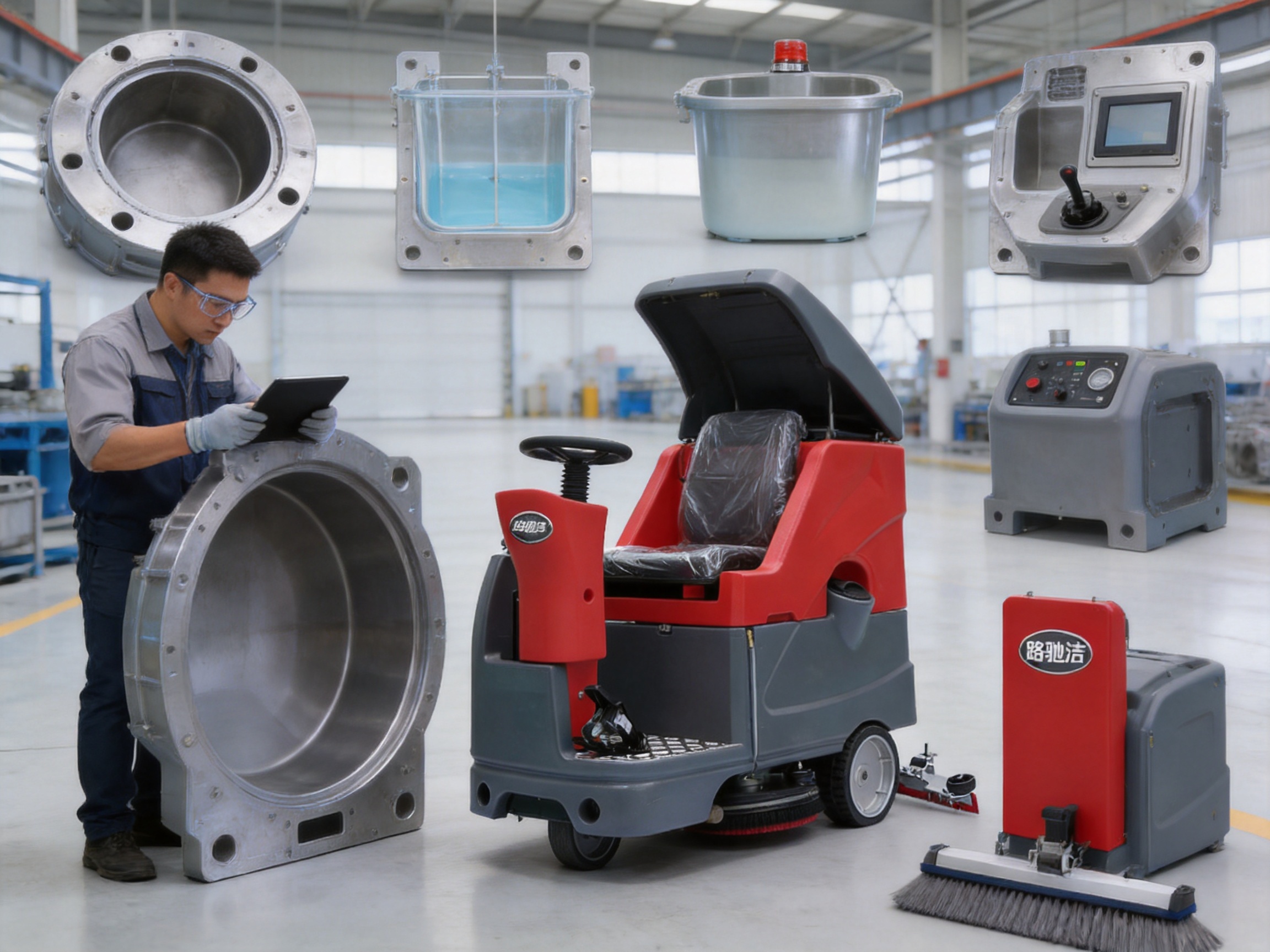
Mold Construction
The mold is manufactured according to the approved design and the requirements of the rotational molding machine. Mold construction must provide dimensional accuracy, suitable surface quality, sufficient strength, and reliable performance through repeated heating and cooling cycles.
Large molds require careful attention to structural stability. Distortion during handling or thermal cycling can affect the finished part and create assembly problems. The mold should maintain the intended geometry while allowing practical access for loading polymer, installing inserts, inspecting surfaces, and removing the product.
Surface finish is also important. The interior mold surface becomes the exterior surface of the plastic part. A suitable finish supports the desired visual appearance and can influence cleaning, release, and the perception of product quality. Areas that require text, logos, indicators, or other surface details should be reviewed early in the design process.
Material Loading and Rotational Heating
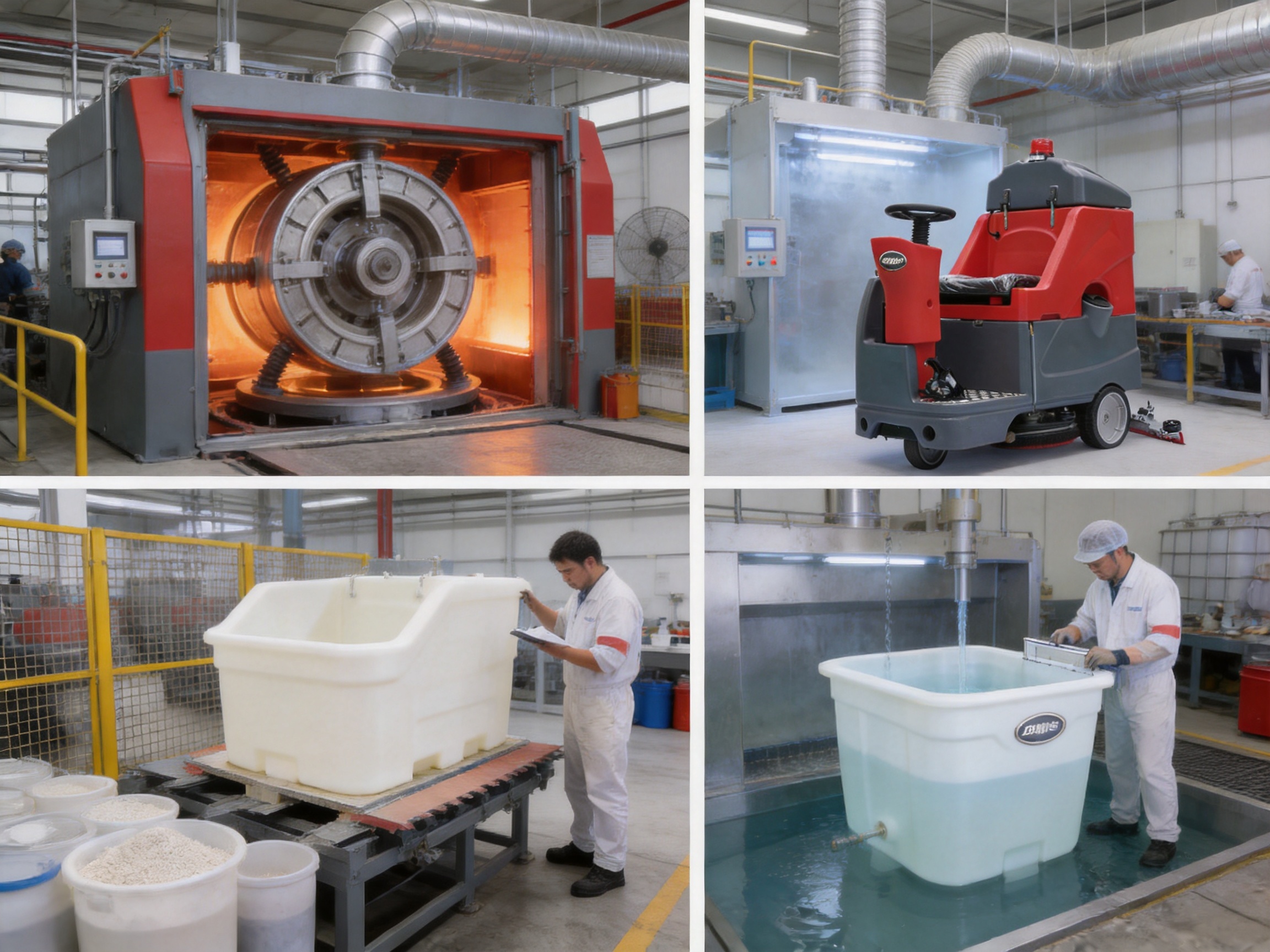
During production, a measured quantity of polymer powder is placed into the mold. The mold is then closed and moved into the heating chamber. As the mold rotates around multiple axes, the polymer softens and coats the interior surface.
Rotation helps distribute the material across the mold surface, but it does not replace good design. The mold geometry, powder quantity, heating profile, rotation speed, and cycle duration all influence the final part. Production parameters must be developed and controlled to achieve the required wall coverage and surface quality.
For tanks and housings, uniformity around corners, recesses, vertical walls, and transition zones is especially important. Thin areas may reduce durability, while excessive material can increase weight and cost. A controlled process helps establish repeatable results from batch to batch.
Cooling and Demolding
After heating, the mold is cooled while continuing to rotate. Controlled cooling helps the polymer solidify against the mold surface and reduces the likelihood of deformation. Cooling conditions can affect shrinkage, dimensions, surface finish, and the ease of demolding.
Once the part has reached a suitable temperature, the mold is opened and the product is removed. Proper draft angles, rounded transitions, and mold access make this step more reliable. Difficult demolding can damage edges, openings, or functional features and may shorten the service life of the mold.
Trimming and Secondary Operations
Rotationally molded parts commonly require trimming along the parting line or around openings. Additional operations may include drilling, routing, cutting, installation of inserts, fitting of gaskets, addition of threaded components, and preparation of mounting points.
These operations should be considered during the original mold design. A well-planned parting line can reduce visible flash and simplify trimming. Clearly defined drilling references and assembly features can improve production efficiency and reduce variation.
Inspection and Quality Control
Quality control should cover both the mold and the finished component. Mold inspection verifies key dimensions, surface condition, parting-line accuracy, venting, and the condition of functional features. Product inspection may include dimensional checks, visual examination, wall-thickness evaluation, leak testing, fit testing, and assembly verification.
For tanks, leak testing is a critical step. The test method should reflect the intended use and should be applied consistently. For instrument panels and joystick covers, inspection may focus on control openings, mounting dimensions, surface defects, and compatibility with associated components.
Quality records support traceability and continuous improvement. If a production issue appears, documented information about material batches, cycle conditions, mold maintenance, and inspection results can help identify the cause and prevent recurrence.
Technical Strengths of an Integrated Mold Manufacturer
Jiangsu Zhroto Mould Co., Ltd. provides more than standalone tooling. Its stated business scope includes rotational mold design, mold manufacturing, rotomolded product processing, and integrated technical solutions. This combination is valuable because the mold cannot be evaluated separately from the finished product and its production conditions.
A mold supplier that understands product processing can identify practical issues before mass production. For example, a proposed tank geometry may look suitable in a drawing but create uneven wall coverage during rotation. An integrated manufacturer can review the geometry, mold construction, polymer loading, cycle conditions, trimming plan, and assembly requirements together.
The company was founded in 2015 and moved to a modern facility in Jiangyan District, Taizhou City, in 2021. The facility covers approximately 18,000 square meters, including more than 12,000 square meters of standardized production workshops. This scale supports organized manufacturing, dedicated production areas, equipment deployment, and coordination between design, tooling, processing, and inspection activities.
Its reported annual capacity exceeds 800 mold sets and 3,600 tons of plastic products. Capacity at this level is relevant to customers that require both initial tooling and continuing production support. It indicates an operating structure designed to manage multiple projects, repeat orders, and different product categories rather than only occasional prototype work.
The company also holds ISO 9001:2015, ISO 14001:2015, and ISO 45001:2018 certifications. These standards relate respectively to quality management, environmental management, and occupational health and safety. Certification does not replace product-specific testing, but it provides a framework for documented procedures, controlled operations, environmental awareness, and workplace management.
| Capability Area | Relevance to Floor Washing Machine Parts | Customer Benefit |
|---|---|---|
| Rotational mold design | Supports tanks, covers, panels, and control housings with complex hollow geometry | Better fit, improved manufacturability, and customized product development |
| Mold manufacturing | Creates tooling for repeated production of large-format components | Consistent dimensions and a stable production foundation |
| Rotomolded product processing | Allows tooling and finished-part behavior to be evaluated together | Faster troubleshooting and better process coordination |
| Integrated technical solutions | Connects design, tooling, molding, trimming, and assembly requirements | Reduced communication gaps and more efficient project management |
| Quality management systems | Supports documented inspection and production procedures | Improved traceability and repeatability |
| Multiple industry experience | Brings knowledge from automotive, water treatment, agriculture, outdoor, and industrial products | Broader problem-solving experience for demanding applications |
Design Considerations for Better Mold Performance
Wall Thickness and Structural Balance
Wall thickness must be considered in relation to part size, material, impact exposure, load, and shape. Uniform thickness is a useful objective, but complex components may require carefully controlled variations. The designer should avoid abrupt changes that can produce inconsistent cooling or stress concentrations.
For tanks, structural areas around handles, mounting points, openings, and supports may require additional engineering. For covers, the balance between stiffness and weight is important. A component that is too thin may flex or transmit vibration, while an unnecessarily thick component may increase mass, cycle time, and material use.
Corner Radii and Transitions
Rounded corners support material movement and reduce stress concentration. They can also improve cleaning by limiting sharp internal areas where dirt or residue may collect. Smooth transitions are especially useful in water tanks and waste water tanks, where drainage and sanitation are important.
External radii also influence the appearance and impact performance of the finished product. A well-rounded enclosure is less likely to have vulnerable sharp edges and may better withstand contact with surrounding equipment.
Parting Lines and Flash Control
The parting line is the location where mold sections meet. Its position affects appearance, trimming effort, sealing surfaces, and the ability to remove the part. For visible instrument panels or control covers, the line should be placed where it can be finished cleanly and does not interfere with operator contact.
For tanks, the parting line should not compromise sealing areas or create unnecessary difficulty around openings. Mold alignment and maintenance are essential for controlling flash. Properly maintained tooling supports consistent edges and reduces post-processing.
Venting and Air Management
Air inside the mold and gases released during heating must be managed appropriately. Venting allows pressure to change as the mold heats and cools. The vent design should protect the cavity from contamination while supporting reliable production.
Inadequate venting may contribute to defects, deformation, or inconsistent surfaces. Venting should therefore be considered as part of the mold system rather than treated as an afterthought. The correct approach depends on product size, material, cycle profile, and mold construction.
Mounting and Assembly Interfaces
Floor washing machine components must fit together accurately. Tanks may connect to frames, pumps, hoses, sensors, covers, and drain systems. Instrument panels may interface with electronic modules, switches, displays, and wiring harnesses.
Interface dimensions should be identified early. Where possible, the mold design should provide stable reference points and repeatable features. Tolerance decisions must reflect the capabilities of rotational molding and the requirements of the assembly. Excessively tight tolerances may increase cost without providing practical value, while insufficient control can create leaks, vibration, or poor fit.
Material and Service Environment Considerations
Material selection depends on the part’s operating conditions. Floor cleaning equipment may encounter water, detergents, disinfectants, oils, dirt, ultraviolet exposure, temperature changes, and mechanical impacts. The polymer must be selected with these factors in mind, along with processing behavior, color, surface requirements, and regulatory expectations.
Polyethylene materials are commonly associated with rotational molding because of their processability and impact resistance, although the final material should be selected according to the customer’s engineering requirements. Different grades may offer different combinations of stiffness, chemical resistance, low-temperature performance, and weatherability.
Color can be incorporated into the molded material, reducing the need for extensive painting. This can improve scratch resistance for some applications and simplify cleaning. However, color consistency, surface appearance, and any required branding or identification features should be discussed during product development.
For tanks, chemical compatibility and leak resistance are primary concerns. For control housings, dimensional stability, impact resistance, and protection from moisture may be more important. A mold manufacturer with experience in several industries can help connect the intended service environment with appropriate design and processing decisions.
Applications Beyond Standard Floor Scrubbers
Although the product focus is floor washing machine tooling, the same rotational molding principles apply to many related cleaning and maintenance products. Compact walk-behind scrubbers, larger ride-on scrubbers, commercial sweepers, pressure-washing systems, sanitation equipment, and specialized industrial cleaning machines may all require custom hollow plastic parts.
Replacement-part production is another important application. Equipment operators often need tanks, covers, or panels for models that have been in service for many years. Original tooling may no longer be available, or the original component may be difficult to source. A new custom mold can support continued equipment maintenance and reduce unnecessary machine replacement.
Rotomolded components are also used in water treatment equipment, agricultural machinery, outdoor facilities, and industrial equipment. Experience in these sectors can support design decisions for floor cleaning equipment because many of the same challenges occur: fluid containment, chemical exposure, outdoor durability, impact resistance, and the need for large lightweight structures.
Benefits for OEM and Replacement-Part Customers
OEM customers need dependable coordination throughout the development process. A successful project begins with a clear understanding of the machine architecture and continues through tooling, trial production, inspection, and repeat manufacturing. An integrated mold and product supplier can reduce the number of separate technical interfaces that the OEM must manage.
For new equipment, the supplier can participate during the design stage. Early involvement helps identify moldability issues before the machine structure is finalized. It can also reveal opportunities to combine functions, reduce the number of fasteners, improve service access, or optimize tank capacity.
For replacement parts, the challenge may involve reverse engineering, measurement of an existing component, adaptation to available installation points, or improvement of a known weakness. The new component must not only resemble the original part; it must fit the surrounding equipment and perform reliably under actual operating conditions.
Consistent repeat production is important in both cases. OEM customers need parts that remain stable across scheduled manufacturing runs, while replacement-part suppliers need confidence that future batches will match the approved design. Controlled tooling, documented processes, and inspection procedures support this consistency.
How to Evaluate a Floor Washing Machine Mold Supplier
Buyers should evaluate more than the quoted mold price. The most suitable supplier should demonstrate an understanding of rotational molding, large hollow components, product integration, quality control, and long-term support.
Engineering Experience
Ask whether the supplier has experience with tanks, enclosures, control housings, and other parts that resemble the intended application. Experience with unrelated small molded parts may not be enough for a large floor cleaning component with sealing and assembly requirements.
Production Capability
Review the supplier’s facility, equipment, staffing, capacity, and ability to manage both tooling and product processing. Customers should understand whether the supplier can support prototype trials, production validation, repeat orders, and replacement-part programs.
Quality Documentation
Clarify how the supplier controls drawings, material specifications, process parameters, inspection records, mold maintenance, and nonconforming products. A documented system improves communication and provides evidence that the project is being managed systematically.
Communication and Technical Support
Successful mold projects require timely communication about drawings, revisions, samples, testing, and approval. The supplier should be able to explain technical recommendations clearly and identify risks before they become expensive production problems.
After-Sales Support
Molds require maintenance, and products may require future modifications. A supplier that can provide technical support, repair recommendations, replacement tooling, and process assistance offers greater long-term value than a supplier focused only on initial delivery.
Recommended Project Workflow
A practical project can be organized into several stages. First, the customer provides product drawings, three-dimensional data, physical samples, or functional requirements. The supplier then reviews the geometry and prepares recommendations related to mold construction, draft, wall thickness, parting lines, openings, and secondary operations.
Next, the product design and mold design are reviewed together. This stage should confirm all major interfaces, including mounting points, drainage features, seals, sensor openings, hose connections, control modules, and access covers. Any changes should be incorporated before mold manufacturing begins.
After mold construction, a trial production stage is used to evaluate the tool and the molded component. The sample should be checked for appearance, dimensions, wall distribution, fit, leakage, demolding behavior, and assembly compatibility. Customers should provide structured feedback rather than relying only on general visual approval.
Once the part is approved, production parameters and inspection requirements should be documented. This supports repeat orders and reduces variation between production periods. Mold storage, cleaning, repair, and periodic inspection should also be addressed as part of the long-term plan.
Operational and Environmental Considerations
Rotational molding can support material-efficient production of durable products with long service lives. A strong tank or enclosure that remains in service for many years may reduce the frequency of replacement and the associated material consumption. The actual environmental performance depends on material selection, energy use, product lifespan, recycling arrangements, and end-of-life handling.
Environmental management is increasingly important for manufacturers and equipment buyers. Jiangsu Zhroto Mould Co., Ltd. reports ISO 14001:2015 certification, indicating that environmental management is addressed through a structured system. Customers can discuss material waste, process efficiency, packaging, scrap handling, and potential use of recyclable materials according to the requirements of the project.
Durability also has an environmental dimension. A floor washing machine that remains reliable in demanding commercial use can provide more cleaning service over its useful life. Components that resist impact, leakage, and chemical degradation contribute to equipment longevity and reduce the need for premature replacement.
Maintenance of Molds and Finished Components
Mold maintenance helps preserve product quality. After production, the mold should be cleaned and inspected for polymer residue, damage, corrosion, misalignment, worn hardware, and blocked vents. Proper storage protects the tool from moisture, impact, and unnecessary deformation.
Finished tanks and housings should also be designed for practical maintenance. Smooth internal surfaces, accessible drains, removable covers, and clear inspection points can reduce service time. Components that are easy to clean may help operators maintain hygiene and prevent buildup of dirt or chemical residue.
When a part is repaired or modified, the effect on the mold and the complete machine should be assessed. Adding a new opening, changing a mounting point, or increasing a wall area may influence balance, cycle conditions, tooling stress, or assembly. Engineering review is preferable to unplanned modification in the field.
Why Customization Matters in Commercial Cleaning Equipment
Floor washing machines are used in environments with different aisle widths, floor conditions, cleaning schedules, storage limitations, and operator expectations. A component designed for a warehouse may not be ideal for a hospital, airport, shopping center, factory, or parking facility.
Customization allows the machine manufacturer to optimize water capacity, overall width, control placement, service access, and protective features. It can also support different battery arrangements, suction systems, brush assemblies, and recovery tank configurations.
The mold is the foundation of this customization. If the tooling process is too rigid, the equipment manufacturer may have to compromise on performance or appearance. If the supplier can develop practical custom molds efficiently, the OEM can introduce differentiated products while maintaining a consistent production strategy.
Frequently Asked Questions
What is a floor washing machine mold?
A floor washing machine mold is a tool used to produce plastic components for floor scrubbers and related cleaning equipment. It can form fresh water tanks, waste water tanks, joystick covers, instrument panels, protective housings, and other large hollow parts.
Why is rotational molding suitable for scrubber tanks?
Rotational molding can produce tanks as continuous hollow structures with no conventional weld seams. It supports large geometries, rounded corners, customized capacities, and durable walls. These characteristics are useful for tanks that must resist leakage, impact, vibration, and chemical exposure.
Can the mold be customized for different machine models?
Yes. The mold can be developed around the required dimensions, capacity, mounting points, control layout, openings, and service features of a specific machine. Separate molds or modified designs can support different equipment models and replacement-part requirements.
What parts besides tanks can be rotomolded?
Common examples include joystick covers, instrument panels, battery covers, motor enclosures, protective guards, access panels, and other structural or protective housings. The suitable design depends on the part’s size, geometry, loading, and operating environment.
How does rotational molding compare with welded plastic assemblies?
A rotomolded part can reduce the number of seams and joints, which may simplify leak control and improve appearance. It can also reduce assembly operations and support large integrated shapes. Welded assemblies may still be appropriate for certain designs, so the best method should be selected according to product requirements and production conditions.
Can a rotational mold support medium-volume production?
Yes. Rotational molding is often suitable for customized large parts and low-to-medium production volumes. It can be attractive for OEM programs, replacement parts, specialized equipment, and product families that require several related geometries.
What information should be provided when requesting a quotation?
Useful information includes product drawings or three-dimensional files, overall dimensions, expected annual quantity, material requirements, tank capacity, mounting details, openings, surface finish, color, tolerances, testing requirements, and the intended operating environment.
How are molded tanks checked for quality?
Tank inspection may include visual examination, dimensional measurement, wall-thickness evaluation, fit checks, and leak testing. The exact inspection plan should be agreed upon according to the tank’s function and the requirements of the cleaning machine.
Does the mold supplier also produce finished plastic parts?
Jiangsu Zhroto Mould Co., Ltd. provides mold manufacturing and rotomolded product processing as part of its integrated service offering. This allows customers to discuss tooling and finished-product requirements with one technical partner.
How long can a rotomolding mold remain usable?
Service life depends on mold construction, material, cycle frequency, heating and cooling conditions, maintenance, storage, and product geometry. Regular inspection and appropriate maintenance help preserve dimensional accuracy and production reliability.
What makes a good floor cleaning machine enclosure?
A good enclosure combines adequate stiffness, impact resistance, dimensional stability, moisture protection, easy access, and compatibility with the machine frame. The mold should reproduce the required shape consistently while supporting efficient trimming and assembly.
Can custom molds be used for replacement parts?
Yes. Custom molds can support replacement tanks, covers, panels, and housings for existing equipment. The development process may use original drawings, physical samples, measurements, or reverse-engineered data to achieve the required fit and function.
Conclusion
Floor washing machine molds are critical to the performance and commercial value of modern cleaning equipment. They determine the shape, fit, durability, and production consistency of tanks, covers, panels, control housings, and protective enclosures. For large hollow components, rotational molding offers important advantages, including seamless construction, design flexibility, efficient material use, reduced assembly, and suitability for customized production.
The technology is especially valuable when a floor scrubber manufacturer requires durable water tanks or protective parts in moderate quantities. With the right mold design, the finished component can combine low weight with structural integrity, smooth surfaces, reliable sealing, and compatibility with the complete machine.
Jiangsu Zhroto Mould Co., Ltd. supports this type of project through rotational mold design, mold manufacturing, rotomolded product processing, and integrated technical services. Its modern production facility, reported annual capacity, quality and environmental certifications, and experience across multiple industrial sectors provide a foundation for OEM and replacement-part programs.
For customers selecting a supplier, the most important consideration is not simply the initial tooling price. Engineering capability, process control, product testing, communication, maintenance support, and the ability to manage both molds and finished parts all influence the long-term result. A supplier that understands the complete rotational molding process can help transform a floor cleaning equipment concept into a durable, repeatable, and commercially practical product.
References
1. ISO 9001:2015, Quality Management Systems—Requirements.
2. ISO 14001:2015, Environmental Management Systems—Requirements with Guidance for Use.
3. ISO 45001:2018, Occupational Health and Safety Management Systems—Requirements with Guidance for Use.
4. Association of Rotational Molders, Principles of Rotational Molding and Product Design.
5. Modern Plastics Processing, Rotational Molding Materials, Tooling, and Process Control.
6. Industrial Tank Design Practice, Guidelines for Hollow Plastic Containers and Fluid Storage Components.
7. Polymer Engineering Reference, Impact Resistance, Chemical Compatibility, and Dimensional Stability of Molded Plastics.
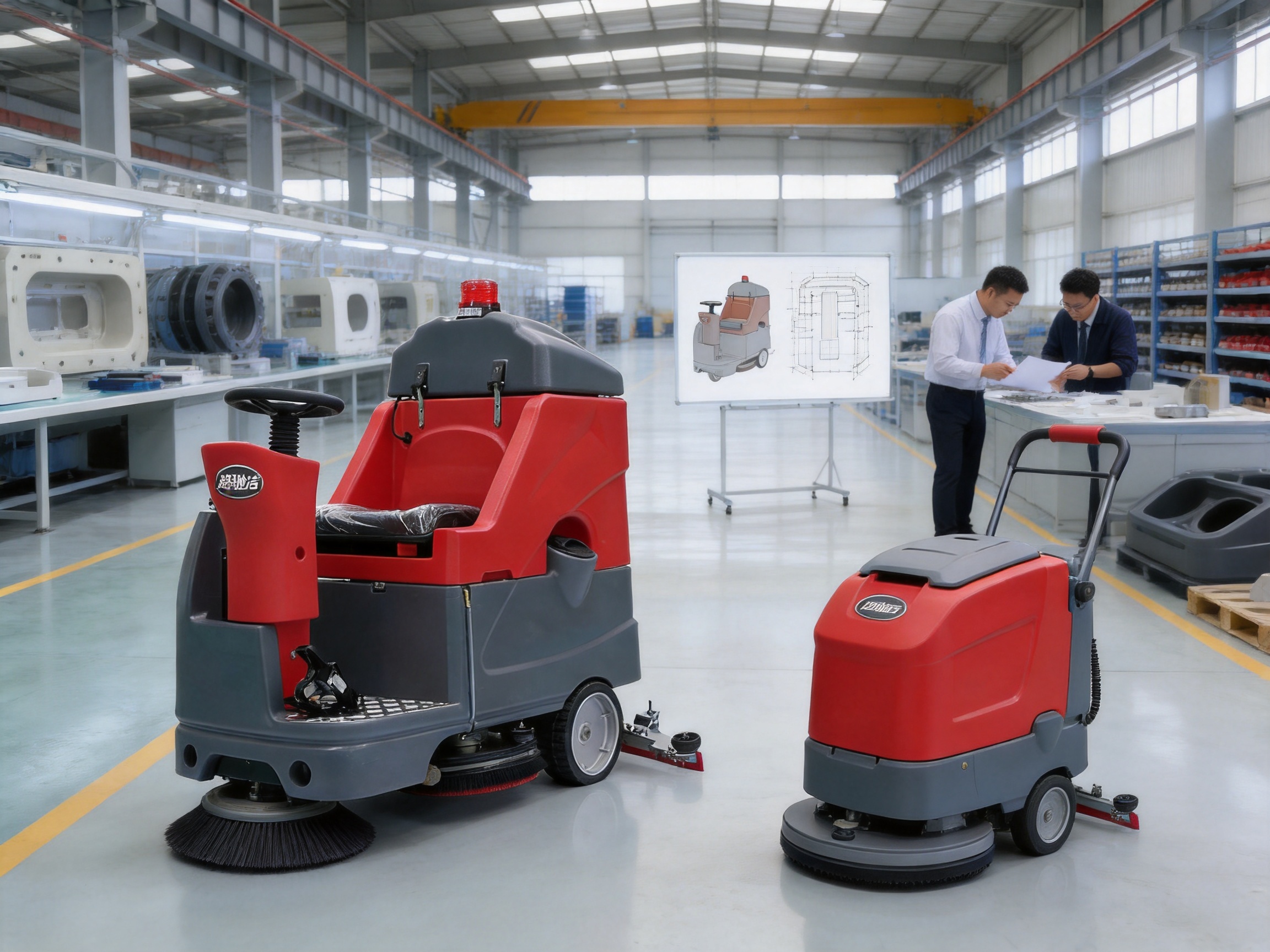
Product: Floor washing machine mold


We provide customers with one-stop services ranging from product design, mold manufacturing to finished product production.
-
 +86-18006248936
-
 ricky.t@zhroto.com
-
 No.9 Jiangyuan Road, Luotang Street, Jiangyan District, Taizhou City,Jiangsu Province, China
Copyright © Jiangsu Zhroto Mould Co., Ltd. Rights Reserved.Custom Rotational Plastic Molding Factory
