 en
 中文简体
 русский
 Español
 Deutsch
 Polskie
 REQUEST A QUOTE

 Home / Author / Mei-Rong Alvarado — Product After-Sales Service Manager / Advanced Sports Equipment Molds for Consistent, Durable Rotational Molding
Advanced Sports Equipment Molds for Consistent, Durable Rotational Molding
Content
- 1 Why the Mold Is Critical to Sports Equipment Quality
- 2 Product Overview: Customized Sports Equipment Mold
- 3 Sand-Cast Aluminum: A Practical Material for Dumbbell Plate Molds
- 4 Forged Aluminum Alloy for Premium and High-Demand Applications
- 5 Advanced Mold Manufacturing Process
- 5.1 1. Project Consultation and Product Assessment
- 5.2 2. Three-Dimensional Modeling and Mold Design
- 5.3 3. Sand Casting or Forged Material Preparation
- 5.4 4. Precision CNC Machining
- 5.5 5. Surface Treatment and Finishing
- 5.6 6. Mold Assembly and Functional Inspection
- 5.7 7. Trial Molding and Sample Validation
- 5.8 8. Final Quality Inspection and Delivery
- 6 Rotational Molding Performance for Fitness Products
- 7 Advantages Over Less Specialized Competitors
- 8 Applications Beyond Dumbbell Plates
- 9 Durable Tooling for Outdoor Sports and Playground Products
- 10 Quality Management and Manufacturing Strengths
- 11 Environmental and Operational Benefits of Aluminum Tooling
- 12 How Customers Can Prepare for a Mold Project
- 13 Maintenance and Service-Life Considerations
- 14 Frequently Asked Questions
- 14.1 What material is best for a dumbbell plate mold?
- 14.2 Why is aluminum commonly used for rotational molding tools?
- 14.3 Can the mold be customized for different dumbbell plate sizes?
- 14.4 Is forged aluminum always better than sand-cast aluminum?
- 14.5 Can the mold be used for large outdoor sports equipment?
- 14.6 Does the company provide product-processing services?
- 14.7 How is mold quality verified before delivery?
- 14.8 Can the molds work with electric-heated rotational molding machines?
- 14.9 What information should be supplied for a quotation?
- 14.10 How can a customer improve the service life of the mold?
- 15 Conclusion
- 16 References
- 17 Product: Sports equipment mold
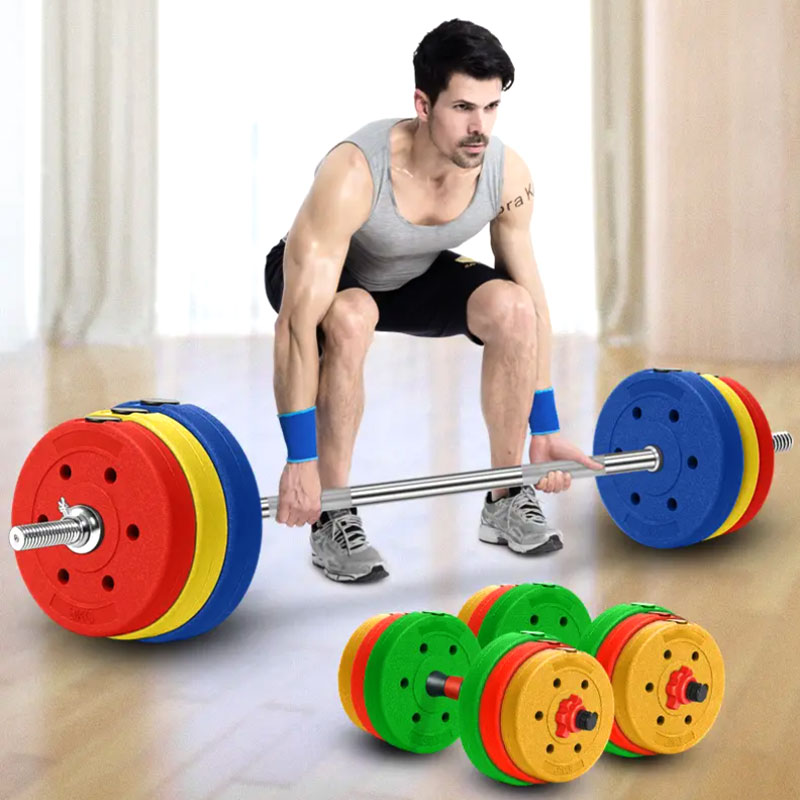
Sports equipment manufacturers operate in a highly competitive market where product quality, production efficiency, appearance, and cost control all influence commercial success. Whether the finished product is a dumbbell plate, fitness accessory, outdoor training component, playground structure, or large recreational item, the mold is one of the most important factors affecting the final result. A carefully engineered sports equipment mold helps manufacturers maintain accurate dimensions, stable wall distribution, smooth surfaces, reliable demolding, and repeatable performance throughout production.
Jiangsu Zhroto Mould Co., Ltd. specializes in the design and manufacture of rotational molding molds and provides integrated tooling and product-processing solutions for sports, outdoor, industrial, agricultural, automotive, and recreational applications. The company combines product evaluation, three-dimensional modeling, mold structure development, precision machining, trial molding, sample validation, inspection, delivery, and technical support in one coordinated workflow.
The sports equipment mold described in this article is designed primarily for dumbbell plates and related fitness products. It uses mature sand-casting aluminum technology to form an integrated mold structure and can also be manufactured with forged aluminum alloy when a higher level of strength, dimensional stability, or long-term durability is required. This material flexibility allows the mold to be matched to product geometry, production volume, heating conditions, surface requirements, and customer budget.
Compared with heavier steel tooling or less carefully engineered low-cost molds, a properly manufactured aluminum sports equipment mold offers important advantages. It is relatively lightweight, transfers heat efficiently, supports complex and customized shapes, and can be finished to meet demanding appearance requirements. These characteristics make it a practical choice for rotational molding manufacturers seeking stable quality and efficient mold handling.
Sports equipment mold
Why the Mold Is Critical to Sports Equipment Quality
The quality of a finished sports product begins long before plastic enters a molding machine. It begins with product structure, material selection, mold design, machining precision, surface treatment, and process validation. If the mold cavity is inaccurate or the mold cannot withstand repeated heating and cooling, even a high-quality plastic material may produce inconsistent results.
For dumbbell plates, dimensional consistency is especially important. The diameter, thickness, central opening, edge profile, and overall shape must remain within the required tolerances so that the finished products can be assembled, stacked, packaged, and used safely. A small variation in the mold can produce visible differences between production batches. In commercial fitness equipment, such variation may affect both customer confidence and the perceived value of the product.
Surface quality is another major consideration. A smooth mold surface can help create a cleaner appearance on the finished plate and can reduce the risk of unwanted marks, rough areas, or difficult release. When the product is intended for retail sale, gyms, sports clubs, schools, or home fitness use, the surface finish contributes directly to the product’s visual appeal and perceived quality.
The mold must also support reliable heat transfer. Rotational molding depends on controlled heating and cooling as the mold rotates. Plastic powder or resin must melt and distribute evenly across the cavity surface. A mold with suitable thermal characteristics can help improve wall consistency, reduce incomplete fusion, and support more predictable production cycles.
For large outdoor sports products, the design challenge becomes even more demanding. Large cavities, deep sections, curved surfaces, inserts, parting lines, and venting requirements must all be considered. The mold may also need reinforcement to maintain stability during handling and repeated operation. A professional mold manufacturer therefore evaluates the entire production system instead of treating material choice as an isolated decision.
Product Overview: Customized Sports Equipment Mold
The sports equipment mold is an aluminum rotational molding tool developed for fitness products and related sporting applications. Its primary use is the production of dumbbell plates, although the same engineering principles can be adapted to other hollow or semi-hollow sports equipment components.
The standard solution uses sand-cast aluminum. This process allows the mold to be formed as an integrated structure and adapted to different product sizes and shapes. Customers can provide product drawings, three-dimensional files, samples, dimensions, or general design concepts. The engineering team can then review the product structure and determine the most suitable cavity configuration, parting arrangement, machining allowance, surface treatment, and operating method.
For applications requiring higher material performance, forged aluminum alloy is available. Forged aluminum can provide a more robust structure and may be considered for high-volume production, demanding thermal cycling, frequent mold handling, strict dimensional requirements, or premium product programs. The decision between sand-cast aluminum and forged aluminum should be based on the full project specification rather than on material price alone.
The mold can be customized for different dumbbell plate diameters, thicknesses, weights, profiles, edge shapes, center-hole designs, logos, recessed areas, raised features, and surface finishes. This flexibility is valuable to manufacturers that offer multiple product models or need to develop equipment for specific customer requirements.
In addition to dimensional customization, the mold can be evaluated for production practicality. This includes opening and closing, product removal, machine compatibility, handling, heating, cooling, venting, inspection, repair, and maintenance. Integrating these considerations into the design stage helps reduce avoidable problems after the mold enters production.
Core Product Advantages
- Sand-cast aluminum construction for practical customization and efficient thermal transfer.
- Forged aluminum alloy option for higher strength and demanding production conditions.
- Integrated mold formation for improved structural consistency.
- Relatively low weight compared with many steel tooling alternatives.
- Compatibility with customized dumbbell plate dimensions and product geometries.
- Support for smooth, attractive, and functional surface finishes.
- Suitability for rotational molding processes using gas or electric heating.
- Professional machining, testing, inspection, and sample-validation support.
- Adaptability to both prototype development and repeated commercial production.
Sand-Cast Aluminum: A Practical Material for Dumbbell Plate Molds
Sand-cast aluminum remains a widely used material for rotational molding tools because it provides a practical balance of cost, weight, thermal performance, and design flexibility. For many dumbbell plate applications, these characteristics are sufficient to support stable and economical production.
The casting process allows the basic mold structure to be produced as an integrated form. This is useful when the product requires a specific contour, a large cavity, or a customized relationship between different mold sections. After casting, the mold can undergo machining, surface treatment, finishing, and inspection to achieve the required dimensional and appearance standards.
One of the most important advantages of aluminum is its manageable weight. Dumbbell plate molds may need to be removed, installed, inspected, or changed regularly, particularly when a manufacturer produces several product sizes. A lighter mold can reduce handling difficulty, improve workplace convenience, and help lower the physical burden on production personnel and equipment.
Aluminum also provides useful thermal conductivity. During rotational molding, heat must pass through the mold wall and reach the plastic material inside the cavity. Efficient heat transfer can help support a stable heating cycle and encourage more uniform material distribution. The actual result depends on mold geometry, wall thickness, machine settings, plastic type, rotation speed, and cooling conditions, but the mold material remains an important part of the overall thermal system.
Another advantage is design adaptability. A sand-cast aluminum mold can be developed for different dumbbell plate sizes and shapes without forcing the manufacturer to use a standard, non-customized design. This makes it suitable for private-label products, brand-specific fitness equipment, commercial gym products, home exercise accessories, and special-purpose training equipment.
How Sand-Cast Aluminum Compares with Heavier Tooling
Steel tooling can offer high strength, but it is often heavier and may require more effort during installation, removal, and maintenance. For applications that do not require the extreme strength of steel, aluminum may provide a more convenient and cost-effective option. Its lower weight can also support faster mold changes and easier inspection.
Some lower-cost tools may be produced with limited attention to cavity accuracy, surface condition, or long-term thermal behavior. These molds may appear economical at the purchasing stage but can create additional costs through uneven products, rework, surface defects, frequent repairs, or unstable production. A properly engineered aluminum mold focuses on total production value rather than only the initial purchase price.
The correct comparison is therefore not simply aluminum against steel or cast aluminum against forged aluminum. Manufacturers should consider the product design, expected number of cycles, heating method, mold size, handling requirements, required tolerances, surface expectations, and maintenance plan. Jiangsu Zhroto Mould Co., Ltd. evaluates these factors before recommending a tooling configuration.
Forged Aluminum Alloy for Premium and High-Demand Applications
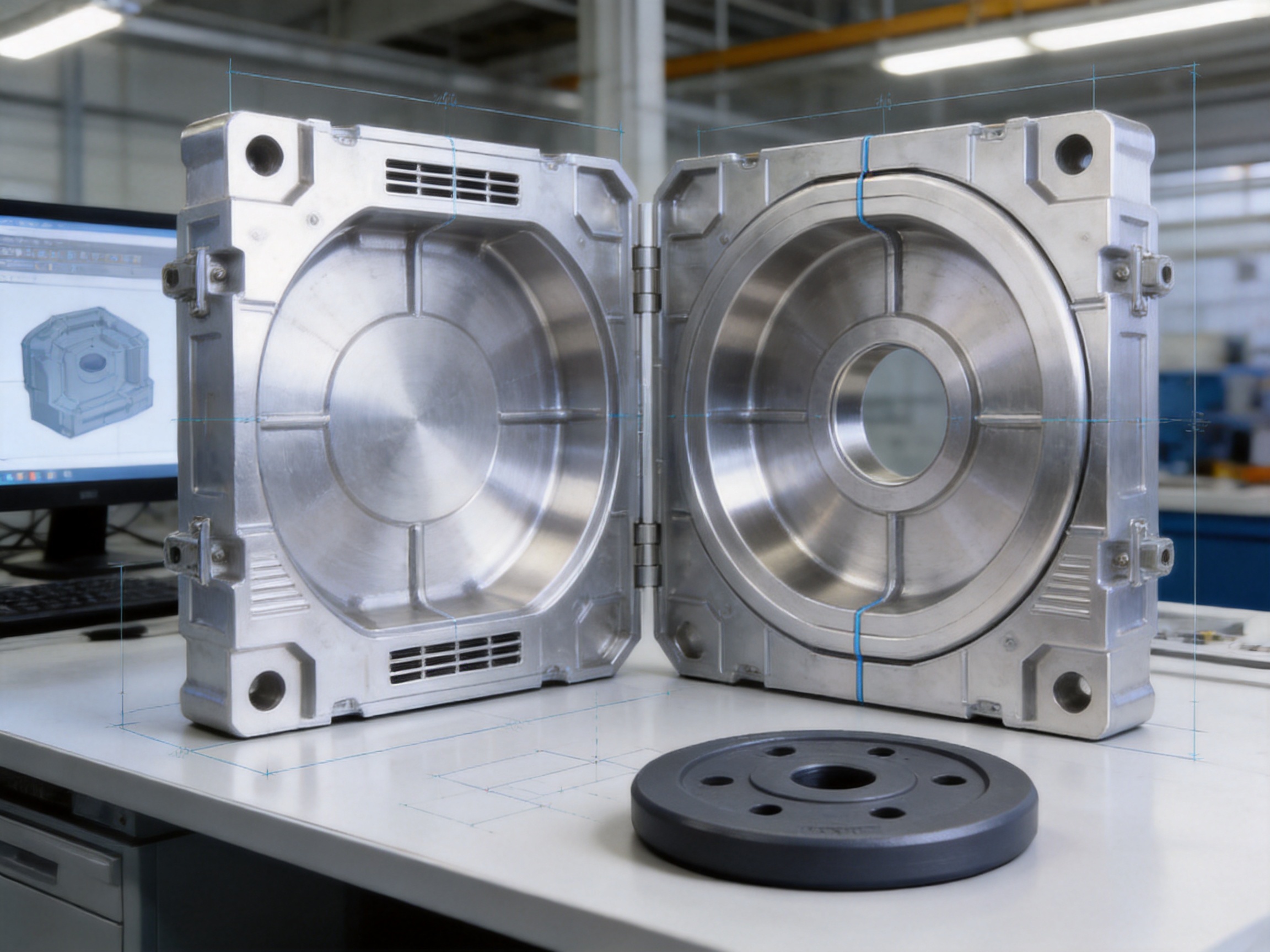
Forged aluminum alloy is available for customers who require a higher-performance material option. Forging can produce a denser and more robust material structure, which may be beneficial when the mold must withstand repeated thermal cycling, frequent handling, or demanding production conditions.
For premium fitness products, dimensional stability can be a major commercial requirement. A mold that maintains its geometry throughout repeated production helps manufacturers reduce variation between batches. It can also support a more consistent surface appearance, which is important when products are sold under a quality-focused brand or supplied to professional gyms and institutional buyers.
Forged aluminum may be appropriate for high-volume production where the tooling will be used intensively over an extended period. It can also be considered when the product contains fine details, complex profiles, close dimensional requirements, or structural features that place greater demands on the mold.
However, forged aluminum is not automatically the best choice for every sports equipment mold. The material must be matched to the production objective. For a short-run product, a simple geometry, or a cost-sensitive project, sand-cast aluminum may provide all the necessary performance. For a long-term program with strict requirements, forged aluminum may justify the additional investment.
Factors Used to Select Between Cast and Forged Aluminum
- Product dimensions, weight, shape, and structural complexity.
- Expected production volume and the number of planned mold cycles.
- Heating and cooling conditions used by the rotational molding machine.
- Required dimensional accuracy and acceptable production variation.
- Surface finish, logo detail, texture, and appearance requirements.
- Frequency of mold installation, removal, transportation, and maintenance.
- Required service life and the customer’s long-term production plan.
- Available tooling budget and the expected return on investment.
The engineering team can review these factors together with the customer and recommend the most appropriate material and structure. This approach helps prevent over-specification, under-specification, and unnecessary tooling expense.
Advanced Mold Manufacturing Process
A high-quality sports equipment mold depends not only on the selected aluminum alloy but also on the manufacturing process used to transform the design into a reliable production tool. Jiangsu Zhroto Mould Co., Ltd. follows an integrated process that connects product development, mold engineering, manufacturing, testing, and customer support.
1. Project Consultation and Product Assessment
The process begins with a review of the product concept and production objective. Customers may provide a drawing, three-dimensional model, physical sample, specification sheet, or preliminary idea. The engineering team examines the product’s dimensions, wall requirements, cavities, openings, structural transitions, inserts, parting lines, and likely production conditions.
This stage is important because a product design created for another manufacturing process may require adjustment before rotational molding. Corners, draft conditions, thickness transitions, vents, handles, reinforcing features, and demolding areas must be evaluated. Early review can reduce later changes and improve the overall efficiency of tooling development.
2. Three-Dimensional Modeling and Mold Design
After the product is reviewed, the mold structure is developed using three-dimensional design methods. The model represents the cavity, mold halves, parting lines, mounting features, vents, inserts, and other functional components. It also provides a basis for estimating material requirements, machining operations, and production handling.
For dumbbell plates, the design may include precise control of the outer diameter, central opening, thickness, edge radius, raised lettering, recessed markings, and product-specific details. For larger outdoor sports products, the model may need to address reinforcement, multiple sections, deep cavities, and complex curved surfaces.
Design confirmation is completed before major manufacturing work begins. This helps ensure that the customer and manufacturer share the same understanding of the final product and mold structure.
3. Sand Casting or Forged Material Preparation
When sand-cast aluminum is selected, the casting process creates the basic mold body. The design must account for material flow, casting allowances, machining allowances, and the intended final geometry. After casting, the mold body is prepared for machining and inspection.
When forged aluminum alloy is selected, the material is prepared according to the required tooling structure and performance expectations. The forged blank provides a strong foundation for subsequent machining and finishing. The choice of process depends on the project’s durability, precision, geometry, and volume requirements.
4. Precision CNC Machining
CNC machining converts the prepared aluminum body into an accurate mold cavity. This stage controls key product dimensions, surface transitions, parting areas, mounting points, and other functional features. Precision machining is especially important for dumbbell plates because variations in diameter, thickness, center opening, or edge geometry can affect the finished product.
Machining also supports the production of complex curved surfaces for outdoor fitness equipment, playground components, recreational products, and other large hollow items. The use of modern CNC equipment helps maintain repeatability and supports the manufacture of tooling based on approved three-dimensional models.
5. Surface Treatment and Finishing
Surface treatment influences product appearance, release behavior, and maintenance. The required treatment depends on the customer’s product design and the finish expected on the finished sports equipment. Smooth surfaces may be required for a clean commercial appearance, while controlled textures may be used to provide a particular visual or functional effect.
Finishing work may include removing unwanted tool marks, refining transitions, checking parting surfaces, and ensuring that the cavity is suitable for the intended rotational molding process. The objective is to create a mold that supports both product quality and practical operation.
6. Mold Assembly and Functional Inspection
After machining and finishing, the mold sections and related components are assembled and inspected. Engineers check the fit between sections, the parting line, mounting points, cavity dimensions, vents, fasteners, and overall structural condition.
Inspection at this stage helps identify potential problems before trial molding. It also creates an opportunity to confirm that the mold can be installed, opened, closed, transported, and maintained efficiently.
7. Trial Molding and Sample Validation
Trial molding is a critical part of the process. A mold may appear correct based on drawings and measurements but still require adjustment after it is used under actual heating, rotation, cooling, and demolding conditions.
During trial molding, the finished sample is evaluated for dimensions, wall distribution, surface quality, edge definition, release performance, and overall appearance. Engineers may also review cycle behavior, heating response, cooling performance, and the stability of the mold during operation.
If an adjustment is required, the mold can be modified before final acceptance. This validation process reduces the risk of delivering a tool that does not fully meet the customer’s production expectations.
8. Final Quality Inspection and Delivery
Before delivery, the mold undergoes final inspection according to the approved project requirements. Documentation, sample confirmation, dimensional checks, and appearance evaluation can be completed as appropriate. The customer can then receive the mold together with relevant operating and maintenance recommendations.
Technical support remains available after delivery. This is valuable when the customer begins mass production and needs assistance with mold installation, process adjustment, maintenance, or future tooling modifications.
Rotational Molding Performance for Fitness Products
Rotational molding is well suited to many sports and fitness products because it can produce hollow or semi-hollow shapes with relatively uniform walls and complex external forms. It is particularly useful for products that require durability, low weight, rounded contours, integrated features, and customized designs.
For a dumbbell plate or similar fitness component, the mold rotates while the plastic material is heated. The material melts and coats the interior surface of the mold. After the required heating period, the mold is cooled while rotation continues or is controlled according to the production process. The solidified product is then removed.
The mold must be compatible with this cycle. Its wall thickness, material, surface finish, venting, and structural design all influence heat transfer and product formation. A well-designed mold can help reduce uneven wall areas, incomplete fusion, air entrapment, difficult release, and surface imperfections.
Jiangsu Zhroto Mould Co., Ltd. supports molds used with conventional gas-heated rotational molding machines and electric-heated systems. Electric heating can provide more precise temperature control and zoned heating, but it also places greater emphasis on mold thermal behavior and process planning. Mold design must work together with machine settings, material selection, rotation speed, heating time, and cooling conditions.
The company’s experience across different rotational molding applications allows engineering decisions to be made with a broader production perspective. A sports equipment mold is not treated as an isolated cavity; it is designed as part of a complete manufacturing system.
Advantages Over Less Specialized Competitors
Manufacturers comparing mold suppliers often focus on price, delivery time, or basic material descriptions. These factors are important, but they do not fully explain the difference between a general tooling supplier and a specialist with experience in rotational molding. The practical value of a mold becomes clear during product validation, repeated production, maintenance, and future development.
Integrated Engineering Instead of Isolated Fabrication
A less specialized supplier may manufacture a mold from a customer drawing without reviewing whether the product is optimized for rotational molding. An integrated manufacturer evaluates the product structure, cavity design, heating requirements, release conditions, and production objectives together. This can reduce design conflicts and improve the likelihood of stable mass production.
Material Flexibility
Some suppliers offer only one mold material, regardless of the application. Jiangsu Zhroto Mould Co., Ltd. can provide both sand-cast aluminum and forged aluminum alloy options. This allows the customer to select a practical material for standard production or a higher-performance option for demanding conditions.
Support for Different Product Scales
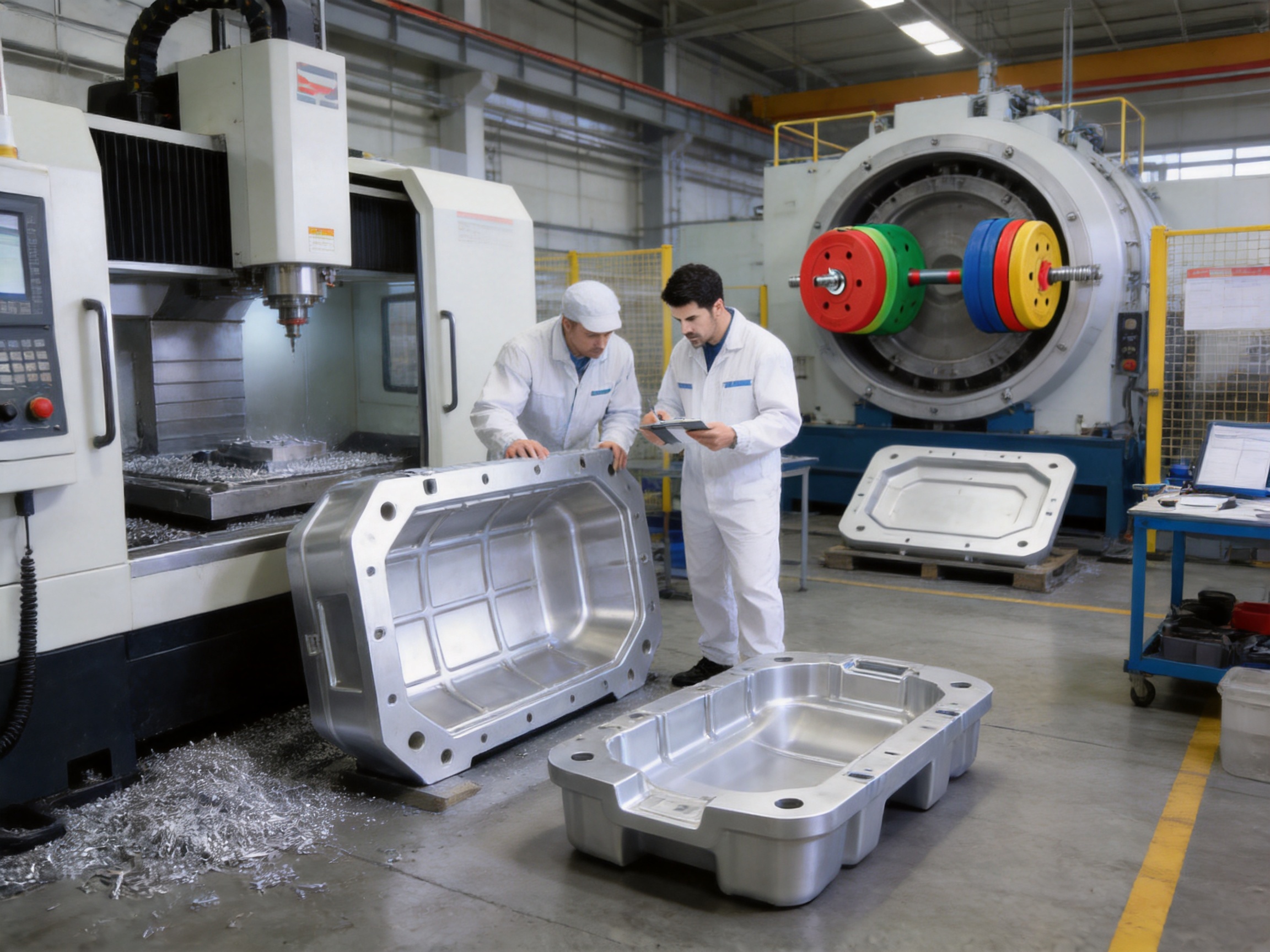
Sports equipment ranges from compact dumbbell plates to large outdoor fitness and playground products. A supplier experienced only with small molds may struggle with large cavities, reinforcement, complex curved surfaces, and handling requirements. The company’s experience with large-scale mold machining allows it to support both compact fitness equipment and larger recreational products.
Trial Validation Before Final Acceptance
A low-cost supplier may deliver a mold without sufficient trial molding or sample analysis. By including trial molding and validation in the workflow, the manufacturer can identify dimensional, surface, release, or process problems before the tool enters full production. This helps protect the customer’s schedule and reduce downstream production risk.
Production Capacity and Standardized Facilities
The company operates a modern facility in Jiangyan District, Taizhou City, with approximately 18,000 square meters of total space and more than 12,000 square meters of standardized production workshops. Its annual capacity exceeds 800 mold sets, supported by organized production processes and equipment suitable for customized tooling projects.
Long-Term Technical Support
A mold supplier’s responsibility should not end when the tool leaves the factory. Production teams may need guidance on operation, maintenance, adjustments, sample evaluation, or future product modifications. A supplier that provides continued technical support can help customers protect their tooling investment and maintain product consistency over time.
Applications Beyond Dumbbell Plates
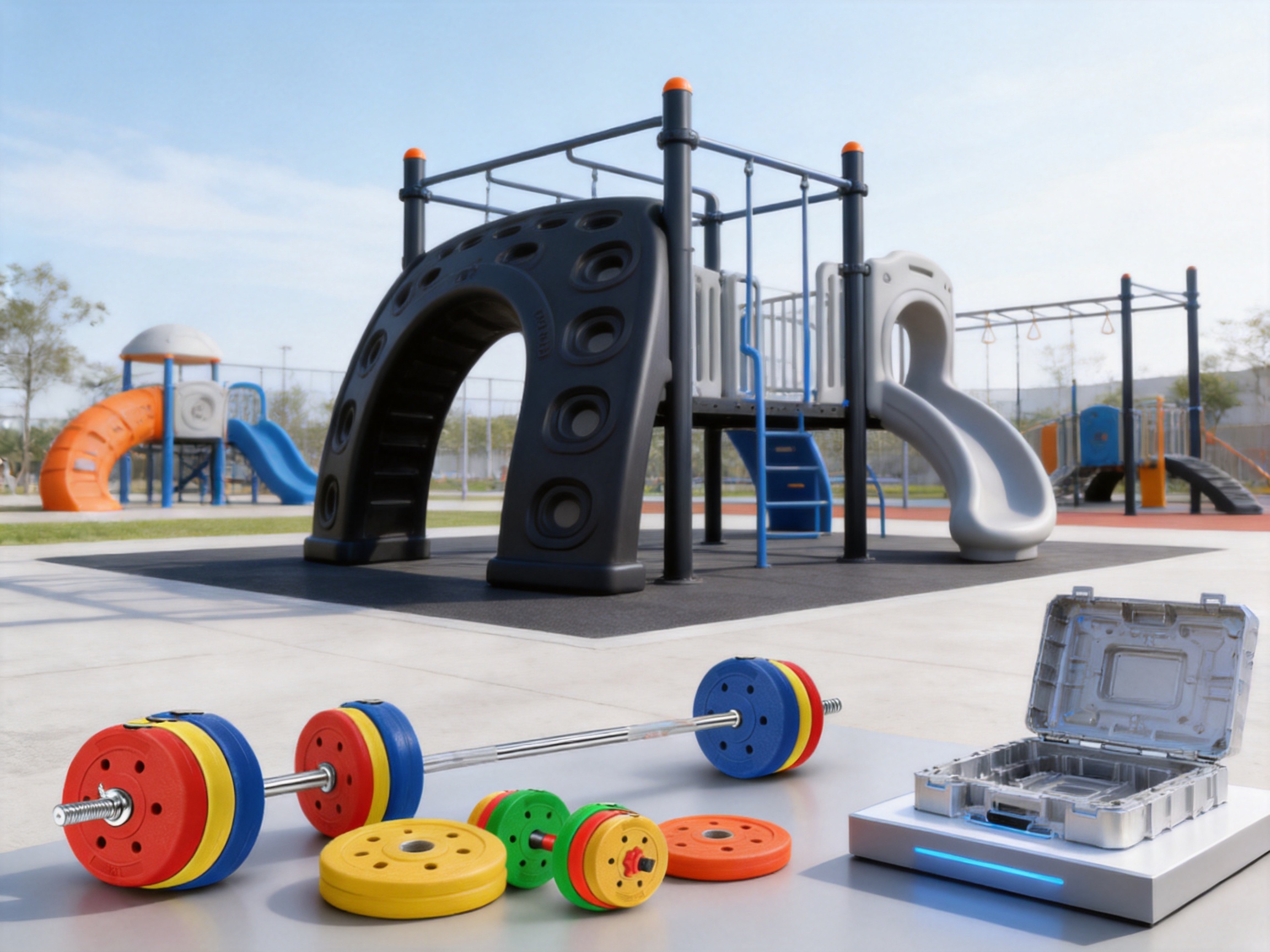
Although dumbbell plate molds are a central application, the same manufacturing capabilities can support a broad range of sports and recreational products. Aluminum rotational molding tools can be adapted to products that require lightweight structures, rounded surfaces, complex cavities, and durable plastic construction.
| Tooling Category | Typical Material | Representative Application | Primary Value |
|---|---|---|---|
| Dumbbell plate mold | Sand-cast aluminum | Weight plates and compact fitness products | Customization, practical cost, and thermal performance |
| Premium fitness tooling | Forged aluminum alloy | High-quality fitness and training equipment | Strength, durability, and dimensional stability |
| Outdoor equipment mold | Engineered aluminum | Outdoor fitness structures and recreational products | Manageable weight and complex-shape adaptability |
| Playground equipment mold | Sand-cast or forged aluminum | Large hollow playground components | Durable construction and controlled surface quality |
| Specialized sports accessory mold | Customized aluminum | Protective covers, training accessories, and fitness components | Flexible design and repeatable production |
Outdoor fitness products may require strong curved structures, mounting areas, integrated handles, reinforced sections, and smooth surfaces that are safe for regular contact. Playground products require careful attention to corners, transitions, openings, and surface quality. These applications demonstrate why the mold must be engineered around the final product and its service environment.
The company also provides tooling for tanks, containers, automotive components, agricultural equipment, water-treatment products, outdoor facilities, amusement equipment, and other large hollow products. Experience across these sectors strengthens its ability to manage different material behaviors, product sizes, structural requirements, and production conditions.
Durable Tooling for Outdoor Sports and Playground Products
Large outdoor sports equipment introduces requirements that are different from those of compact dumbbell plates. The mold may be large and difficult to handle, while the finished product may need to withstand weather exposure, repeated use, impact, and changing temperatures.
A durable outdoor equipment mold should have suitable structural support, accurate parting lines, effective venting, stable mounting features, and a surface finish appropriate for the product. The engineering team must also consider how the mold will be heated, rotated, cooled, opened, transported, and stored.
Large products often contain broad curved areas where uneven heating or insufficient venting can create quality problems. The relationship between mold thickness and thermal response must be evaluated carefully. Reinforcement may be required to maintain dimensional stability, particularly when the mold is large or the product has deep cavities.
For playground equipment, surface safety is a major consideration. Sharp edges, unwanted projections, rough areas, and inconsistent transitions must be controlled through product design and mold finishing. Trial samples allow engineers to confirm that the final product meets the intended appearance and functional requirements before mass production.
ZHROTO’s capability in large-scale mold machining and complex curved surfaces provides a practical advantage for customers developing outdoor equipment. The same project workflow used for fitness products can be extended to large recreational components, allowing product design, mold construction, and production validation to remain connected.
Quality Management and Manufacturing Strengths
Jiangsu Zhroto Mould Co., Ltd. was founded in 2015 and focuses on rotational molding mold design, manufacturing, product processing, and integrated technical solutions. The company moved to a modern facility in 2021, creating additional space for standardized production and project management.
The company has obtained ISO 9001:2015 quality management certification, ISO 14001:2015 environmental management certification, and ISO 45001 occupational health and safety certification. These systems support controlled production, documented procedures, environmental awareness, and safer working practices.
Its service range covers the project from the earliest design consultation through final product production. Customers can receive assistance with product structure, three-dimensional modeling, mold design, machining, testing, sample validation, inspection, delivery, maintenance advice, and technical support.
The company has an annual capacity of more than 800 mold sets and approximately 3,600 tons of plastic product production capacity. This combination of tooling and product-processing capability is valuable for customers that require not only a mold but also prototype development, sample production, or finished-product manufacturing support.
By maintaining mold engineering and product production capabilities within an integrated organization, the company can obtain practical feedback from actual molding operations. This experience can help improve mold designs, identify production risks, and develop more useful recommendations for customers.
Environmental and Operational Benefits of Aluminum Tooling
Environmental performance is increasingly important in sports equipment manufacturing. Tooling does not determine environmental impact by itself, but its weight, service life, maintenance requirements, and production efficiency can influence the overall manufacturing system.
Aluminum molds are relatively lightweight, which may reduce handling energy and simplify transportation within the factory. Their thermal conductivity can support efficient heating, although actual energy consumption depends on the machine, cycle settings, product material, mold size, and operating procedures.
A durable mold can also reduce waste associated with defective products, premature tooling replacement, and repeated trial production. When the mold maintains accurate dimensions and stable surface quality, manufacturers may achieve better first-pass production and lower material loss.
Environmental performance also includes responsible manufacturing practices. ISO 14001 certification reflects the company’s commitment to a structured environmental management system. Customers seeking more responsible supply-chain partners can consider this certification together with tooling durability, process efficiency, and product life-cycle requirements.
How Customers Can Prepare for a Mold Project
Good preparation can make mold development faster and more efficient. Customers should provide as much information as possible about the intended product and production plan. Useful information includes product drawings, three-dimensional files, physical samples, dimensions, weight, material, expected production volume, surface requirements, machine type, heating method, and target delivery schedule.
If the product is still at the concept stage, the customer can provide sketches, reference products, functional requirements, and intended market information. The engineering team can then help evaluate whether the proposed structure is appropriate for rotational molding and identify areas that may require adjustment.
Customers should also explain whether they need a prototype, a single production mold, several interchangeable sizes, or a complete product-processing service. This information affects material selection, mold structure, test planning, and production capacity planning.
Recommended Project Questions
- What are the final product dimensions and acceptable tolerances?
- What is the intended plastic material and product weight?
- How many production cycles are expected each year?
- Will the product be manufactured using gas heating or electric heating?
- What surface finish, texture, logo, or marking is required?
- Does the mold need inserts, special vents, or reinforced sections?
- How frequently will the mold be changed or transported?
- Is a prototype or trial sample required before final approval?
- Will the supplier also support finished-product manufacturing?
Answering these questions early helps the manufacturer create a more accurate quotation and a more suitable tooling proposal. It also reduces the possibility of unexpected changes during machining or trial production.
Maintenance and Service-Life Considerations
Even a well-made mold requires proper maintenance. Operators should inspect the mold regularly for damage, contamination, loose fasteners, wear at the parting line, vent blockage, and changes in surface condition. Cleaning procedures should be compatible with the aluminum material and the surface finish.
Careful handling is also important. Dropping or striking the mold can affect the parting line, cavity geometry, mounting points, or surface finish. When the mold is not in use, it should be stored in a clean and dry area and protected from unnecessary impact or contamination.
Production records can help identify changes in mold behavior. If product dimensions, surface quality, demolding force, or heating time begin to change, the tooling should be inspected before the issue becomes a larger production problem.
Maintenance recommendations may vary according to mold size, alloy, surface treatment, product material, cycle frequency, and machine type. The supplier can provide project-specific guidance based on the final tooling design and operating conditions.
Frequently Asked Questions
What material is best for a dumbbell plate mold?
Sand-cast aluminum is a practical choice for many dumbbell plate molds because it combines customization, manageable weight, useful thermal conductivity, and cost-effective production. Forged aluminum alloy may be more suitable when the customer requires higher strength, greater dimensional stability, or extended service under demanding production conditions.
Why is aluminum commonly used for rotational molding tools?
Aluminum is relatively lightweight, transfers heat efficiently, can be machined into complex shapes, and is suitable for customized mold designs. These characteristics support easier handling, stable heating, and flexible product development.
Can the mold be customized for different dumbbell plate sizes?
Yes. The mold can be developed according to the required diameter, thickness, weight, central opening, edge profile, surface finish, markings, and other product details. Several related sizes can also be evaluated as part of a broader tooling program.
Is forged aluminum always better than sand-cast aluminum?
No. Forged aluminum can provide advantages for demanding applications, but sand-cast aluminum may be the more economical and practical solution for many standard products. The correct choice depends on production volume, product structure, durability requirements, dimensional accuracy, and budget.
Can the mold be used for large outdoor sports equipment?
Yes. Engineered aluminum molds can be adapted to large outdoor fitness products, playground components, recreational equipment, and other hollow products. Large molds require additional attention to reinforcement, venting, parting lines, handling, thermal behavior, and surface transitions.
Does the company provide product-processing services?
Yes. In addition to mold design and manufacturing, Jiangsu Zhroto Mould Co., Ltd. provides rotomolded product-processing services. This allows customers to obtain support from product development and tooling through sample production and finished-product manufacturing.
How is mold quality verified before delivery?
Verification may include dimensional inspection, assembly checks, surface evaluation, trial molding, sample measurement, and confirmation of product appearance and release performance. The exact inspection plan depends on the product and customer requirements.
Can the molds work with electric-heated rotational molding machines?
Yes. The company supports molds for conventional gas-heated machines and electric-heated rotational molding systems. Electric heating may require more detailed attention to thermal management, zoned heating, and mold design.
What information should be supplied for a quotation?
Customers should provide product drawings or models, dimensions, material information, expected annual volume, surface requirements, machine type, heating method, and delivery expectations. If the product is still under development, sketches and functional requirements can also support an initial evaluation.
How can a customer improve the service life of the mold?
Proper installation, controlled heating and cooling, regular cleaning, careful handling, parting-line inspection, vent maintenance, and suitable storage can all help extend mold service life. Operators should also follow the recommended process conditions and report changes in product quality promptly.
Conclusion
A sports equipment mold is more than a cavity used to shape plastic. It is a production asset that influences product dimensions, wall distribution, surface appearance, handling efficiency, cycle stability, maintenance requirements, and long-term manufacturing cost.
For dumbbell plates and related fitness products, sand-cast aluminum provides a practical combination of customization, thermal performance, light weight, and production flexibility. Forged aluminum alloy offers an additional option for premium tooling and more demanding production conditions. The best material depends on the product, process, volume, and expected service life.
Jiangsu Zhroto Mould Co., Ltd. strengthens these material advantages through integrated engineering and manufacturing capabilities. Its workflow includes product assessment, three-dimensional modeling, mold design, aluminum casting or forging, CNC machining, surface finishing, assembly, trial molding, sample validation, inspection, delivery, and technical support.
With experience in compact fitness products, large outdoor equipment, playground components, automotive parts, agricultural products, tanks, containers, and other rotationally molded applications, the company can support customers with different product sizes and production objectives. Its modern facility, quality-management systems, annual tooling capacity, and product-processing capabilities provide a strong foundation for customized projects.
For manufacturers seeking consistent dumbbell plates, durable outdoor sports products, or specialized rotational molding tools, choosing an experienced supplier can improve both the immediate project outcome and the long-term value of the tooling investment.
References
1. ISO 9001:2015, Quality Management Systems—Requirements.
2. ISO 14001:2015, Environmental Management Systems—Requirements with Guidance for Use.
3. ISO 45001:2018, Occupational Health and Safety Management Systems—Requirements with Guidance for Use.
4. Rosato, D. V., Rosato, M. G., and Rosato, D. V. Rotational Molding Technology. Technical reference on rotational molding materials, equipment, tooling, and production methods.
5. Crawford, R. J., and Throne, J. L. Rotational Molding Technology. Reference material covering mold design, polymer processing, heating, cooling, and quality control.
6. ASM International. Aluminum Casting Technology. Technical guidance on aluminum alloys, casting processes, machining allowances, and quality considerations.
7. Aluminum Association. Aluminum Standards and Data. Reference information concerning aluminum alloy characteristics and manufacturing applications.
Product: Sports equipment mold


We provide customers with one-stop services ranging from product design, mold manufacturing to finished product production.
-
 +86-18006248936
-
 ricky.t@zhroto.com
-
 No.9 Jiangyuan Road, Luotang Street, Jiangyan District, Taizhou City,Jiangsu Province, China
Copyright © Jiangsu Zhroto Mould Co., Ltd. Rights Reserved.Custom Rotational Plastic Molding Factory
