 en
 中文简体
 русский
 Español
 Deutsch
 Polskie
 REQUEST A QUOTE

 Home / Author / Mei-Rong Alvarado — Product After-Sales Service Manager / Environmentally Friendly Mobile Toilet Molds for Efficient Rotational Manufacturing
Environmentally Friendly Mobile Toilet Molds for Efficient Rotational Manufacturing
Content
- 1 Why Mobile Toilet Manufacturing Requires Specialized Molds
- 2 Core Advantages of the Rotational Molding Solution
- 3 Comparison with Alternative Manufacturing Approaches
- 4 Engineering Design of the Mobile Toilet Mold
- 5 Advanced Manufacturing Process
- 6 Environmental Benefits of the Product and Process
- 7 Advantages for Different Application Environments
- 8 Customization Capabilities
- 9 Quality Management and Production Reliability
- 10 Company Manufacturing Strengths
- 11 Project Development Process for Buyers
- 12 Maintenance and Service-Life Considerations
- 13 Frequently Asked Questions
- 13.1 What is an environmentally friendly mobile toilet mold?
- 13.2 Why is rotational molding suitable for portable toilets?
- 13.3 Can the mold produce different mobile toilet sizes?
- 13.4 Can colors and surface textures be customized?
- 13.5 How does the product compare with a sheet-metal toilet enclosure?
- 13.6 Can the mold include ventilation or accessory mounting areas?
- 13.7 What materials are used for the mobile toilet enclosure?
- 13.8 Does the company provide only molds?
- 13.9 How is mold quality checked?
- 13.10 Can the mold be used for high-volume production?
- 13.11 How should buyers start a project?
- 14 Conclusion
- 15 References
- 16 Product: Environmentally friendly mobile toilet mold
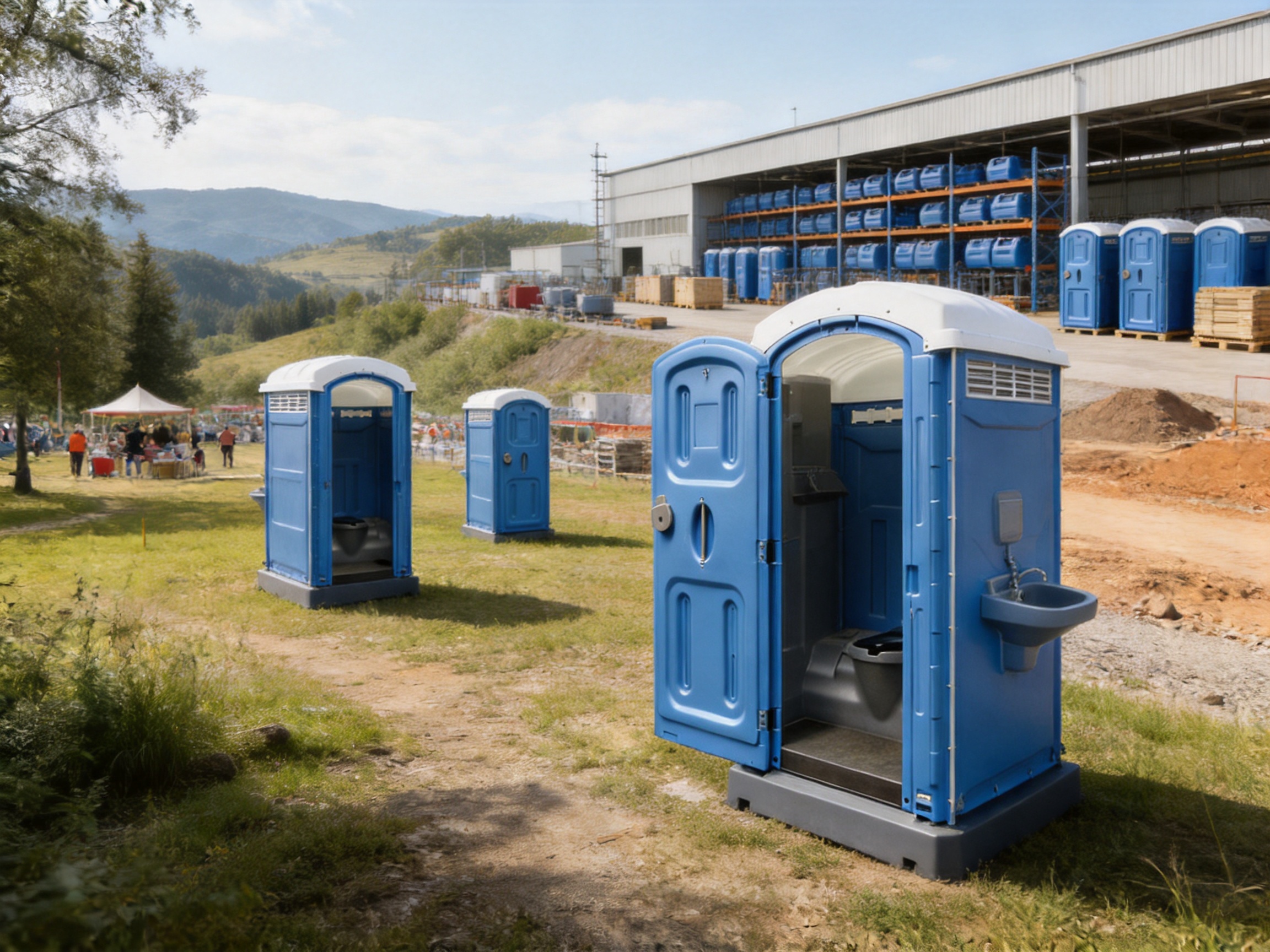
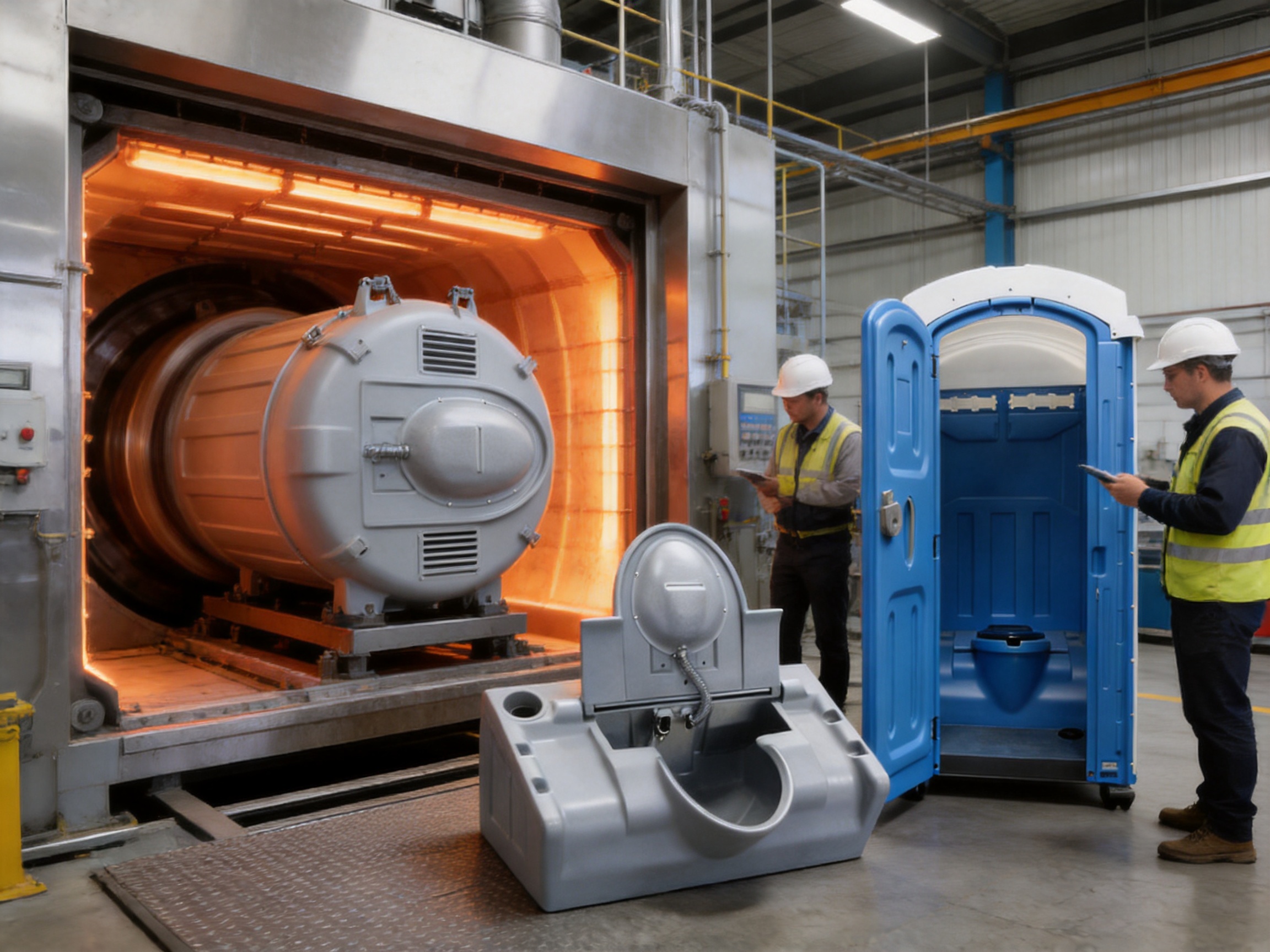
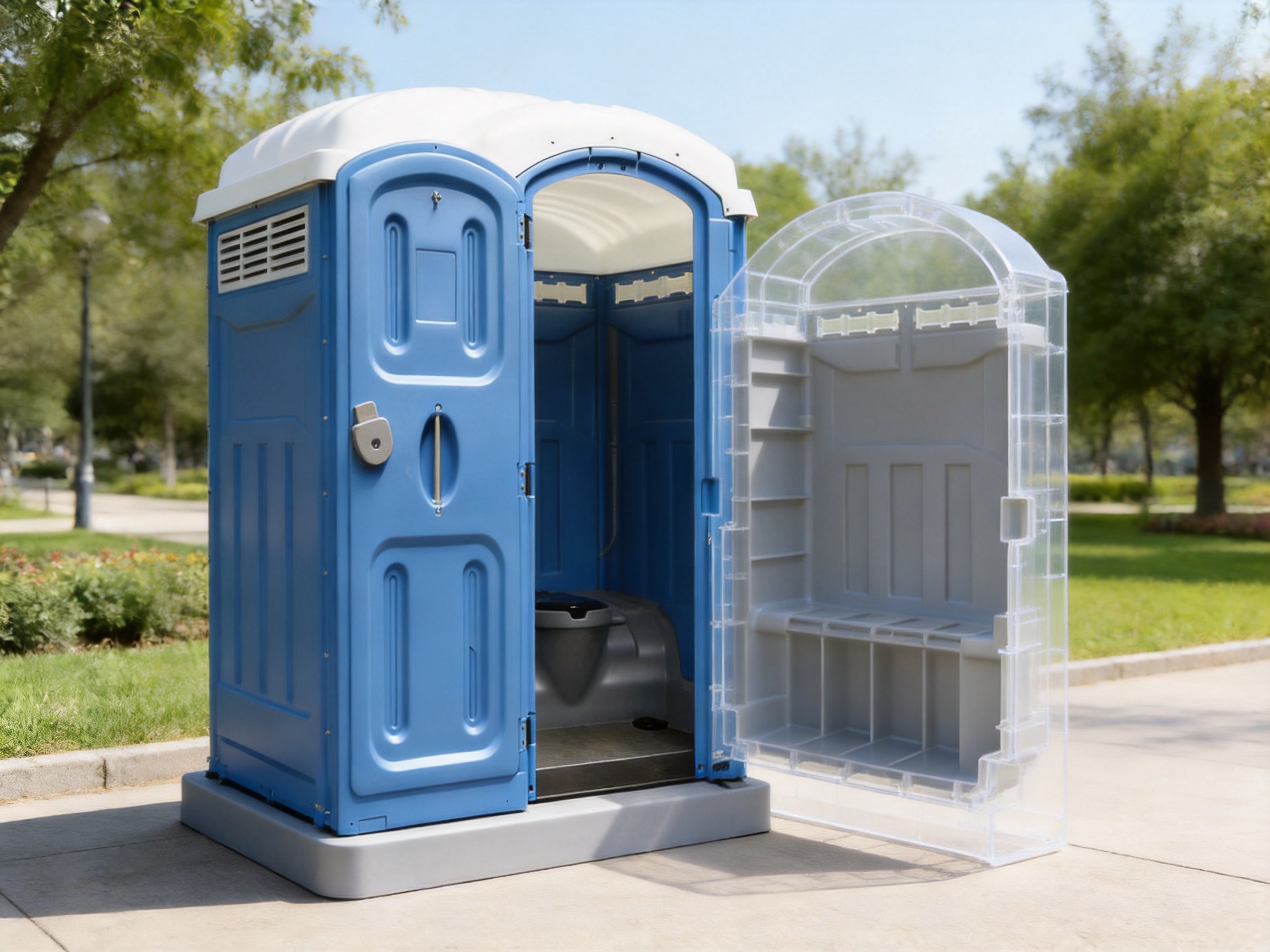
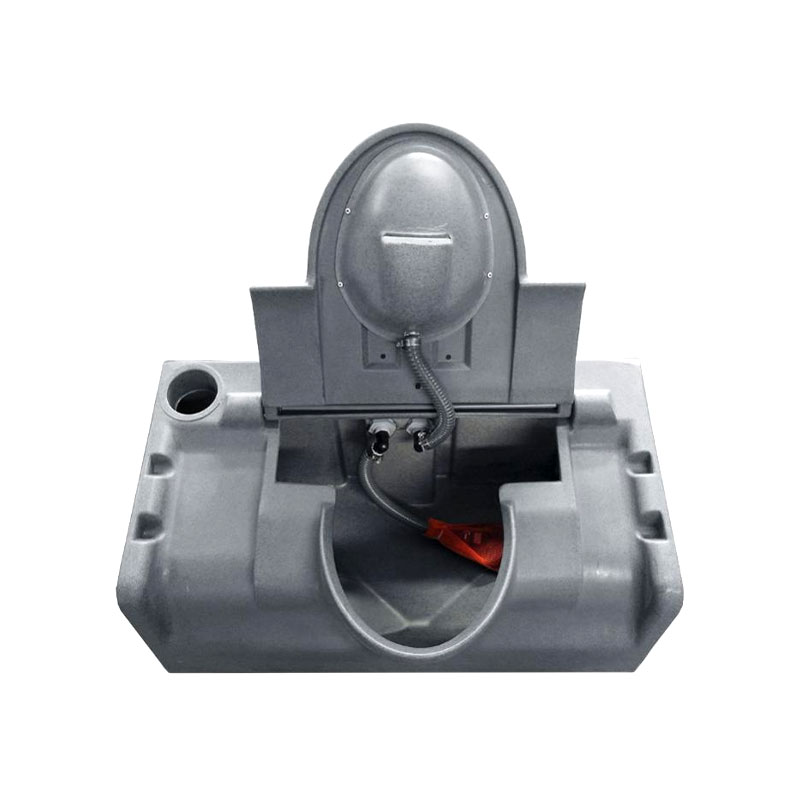
Environmentally friendly mobile toilet mold
Mobile sanitation infrastructure is increasingly important in public spaces, construction areas, transportation hubs, event venues, parks, scenic destinations, and temporary work locations. Whenever permanent plumbing systems are unavailable, difficult to install, or too expensive to justify, portable toilets provide a practical way to maintain hygiene and public convenience. However, the quality, durability, and environmental performance of each portable toilet depend heavily on the manufacturing method used to produce its enclosure and structural components.
The environmentally friendly mobile toilet mold is a rotational molding tooling solution developed for the production of portable sanitation units. It enables manufacturers to produce strong, lightweight, corrosion-resistant, and customizable toilet enclosures in a repeatable industrial process. Unlike improvised fabrication methods that rely on multiple assembled panels, rotational molding can create large hollow plastic structures with consistent wall formation, integrated reinforcement features, and fewer joints.
This type of mold is designed for applications including parks, scenic areas, exhibition grounds, construction sites, temporary public facilities, outdoor activity areas, and other locations where reliable sanitation must be deployed quickly. It supports the manufacture of self-contained mobile toilets that can withstand outdoor exposure, repeated cleaning, transportation, and frequent daily use.
Jiangsu Zhroto Mould Co., Ltd. combines mold design, rotational tooling production, rotomolded product processing, and technical support to provide an integrated manufacturing solution. Founded in 2015, the company operates from a modern facility in Jiangyan District, Taizhou City, Jiangsu Province, China. Its capabilities include product development, mold manufacturing, plastic product production, and project support for industries such as hydrogen energy storage and transportation, automotive components, industrial equipment, agricultural machinery, water treatment, and outdoor facilities.
With an annual production capacity of more than 800 mold sets and 3,600 tons of plastic products, the company is positioned to support both customized development and larger-scale manufacturing programs. Its ISO 9001:2015, ISO 14001:2015, and ISO 45001:2018 certifications provide a structured foundation for quality management, environmental management, and occupational health and safety.
Why Mobile Toilet Manufacturing Requires Specialized Molds
A mobile toilet enclosure must perform several functions at the same time. It must provide privacy, protect users from weather, maintain a cleanable interior surface, tolerate impact during transportation, and remain stable when placed on different types of ground. It may also need to accommodate doors, ventilation openings, lighting, waste tanks, hand-washing systems, lifting points, floor structures, and other accessories.
These requirements create challenges for manufacturers. A conventional sheet-metal or panel-assembly approach may require numerous components, fasteners, welding operations, seals, and finishing steps. Each additional joint can become a potential point for water penetration, corrosion, loosening, or contamination. The greater the number of individual parts, the more difficult it can be to maintain consistent quality across large production volumes.
Rotational molding offers a different approach. A hollow mold is loaded with a measured quantity of polymer powder, heated, and rotated around multiple axes. As the material melts, it gradually coats the internal surfaces of the mold. After cooling, the finished enclosure is removed from the tool. This process is especially suitable for large, hollow, seamless products with complex shapes.
For mobile toilet production, a well-engineered mold can help form the main enclosure as a durable integrated structure. Features such as curved walls, roof contours, rounded corners, recesses, mounting areas, and ventilation zones can be incorporated into the design. This reduces dependence on extensive secondary assembly and supports a cleaner, more efficient manufacturing workflow.
The tooling must be engineered carefully because the performance of the finished toilet enclosure depends on the mold’s dimensional accuracy, surface quality, structural stability, and ability to release the product without distortion. A professional mold manufacturer therefore contributes much more than a metal shell. The supplier must understand the product’s intended use, material behavior, heating cycle, cooling requirements, assembly interfaces, and expected service conditions.
Core Advantages of the Rotational Molding Solution
Uniform Wall Thickness
Uniform wall thickness is one of the most important benefits of a properly designed rotational molding system. During the process, the polymer material is distributed across the mold surface while the tool rotates. With suitable mold geometry, material loading, rotation settings, and heating control, manufacturers can achieve a balanced wall structure throughout the mobile toilet enclosure.
A consistent wall profile supports predictable mechanical performance. It helps reduce weak areas, excessive material accumulation, unnecessary weight, and uneven shrinkage. For portable sanitation units, this balance is important because the enclosure must be sufficiently strong without becoming unnecessarily heavy or expensive to transport.
Uniformity also contributes to product appearance. An even wall structure can reduce visible deformation and improve the consistency of repeated production runs. This is particularly valuable when a project requires many units with the same external dimensions and visual specifications.
Integrated Structural Rigidity
Mobile toilets are often moved, lifted, stored, and installed multiple times during their service life. Their enclosure must therefore resist vibration, impact, handling stress, wind exposure, and repeated door operation. Rotational molding allows designers to use curves, ribs, contours, double-wall sections, and other geometric features to improve rigidity.
Because the product can be developed as a large integrated shell, the number of separate structural joints may be reduced. Fewer joints can help simplify assembly and limit the risk of loose fasteners or poorly sealed connections. Structural reinforcement areas can be incorporated into the mold rather than added entirely through later fabrication.
The correct reinforcement design depends on product dimensions, polymer selection, wall thickness, door configuration, floor support, lifting requirements, and local operating conditions. These factors must be reviewed during the mold development stage rather than treated as afterthoughts.
Chemical and Weather Resistance
Portable toilets are exposed to a wide range of environmental and cleaning conditions. Outdoor units may experience sunlight, rain, humidity, dust, wind, temperature fluctuations, and accidental contact with cleaning chemicals. The enclosure must retain its functional properties during routine service and maintenance.
Rotationally molded plastic products can be designed around materials that provide resistance to moisture, corrosion, and many common cleaning environments. Unlike painted steel, a suitable plastic enclosure does not rely on an external coating alone to protect the underlying structure from rust. This can be advantageous in wet locations, coastal environments, water-treatment areas, and sites where frequent washing is required.
Material selection remains essential. The final product should be matched to the intended exposure, temperature range, color requirements, impact expectations, and regulatory considerations. A qualified mold and product engineering team can help coordinate the mold design with the selected polymer and the required processing cycle.
Complex Shapes Without Excessive Assembly
Mobile toilet designs vary widely. Some projects require compact units for crowded urban areas, while others require larger accessible enclosures or units with integrated hand-washing systems. The mold may need to support curved roofs, sloped surfaces, non-rectangular profiles, ventilation channels, recessed panels, or decorative exterior features.
Rotational molding is well suited to many of these shapes because the product is formed against the internal surface of the tool. Designers can develop complex three-dimensional geometry while maintaining a hollow structure. This flexibility allows manufacturers to create distinctive product forms without dividing every feature into separate panels.
Customization can include overall dimensions, door arrangements, access openings, surface textures, colors, mounting interfaces, and optional accessory areas. Once the basic tooling strategy has been established, product variants may be developed to meet different procurement requirements and usage scenarios.
Efficient Material Use
Compared with manufacturing methods that begin with oversized blocks, thick sheet stock, or numerous structural sections, rotational molding can support efficient material distribution in a hollow product. The process uses a measured material charge, and the finished enclosure is formed in a single mold cycle.
Efficient material use can reduce product weight, transport requirements, and handling effort. It may also contribute to more competitive operating economics over the product’s service life. The exact material efficiency depends on product design, wall requirements, processing parameters, and quality standards.
Reduced Risk of Corrosion
Metal components can be vulnerable to corrosion when exposed to water, cleaning agents, fertilizers, salt, and humid outdoor conditions. Corrosion can affect appearance and structural performance, especially if protective coatings are damaged during transportation or use.
A plastic mobile toilet enclosure produced through rotational molding avoids many of the corrosion concerns associated with exposed metal walls. Metal parts may still be used for hinges, locks, frames, brackets, or other accessories, but the main enclosure can be designed to provide a moisture-resistant shell. This is particularly useful for long-term outdoor deployment.
Comparison with Alternative Manufacturing Approaches
Manufacturers can produce portable sanitation units through several methods, including sheet-metal fabrication, fiberglass molding, thermoforming, injection molding, and rotational molding. Each technique has suitable applications, but the choice must reflect the product’s size, geometry, quantity, required durability, and production budget.
| Manufacturing approach | Typical strengths | Potential limitations for mobile toilet enclosures | Value of rotational molding |
|---|---|---|---|
| Sheet-metal fabrication | Strong panels, familiar fabrication methods, suitable for certain frames and accessories | More joints, possible corrosion, additional welding and coating, greater assembly workload | Provides a hollow integrated plastic shell with fewer assembled seams |
| Fiberglass molding | Good surface appearance and complex shapes | More manual labor, potential fiber exposure, longer finishing work, variable thickness | Supports repeatable polymer processing and efficient hollow construction |
| Thermoforming | Fast production of certain thin-walled panels | May require separate panels, trimming, support frames, and assembly | Forms large three-dimensional parts with integrated geometry |
| Injection molding | High repeatability for smaller parts and very large production volumes | High tooling investment and limitations for large hollow enclosures | More suitable for large, hollow, lower-to-medium volume products |
| Rotational molding | Large hollow structures, complex geometry, low internal stress, customization flexibility | Cycle times can be longer and process control remains important | Balances durability, design flexibility, tooling practicality, and product integration |
The comparison does not mean that one process replaces every other process. A complete mobile toilet may combine rotationally molded components with metal hardware, plumbing assemblies, electrical systems, and separately manufactured accessories. The advantage lies in using rotational molding for the parts where its design and performance benefits are most valuable.
Engineering Design of the Mobile Toilet Mold
Product Requirement Analysis
Successful tooling begins with a detailed understanding of the intended product. Before mold construction, the project team should review the toilet’s overall dimensions, user capacity, door swing, floor height, ventilation strategy, accessory layout, transportation method, and installation environment.
Important questions include whether the unit will be manually moved, transported by forklift, lifted by crane, mounted on a trailer, or installed on a prepared foundation. The answer affects the design of the base, lifting points, reinforcement regions, and external dimensions.
Accessibility requirements may influence door width, turning space, grab-bar positions, floor transitions, and internal clearances. Public procurement projects may also specify color, branding areas, anti-slip surfaces, ventilation openings, or cleaning access. Reviewing these details early helps prevent costly changes after the mold has been manufactured.
Draft Angles and Part Release
Rotationally molded products must be removed from the mold after cooling. The geometry therefore requires suitable draft angles and release considerations. Deep undercuts, sharp internal corners, and trapped sections can complicate demolding or damage the product.
Engineers must balance visual design with manufacturability. Rounded corners generally improve material flow, reduce stress concentration, and simplify cleaning. Carefully planned transitions can also improve mold durability and reduce the risk of product distortion.
Where a special feature is necessary, the mold may require split sections, removable inserts, or alternative demolding procedures. These decisions affect tooling cost, cycle time, maintenance, and production efficiency.
Wall Thickness and Material Distribution
Wall thickness must be considered in relation to product size, material type, impact requirements, loading conditions, temperature, and expected service life. Excessive thickness increases weight and material cost, while insufficient thickness may reduce rigidity or impact resistance.
The mold’s geometry, rotation pattern, material charge, heating profile, and cooling conditions all influence the final wall distribution. A professional tooling supplier evaluates areas such as corners, roof transitions, door openings, mounting zones, and base sections because these regions may behave differently during processing.
In some designs, local reinforcement can be achieved through geometric features rather than simply adding more material. Ribs, contours, curved sections, and formed-in bosses can increase rigidity while helping maintain a reasonable overall weight.
Ventilation and Process Control
Rotational molding tools require appropriate venting so that air and gases can move during heating and cooling. Venting must be designed without compromising the product surface or creating unwanted marks in visible areas. The venting strategy is also related to product size, polymer type, mold geometry, and cycle conditions.
Process control is equally important. The mold must be heated sufficiently to melt and distribute the polymer, but excessive heating can degrade the material or affect the surface finish. Cooling must be controlled to limit shrinkage, warpage, and dimensional variation.
The mold design therefore works together with the production process. A strong tool is not enough by itself; it must be compatible with the manufacturer’s heating equipment, rotation equipment, cooling method, material handling procedures, and quality inspection system.
Surface Finish and Appearance
The internal mold surface transfers its texture and finish to the external surface of the finished mobile toilet enclosure. Surface selection can affect visual quality, cleaning behavior, slip resistance, scratch visibility, and perceived durability.
Manufacturers may require smooth surfaces for easy washing, textured areas for improved grip, or a controlled appearance that hides minor marks from outdoor handling. Color can be integrated into the plastic material, reducing dependence on post-production painting. Multiple color options may be used to distinguish product models, support site identification, or meet project design requirements.
Advanced Manufacturing Process
Jiangsu Zhroto Mould Co., Ltd. provides an integrated workflow covering product design, mold manufacturing, and finished plastic product production. This arrangement allows tooling decisions to be evaluated together with the final manufacturing process rather than handled as isolated activities.
Concept and Technical Review
The process begins with a review of the customer’s product concept and technical requirements. Product drawings, three-dimensional models, reference samples, material specifications, and usage conditions can be analyzed to identify design risks.
At this stage, the engineering team can assess whether the proposed product is suitable for rotational molding and recommend changes where necessary. It is generally more economical to adjust wall transitions, corner radii, draft angles, reinforcement areas, and accessory interfaces before fabrication begins.
A technical review may also consider expected production quantity. A mold intended for a short project may prioritize rapid development and flexible modification, while a high-volume program may require greater attention to cycle optimization, maintenance access, repeatability, and long-term tool life.
Three-Dimensional Mold Development
Three-dimensional design tools support the development of the mold and finished product. Digital modeling helps engineers examine the overall shape, split lines, insert locations, door openings, roof geometry, base support, and potential interference areas.
Digital review can also improve communication between the tooling supplier and the customer. Dimensions, interfaces, and optional configurations can be confirmed before metal processing starts. This is especially useful for mobile toilets because the enclosure often connects with plumbing, flooring, doors, tanks, electrical components, and external support structures.
Tooling Fabrication
Rotational molds are manufactured from materials and structures appropriate to the required product size, complexity, thermal cycle, and expected production volume. Fabrication must maintain dimensional accuracy while providing sufficient rigidity during heating, rotation, and cooling.
Large tooling may require carefully planned panel construction, reinforcement, access points, and handling features. The mold must be able to withstand repeated thermal cycling without unacceptable deformation. Seams, corners, flanges, inserts, and vent areas should be fabricated and finished with attention to both product appearance and process reliability.
Tooling quality directly affects the finished product. Dimensional errors can lead to misalignment with doors, frames, floors, tanks, and accessory systems. Poor surface preparation can transfer defects to the enclosure. Inadequate reinforcement can cause mold movement or distortion. A systematic manufacturing process helps reduce these risks.
Trial Production and Adjustment
Before full production, trial molding allows the team to evaluate the tool and the product together. Trial units can be inspected for dimensional accuracy, wall distribution, surface appearance, release behavior, deformation, accessory fit, and general structural performance.
Trial production may identify areas that need adjustment. For example, a corner may require a revised radius, a mounting area may need additional support, or a vent may need relocation to improve appearance. Process settings can also be refined to achieve more consistent heating, material distribution, and cooling.
This iterative stage is one of the most important differences between a basic tooling transaction and an integrated manufacturing service. The objective is not only to deliver a mold that appears complete, but to establish a reliable path toward repeatable finished products.
Finished Product Production
Once the mold and process have been verified, the same technical team can support finished plastic product manufacturing. This provides continuity between tooling design and production operation. It can also simplify communication when changes are required during product development.
Finished product production includes material preparation, mold loading, heating, rotation, cooling, demolding, trimming, inspection, and assembly. Additional components such as doors, hardware, tanks, ventilation devices, floors, and hand-washing equipment may be integrated according to the project specification.
A controlled production system helps maintain consistency between units. Quality checks may include dimensions, appearance, wall condition, fit of mating parts, surface integrity, and functional operation of the completed assembly.
Environmental Benefits of the Product and Process
The environmentally friendly designation of a mobile toilet mold relates to the product’s ability to support durable, resource-conscious portable sanitation manufacturing. Environmental performance should be evaluated across the complete product life cycle, including material choice, production efficiency, transportation, maintenance, service life, and end-of-life handling.
A durable enclosure can remain in service for an extended period, reducing the frequency of replacement. Long service life helps avoid the material consumption, transportation, and labor associated with repeatedly producing and installing new units.
Lightweight construction can also reduce transportation demand. If the enclosure is designed to provide adequate strength with an efficient material charge, more units may be moved with less fuel consumption compared with heavier alternatives. The actual environmental result depends on product dimensions, logistics, vehicle capacity, and deployment distance.
Plastic surfaces that resist moisture and routine cleaning can reduce the need for corrosion repairs and repainting. A product that is easier to wash and maintain may also support better hygiene management, particularly in public environments with high usage levels.
Environmental management extends to the manufacturing facility. Jiangsu Zhroto Mould Co., Ltd. maintains ISO 14001:2015 certification, demonstrating the implementation of a formal environmental management framework. Such a framework can help organize resource use, waste management, environmental risk control, and continuous improvement activities.
Material efficiency should still be managed responsibly. Excess polymer, trimming waste, rejected parts, and damaged components require appropriate handling. Material selection, process control, and inspection can reduce waste by preventing avoidable defects. Where technically and legally suitable, recycling strategies may be considered for certain production residues, although the appropriate method depends on polymer type, contamination, additives, and local regulations.
Advantages for Different Application Environments
Parks and Scenic Areas
Parks and scenic areas require sanitation facilities that fit naturally into outdoor surroundings while handling fluctuating visitor demand. The mobile toilet enclosure can be customized in color and form to complement a public landscape. Its weather-resistant plastic structure is suited to locations where exposure to rain, sunlight, soil, and cleaning operations is unavoidable.
Because the units can be manufactured as portable structures, facility managers may reposition them according to seasonal visitor patterns, event schedules, or changes in site planning. The product can also be developed in different sizes to support standard, family, or accessibility-oriented layouts.
Exhibition Grounds and Events
Temporary exhibitions, fairs, sports events, festivals, and outdoor gatherings often create short-term sanitation demands. The number and location of facilities may change from one event to another. Portable toilets produced with durable rotationally molded enclosures can be delivered, installed, serviced, and relocated as needed.
Color customization and clean external geometry can help the units appear more consistent with event branding or venue design. The reduction of visible seams and exposed fasteners may also simplify cleaning and improve the overall appearance of a temporary installation.
Construction Sites
Construction sites need practical sanitation facilities that tolerate dust, impact, movement, and changing site conditions. A rotationally molded enclosure can provide a robust external shell while remaining lighter and easier to handle than some conventional alternatives.
Construction projects may require units to be moved as work progresses. The mold can be designed around handling points, skid bases, lifting provisions, or transport interfaces. These features should be evaluated with the complete unit, including the floor, tank, frame, and accessories.
Remote and Temporary Infrastructure
Remote work locations, emergency response areas, roadside projects, agricultural sites, and temporary camps may lack permanent sanitation infrastructure. A mobile unit can be deployed quickly and operated independently of a fixed building.
For these applications, durability, maintainability, transportability, and resistance to changing weather are especially important. A well-designed rotationally molded enclosure can form the foundation of a practical sanitation system that is adaptable to different deployment conditions.
Customization Capabilities
One of the major advantages of a professional rotational molding program is the ability to customize the product without abandoning the basic manufacturing concept. Customization may address function, appearance, installation, and procurement requirements.
Dimensional customization can include width, depth, height, roof profile, floor clearance, door position, and internal space. Functional customization may include hand-washing provisions, ventilation openings, lighting interfaces, waste-tank access, service doors, lifting points, and mounting features.
Surface and color options can support different operational needs. Light colors may help reflect solar heat, while darker or specialized colors may be preferred for visual integration with a site. Textured surfaces may be selected for particular areas where improved grip or reduced visibility of minor marks is desirable.
Accessibility requirements can be addressed during the initial mold and product design stage. A larger entrance, increased turning area, suitable grab-bar mounting zones, and an appropriate floor transition may require changes to the enclosure geometry. Early coordination ensures that the mold supports the complete user experience rather than only the external appearance.
Customization should always be balanced with tooling practicality. Every additional insert, undercut, split section, or geometric feature can influence manufacturing cost and cycle time. The best design is not necessarily the most complicated one. It is the design that delivers the required performance with a reliable and maintainable production process.
Quality Management and Production Reliability
Quality management is essential because a mobile toilet enclosure must perform consistently across repeated production runs. Variations in dimensions, wall distribution, surface condition, or accessory interfaces can increase assembly time and create service issues after installation.
ISO 9001:2015 certification provides a framework for managing documented processes, customer requirements, production controls, corrective actions, and continual improvement. In a mold manufacturing environment, this approach can support better control from quotation and technical review through design, fabrication, trial production, and delivery.
ISO 45001:2018 certification addresses occupational health and safety. Mold fabrication involves metal processing, machining, welding, lifting, surface treatment, and production equipment. A structured safety system helps reduce workplace risks while supporting stable operations.
Inspection should be appropriate to the product and stage of production. Mold inspections may include dimensional verification, surface checks, weld quality review, insert location confirmation, and functional assessment of opening and closing areas. Finished product inspections may include appearance, dimensions, wall condition, deformation, fit, and assembly performance.
Production reliability also depends on preventive maintenance. Rotational molds experience repeated heating and cooling cycles, mechanical handling, cleaning, and demolding. Accessible design, robust construction, and planned maintenance can help preserve tool performance and reduce unexpected downtime.
Company Manufacturing Strengths
Jiangsu Zhroto Mould Co., Ltd. was founded in 2015 and moved to a modern facility in Jiangyan District, Taizhou City, in 2021. The facility covers approximately 18,000 square meters, including more than 12,000 square meters of standardized production workshops.
This scale provides room for mold fabrication, product processing, assembly, inspection, storage, and project coordination. A standardized workshop environment can support more organized material flow and help separate different stages of production.
The company specializes in three closely connected areas: rotational molding mold design and manufacturing, rotomolded product processing, and integrated technical solutions. This combination is valuable for mobile toilet projects because the supplier can consider the tool, the polymer product, and the final application as parts of one system.
Its products serve multiple industries, including hydrogen energy storage and transportation, automotive parts, industrial equipment, agricultural machinery, water treatment, and outdoor facilities. Experience across these sectors can contribute to broader knowledge of structural design, chemical resistance, outdoor durability, transport requirements, and complex product development.
The stated annual capacity of more than 800 mold sets and 3,600 tons of plastic products indicates the ability to support both tooling projects and finished-product manufacturing. Customers may benefit from a supply structure that can begin with a customized mold and continue into sample production, process validation, and volume manufacturing.
The company’s certifications and facility resources support a professional manufacturing model. However, every project should still be evaluated according to its specific drawings, materials, service conditions, quality requirements, and delivery schedule. The strongest results come from close technical cooperation between the customer and the supplier throughout the development process.
Project Development Process for Buyers
Customers planning a mobile toilet program should prepare a clear project brief. The brief should describe the intended application, expected order quantity, deployment environment, dimensions, accessibility requirements, material preferences, color requirements, accessories, transportation method, and target delivery schedule.
Drawings or three-dimensional reference files are useful, but they are not always required at the beginning. A concept sketch, reference photograph, dimension list, or description of an existing product can provide a starting point for engineering discussion.
The next step is a manufacturability review. The tooling supplier should identify potential risks related to draft, undercuts, wall distribution, deformation, assembly interfaces, material selection, and mold construction. Design changes are usually easier and less expensive before final approval.
After the mold design is confirmed, fabrication can begin. Customers should review important dimensions, parting lines, accessory locations, surface finishes, and color or material specifications before the tool is completed.
Trial molding provides an opportunity to evaluate the first product. The customer and manufacturer can review the trial unit together, confirm fit with associated components, and determine whether modifications are needed. Once the sample is approved, production parameters can be documented for repeat manufacturing.
For long-term programs, buyers should also discuss spare parts, mold storage, maintenance, inspection standards, packaging, transportation protection, and technical support. These issues may not affect the first sample, but they influence the total cost and reliability of the project over time.
Maintenance and Service-Life Considerations
A durable mobile toilet enclosure still requires proper care. Routine inspection should identify cracks, impact damage, loose hardware, door misalignment, degraded seals, blocked ventilation, and problems with the base or lifting interfaces. Early maintenance can prevent minor issues from becoming larger service failures.
Cleaning procedures should be compatible with the selected polymer and any installed accessories. Harsh chemicals, excessive temperatures, abrasive tools, or concentrated exposure may damage surfaces even when the material provides general chemical resistance. Facility operators should follow suitable cleaning and sanitation guidelines.
Transport and storage also influence service life. Units should be secured properly during movement, supported at designated points, and protected from unnecessary impact. If units are stacked or stored for extended periods, the loading condition should be reviewed to avoid deformation.
Where the product is exposed to strong sunlight, material and color selection should account for outdoor use. The enclosure should also be checked periodically for changes caused by ultraviolet exposure, extreme temperature, or repeated thermal expansion and contraction.
Good maintenance practices help preserve the advantages of rotationally molded construction. A robust enclosure, combined with responsible operation and regular inspection, can provide dependable performance across many deployment cycles.
Frequently Asked Questions
What is an environmentally friendly mobile toilet mold?
It is a rotational molding tool designed to produce portable toilet enclosures and related components. The mold supports the manufacture of hollow plastic structures with controlled wall formation, integrated geometric reinforcement, and resistance to outdoor operating conditions.
Why is rotational molding suitable for portable toilets?
Rotational molding is suitable because it can produce large, hollow, three-dimensional parts with relatively few seams. It supports customized shapes, rounded corners, integrated reinforcement features, and efficient production of durable plastic enclosures.
Can the mold produce different mobile toilet sizes?
Yes. The mold is developed around the required product dimensions and configuration. Different projects may require compact units, larger accessible units, event facilities, construction-site units, or specialized models. Each major size or geometry may require its own tooling strategy.
Can colors and surface textures be customized?
Color and surface finish can generally be planned during product and material development. The available options depend on the selected polymer, outdoor exposure, appearance requirements, cleaning conditions, and production specifications.
How does the product compare with a sheet-metal toilet enclosure?
A rotationally molded enclosure can reduce the number of assembled panels and exposed joints. It also avoids many corrosion concerns associated with painted metal surfaces and can provide complex hollow geometry. Sheet metal may still be appropriate for certain frames, hardware, and specialized structural parts.
Can the mold include ventilation or accessory mounting areas?
Yes. Ventilation openings, mounting zones, service access areas, door interfaces, lifting provisions, and other features can be incorporated into the product design. These features should be reviewed early because they affect mold geometry and demolding.
What materials are used for the mobile toilet enclosure?
The specific material depends on the required impact performance, chemical resistance, weather exposure, color, weight, temperature range, and regulatory requirements. Material selection should be confirmed during the technical review before mold production.
Does the company provide only molds?
The company provides mold design and manufacturing, rotomolded product processing, and integrated technical solutions. This means the project can potentially progress from product concept and tooling through finished plastic product production.
How is mold quality checked?
Mold quality may be evaluated through dimensional review, surface inspection, structural checks, insert and opening verification, trial molding, and assessment of the finished sample. The exact inspection plan should correspond to the product drawings and customer requirements.
Can the mold be used for high-volume production?
Rotational molding can support repeated production, and the company reports an annual capacity of more than 800 mold sets and 3,600 tons of plastic products. The appropriate production plan depends on the product design, order volume, cycle time, equipment, and required delivery schedule.
How should buyers start a project?
Buyers should provide the application, approximate dimensions, drawings or sketches, expected quantity, material preferences, color requirements, accessories, operating environment, and delivery expectations. A technical review can then identify the most suitable mold structure and production process.
Conclusion
The environmentally friendly mobile toilet mold provides a practical foundation for producing durable, customizable, and serviceable portable sanitation units. Its rotational molding process supports uniform wall thickness, integrated structural rigidity, chemical resistance, outdoor durability, and complex hollow geometry. These qualities make it well suited to parks, scenic areas, exhibition grounds, construction sites, events, remote facilities, and other temporary or mobile applications.
Compared with approaches that rely on numerous panels, fasteners, welds, coatings, or secondary assembly steps, rotational molding can simplify the enclosure structure and improve design flexibility. It can also support efficient material use, lighter product construction, reduced corrosion exposure, and a more consistent appearance.
The performance of the final product depends on more than the mold shape alone. Product requirements, material selection, wall distribution, draft, venting, heating, cooling, demolding, finishing, inspection, and maintenance must be coordinated. This is why an integrated supplier with experience in mold design, tooling manufacturing, and rotomolded product processing can provide significant value.
Jiangsu Zhroto Mould Co., Ltd. brings together specialized rotational molding experience, a modern production facility, certified management systems, and the capacity to support both mold manufacturing and finished plastic production. Its one-stop approach can help customers move from concept development to validated tooling and repeatable mobile toilet production.
For buyers seeking a portable sanitation solution that combines practical performance, customization flexibility, and long-term outdoor usability, a professionally engineered rotational molding system offers a strong manufacturing path. With the right design review and process controls, the resulting mobile toilet units can support hygiene, convenience, and efficient deployment wherever permanent sanitation infrastructure is unavailable or impractical.
References
1. ISO 9001:2015, Quality Management Systems — Requirements.
2. ISO 14001:2015, Environmental Management Systems — Requirements with Guidance for Use.
3. ISO 45001:2018, Occupational Health and Safety Management Systems — Requirements with Guidance for Use.
4. American Society for Testing and Materials, Standard Practices and Technical Guidance for Rotational Molding.
5. Association of Rotational Molders, Technical Principles of Rotational Molding and Rotomolded Product Design.
6. Plastics processing engineering references covering polymer selection, mold design, heating cycles, cooling behavior, and wall-thickness control.
7. Public sanitation facility planning references covering portable toilet deployment, accessibility, cleaning, maintenance, and temporary-use infrastructure.
Product: Environmentally friendly mobile toilet mold


We provide customers with one-stop services ranging from product design, mold manufacturing to finished product production.
-
 +86-18006248936
-
 ricky.t@zhroto.com
-
 No.9 Jiangyuan Road, Luotang Street, Jiangyan District, Taizhou City,Jiangsu Province, China
Copyright © Jiangsu Zhroto Mould Co., Ltd. Rights Reserved.Custom Rotational Plastic Molding Factory
