 en
 中文简体
 русский
 Español
 Deutsch
 Polskie
 REQUEST A QUOTE

 Home / Author / Mei-Rong Alvarado — Product After-Sales Service Manager / Electrically Heated Rotational Molding Mold: Precision, Efficiency, and Advanced Manufacturing for Modern Rotomolding
Electrically Heated Rotational Molding Mold: Precision, Efficiency, and Advanced Manufacturing for Modern Rotomolding
Content
- 1 1. The Role of Heating in Rotational Molding
- 2 2. What Is an Electrically Heated Rotational Molding Mold?
- 3 3. Main Design Features of the Product
- 4 4. How Electric Heating Improves Energy Efficiency
- 5 5. Advantages Over Conventional Rotational Molding Molds
- 6 6. Zoned Heating for Complex Products
- 7 7. Applications of Electrically Heated Rotational Molding Molds
- 8 8. Manufacturing Process and Engineering Workflow
- 9 9. Manufacturing Strengths of Jiangsu Zhroto Mould Co., Ltd.
- 10 10. Quality, Safety, and Reliability Considerations
- 11 11. Comparison with Other Electric and Gas-Heated Solutions
- 12 12. Customization Capabilities
- 13 13. Selecting the Right Electrically Heated Mold
- 14 14. Process Control and Production Optimization
- 15 15. Environmental and Workplace Benefits
- 16 16. Service Life and Long-Term Value
- 17 17. Why Choose an Integrated Mold Manufacturer?
- 18 18. Frequently Asked Questions
- 18.1 Q1: What is the main advantage of an electrically heated rotational molding mold?
- 18.2 Q2: Can the mold process polyethylene?
- 18.3 Q3: How does electric heating improve wall-thickness consistency?
- 18.4 Q4: Is a zoned heating system necessary for every product?
- 18.5 Q5: Can an electrically heated mold be installed on an existing rotational molding machine?
- 18.6 Q6: Does electric heating eliminate the need for cooling equipment?
- 18.7 Q7: Is an electrically heated mold safer than a gas-heated system?
- 18.8 Q8: What maintenance does the mold require?
- 18.9 Q9: What products are suitable for this technology?
- 18.10 Q10: How should energy-saving claims be evaluated?
- 18.11 Q11: What information should be provided when requesting a quotation?
- 18.12 Q12: Can the manufacturer provide technical support after delivery?
- 19 19. Conclusion
- 20 References
- 21 Product: Electrically Heated Rotational Molding Mold
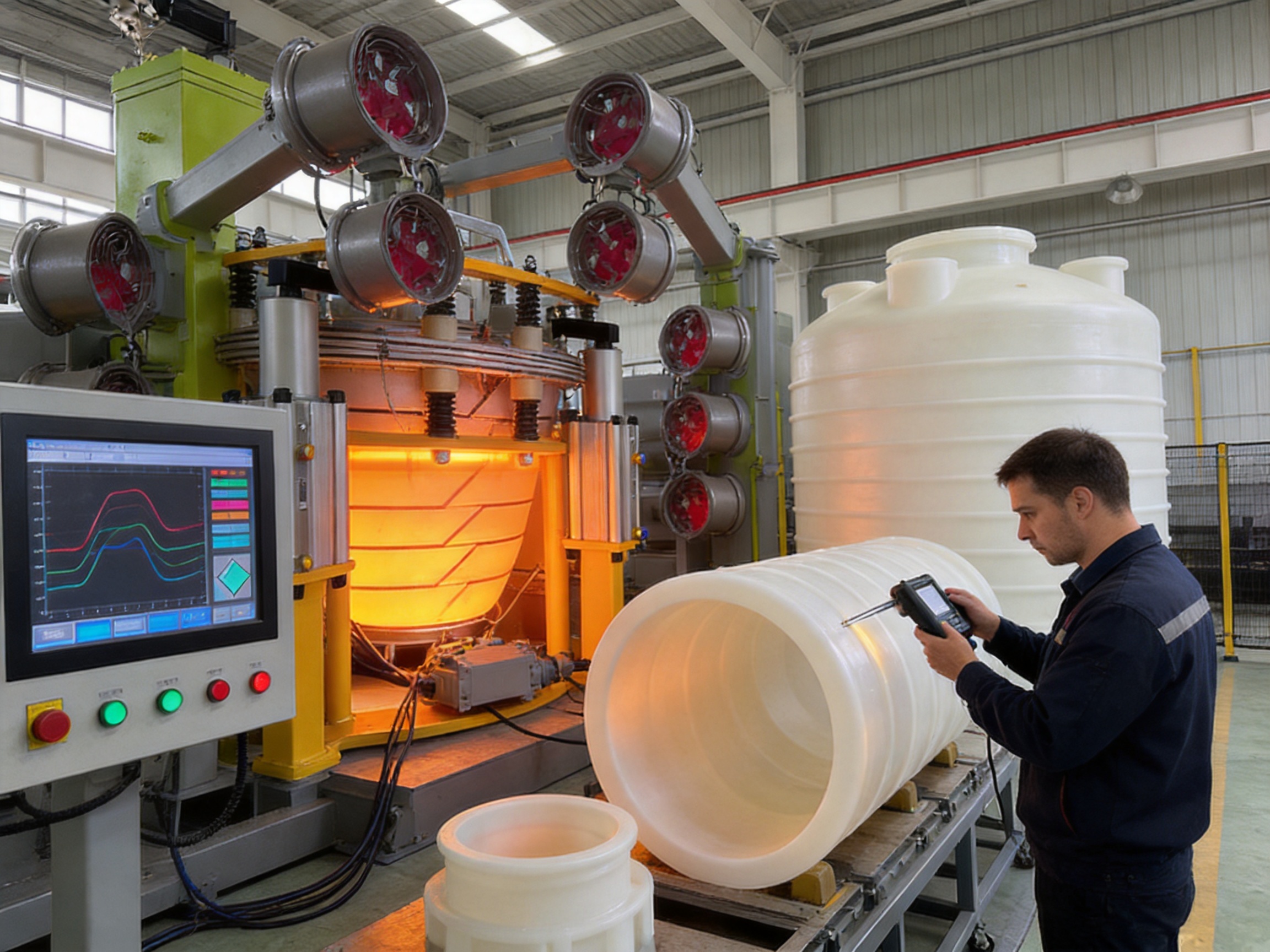
Rotational molding is widely used to manufacture large, hollow plastic products with complex shapes, seamless structures, and relatively uniform wall thicknesses. Water tanks, chemical containers, agricultural bins, industrial housings, outdoor equipment, automotive components, and many customized plastic products can all be produced through this process. However, the quality and efficiency of rotational molding depend heavily on the performance of the mold and the way heat is delivered during each production cycle.
The electrically heated rotational molding mold is an advanced solution developed for manufacturers seeking better thermal control, lower heat loss, improved process repeatability, and a cleaner production environment. Unlike a conventional mold that depends mainly on an external oven or gas-based heating equipment, this type of mold incorporates electric heating elements into or closely around the mold structure. Heat can therefore be delivered more directly to the mold cavity, where it is needed to melt and distribute the polymer material.
Direct electric heating changes the mold from a passive component into an active thermal system. The mold cavity, heating elements, conductive materials, control system, structural frame, and cooling strategy work together as one integrated production tool. This approach provides manufacturers with greater control over the heating cycle and creates new opportunities for energy-efficient plastic molding.
Jiangsu Zhroto Mould Co., Ltd. specializes in the design and manufacture of rotational molding molds, rotomolded products, and integrated technical solutions. With experience in conventional and electrically heated rotational molding systems, the company supports projects from product evaluation and 3D design through mold manufacturing, trial molding, inspection, delivery, and production assistance. Its capabilities are suited to customers who need more than a basic cavity: they need a complete, durable, and controllable mold solution.
1. The Role of Heating in Rotational Molding
Rotational molding begins with a measured quantity of polymer powder or another suitable thermoplastic material placed inside a hollow mold. The mold is then closed and rotated around two or more axes while heat is applied. As the mold temperature rises, the polymer melts and gradually coats the internal cavity surface. Continued rotation helps distribute the material around the cavity. The mold is subsequently cooled while rotation continues, allowing the plastic to solidify into the desired hollow product.
Heating is one of the most important stages in this process. If the mold is heated too slowly, the polymer may not melt completely or may fail to achieve the required surface quality. If the temperature is too high, the material may degrade, discolor, become brittle, or develop excessive internal stress. Uneven heating can result in thin areas, thick areas, pinholes, warpage, poor corner coverage, or inconsistent mechanical performance.
Traditional rotational molding systems commonly place the mold inside an external oven. In other configurations, gas burners or other external heat sources are used to raise the temperature of the mold. These methods remain useful for many applications, but they also present limitations. Heat must pass through the surrounding environment before reaching the mold, and a portion of the thermal energy can be lost to the oven structure, air, machine frame, and surrounding factory space.
An electrically heated rotational molding mold addresses these challenges by bringing the heat source closer to the mold body. The heating elements can be arranged according to the geometry of the cavity and the thermal requirements of the product. This creates a more direct heating path and allows the operator to monitor and adjust the heating process with greater precision.
2. What Is an Electrically Heated Rotational Molding Mold?
An electrically heated rotational molding mold is a specialized rotomolding tool equipped with integrated electric heating elements. These elements may be embedded within the mold structure, mounted in carefully designed heating channels, or positioned close to the mold surface. The specific arrangement depends on the mold material, product dimensions, cavity geometry, required temperature range, and control strategy.
The system generally includes the following major components:
- Rotational molding cavity designed according to the final product geometry.
- Electric heating elements distributed across the mold body.
- Thermal insulation or heat-management structures that reduce unnecessary heat loss.
- Temperature sensors and monitoring points for process feedback.
- Electrical connection and control interfaces compatible with the molding machine.
- Reinforced support frames capable of withstanding repeated rotation and thermal cycling.
- Cooling provisions that allow the part to solidify without damaging the mold or product.
The heating system can be configured as a basic integrated arrangement or as a zoned system. In a basic integrated mold, the heating elements are distributed to provide stable and relatively uniform heating across the cavity. In a zoned electric mold, different areas can be controlled independently. This allows the operator to apply more or less thermal energy to specific sections according to wall thickness, corners, ribs, deep areas, or other product features.
By combining electric heating with accurate mold engineering, the system supports stable processing conditions for both standard and complex hollow plastic products. It is especially useful when a product requires tighter temperature control than a conventional external oven can easily provide.
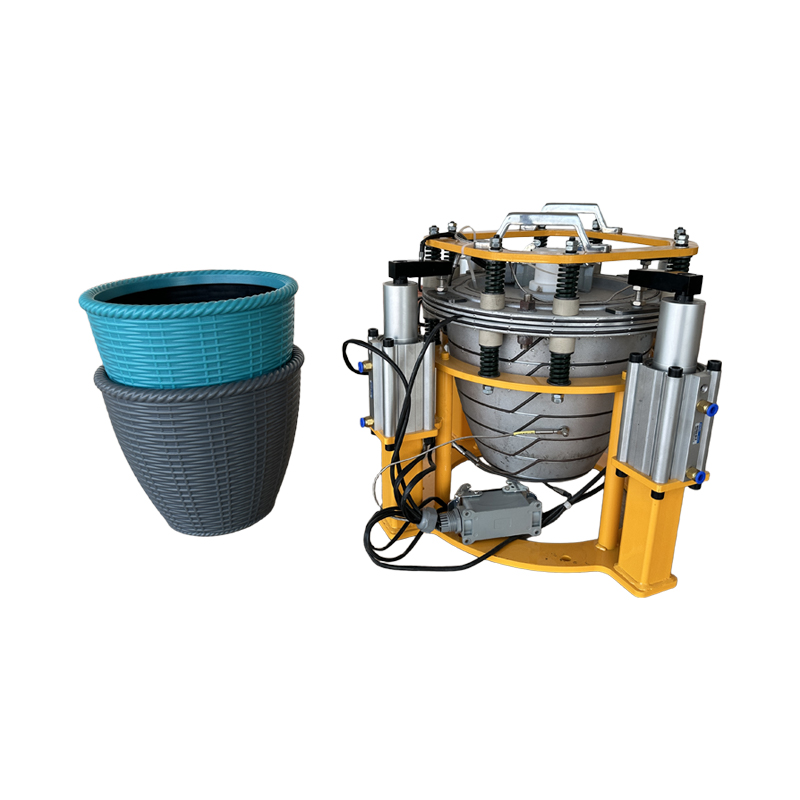
Electrically Heated Rotational Molding Mold
3. Main Design Features of the Product
3.1 Integrated Electric Heating Elements
The most important feature is the integration of electric heating elements into the mold system. These elements are positioned to provide effective heat transfer to the cavity while maintaining the mechanical integrity of the mold. Their distribution is determined during the engineering stage, taking into account the product shape, expected material flow, wall-thickness requirements, and areas that may require additional thermal input.
Proper element distribution helps prevent localized hot spots and cold zones. Hot spots can cause premature melting, material degradation, or excessive wall build-up. Cold zones can lead to incomplete fusion, poor surface appearance, or insufficient coverage in corners and difficult sections. A carefully designed electric heating system supports a more balanced thermal environment throughout the rotational molding cycle.
3.2 High Thermal Conductivity Mold Materials
Mold material selection directly influences heating speed, temperature distribution, surface finish, service life, and maintenance requirements. High thermal conductivity materials can improve the transfer of heat from the electric elements to the cavity surface. This allows the mold to respond more quickly to temperature changes and can help reduce unnecessary heating time.
The material must also withstand repeated heating and cooling cycles, mechanical vibration, rotation, clamping, and handling. A mold that transfers heat efficiently but deforms under thermal stress is not suitable for long-term production. For this reason, thermal performance and structural durability must be considered together during design and manufacturing.
3.3 Modular Heating Zones
Modular heating zones are particularly valuable for products with complex geometries or variable wall thicknesses. Each zone can be assigned an individual temperature setting or heating intensity. This provides the process engineer with greater flexibility than a single undifferentiated heat source.
For example, a deep corner may require additional thermal input because material reaches the area later or because the geometry makes heat transfer less uniform. A flat panel may require less energy than a curved or reinforced section. Independent control allows the heating profile to be adjusted according to actual product requirements instead of applying excessive heat to the entire mold.
3.4 Reinforced Mold Frame
The mold frame must support the cavity and heating system during continuous rotational movement. It also needs to maintain alignment, protect electrical connections, and resist deformation under repeated thermal cycling. A reinforced frame improves the stability of the complete mold assembly and contributes to longer service life.
Frame design is especially important for large tanks, industrial containers, and molds with significant cavity volume. The structure must be strong enough to support the mold while remaining compatible with the rotational molding machine. Careful engineering helps prevent vibration, misalignment, and stress concentration during operation.
3.5 Optimized Cavity Geometry
The cavity is designed not only to reproduce the external shape of the product but also to support stable material movement during rotation. Rounded transitions, suitable draft angles, balanced sections, and properly designed corners can improve polymer distribution and reduce internal stress.
When cavity geometry and heating layout are designed together, the mold can provide more consistent wall thickness and improved surface quality. This integrated approach is more effective than treating the heating system as an afterthought added to an existing mold design.
4. How Electric Heating Improves Energy Efficiency
Heating represents a substantial portion of the energy consumed during rotational molding. Conventional external ovens must heat not only the mold but also the surrounding air, oven walls, fixtures, and other machine components. Some of this energy eventually reaches the mold, but another portion is dissipated into the production environment.
An electrically heated rotational molding mold places the heat source closer to the mold structure. This shortens the distance that thermal energy must travel before reaching the polymer. Direct heat transfer can reduce unnecessary losses and support faster thermal response. The actual energy savings will depend on mold size, product geometry, material, cycle time, insulation, operating temperature, and factory conditions, but the design principle is consistent: heat can be delivered more accurately to the location where it is required.
Electric heating also supports energy efficiency through better control. Excessive heating is often used in conventional systems to compensate for uneven temperature distribution or heat loss. When the mold surface can be monitored and adjusted more accurately, the process may require less thermal overshoot. Zoned heating can further reduce unnecessary energy use by directing additional power only to areas that need it.
Shorter heating cycles may improve machine utilization by reducing the time required for each batch. More stable cooling and heating conditions can also reduce rejected parts caused by incomplete melting, uneven walls, or thermal degradation. In this way, energy efficiency is connected not only with electricity consumption but also with productivity, material utilization, and reduced rework.
ZHROTO reports thermal efficiency above 95 percent and potential energy consumption reductions of approximately 30 to 50 percent for its electric-heated rotomolding solutions, depending on equipment configuration and production conditions. These figures should be evaluated through application-specific testing because every product and factory environment is different. Nevertheless, integrated electric heating provides a strong technical foundation for energy-efficient plastic molding.
5. Advantages Over Conventional Rotational Molding Molds
Conventional rotational molding molds are commonly heated in an external oven or by a gas-based system. Such equipment can be reliable and cost-effective for established applications, but it may provide less direct control over individual areas of the mold. An electrically heated mold offers several potential advantages when precision, energy management, cleanliness, and automation are important.
| Feature | Electrically Heated Rotational Molding Mold | Conventional Rotational Molding Mold |
|---|---|---|
| Heating method | Electric heating elements integrated into or closely connected to the mold | External oven, gas burner, or other surrounding heat source |
| Temperature control | Direct, adjustable, and suitable for independent heating zones | More dependent on oven temperature and air circulation |
| Heat transfer | Shorter and more direct path to the mold cavity | Heat must travel through the surrounding environment and mold structure |
| Energy management | Supports localized heating and reduced heat loss | May require heating a larger volume of air and equipment |
| Production environment | No combustion gases from the heating process | Gas systems may involve combustion emissions and additional ventilation |
| Installation flexibility | Compact and modular configuration | May require a large oven or extensive heating infrastructure |
| Automation potential | Well suited to digital monitoring and programmable control | Automation depends strongly on the external oven system |
| Thermal response | Fast response when correctly designed and controlled | May be slower because the entire oven environment must change |
5.1 More Precise Temperature Control
Temperature accuracy is essential when producing parts with demanding dimensional or mechanical requirements. Integrated sensors and electric control systems allow operators to monitor thermal conditions more closely. The system can be programmed to follow a repeatable heating profile rather than relying only on general oven temperature.
For products with complex shapes, independent zones can compensate for differences in heat transfer. This improves control over polymer melting and can help maintain more uniform wall thickness.
5.2 Cleaner Operation
Electric heating does not require open flames or gas combustion within the heating process. As a result, it can reduce combustion-related emissions and simplify the production environment. Cleaner operation may benefit factories that are working toward stricter environmental standards, improved indoor air quality, or lower workplace heat exposure.
5.3 Reduced Floor-Space Requirements
External ovens can occupy significant factory space and may require additional ventilation, gas supply, insulation, and safety infrastructure. A compact electric heating system can reduce dependence on large heating equipment. This may provide more flexibility when planning automated production lines or expanding an existing facility.
5.4 Improved Repeatability
Repeatability is a major factor in commercial production. A stable heating profile helps produce parts with consistent appearance, wall thickness, dimensional accuracy, and mechanical properties. Digital temperature monitoring also makes it easier to record process data and reproduce successful settings between batches.
6. Zoned Heating for Complex Products
Some rotationally molded products are simple enough to use a relatively uniform heating profile. Others contain ribs, deep recesses, sharp transitions, curved surfaces, thick structural sections, and areas that are difficult to heat evenly. For these applications, zoned heating can provide an important advantage.
A zoned electric mold divides the heating system into separate control areas. Each area may include its own heating elements, sensor, control setting, and monitoring logic. The number and arrangement of zones depend on the size and complexity of the mold. A small customized part may require only a few zones, while a large industrial container may use a more detailed heating layout.
During engineering, the mold manufacturer studies the product drawing, material, expected wall thickness, rotation pattern, and production cycle. Areas with deeper geometry or greater material requirements may receive additional heating capacity. Sections that heat quickly can be controlled more conservatively to prevent overheating.
Independent zone control can also improve development efficiency. During trial molding, process engineers can adjust one section without changing the entire mold. This makes it easier to identify the cause of a wall-thickness variation or surface defect. Once the correct settings are established, the data can be stored as part of the production recipe.
ZHROTO has invested in electric-heated rotomolding technology since 2023 and supports independent zoned heating and temperature control accuracy in the approximate range of 1 to 2 degrees Celsius under suitable operating conditions. This capability is valuable for manufacturers that require stable thermal settings and detailed process management.
7. Applications of Electrically Heated Rotational Molding Molds
7.1 Water Tanks and Chemical Storage Tanks
Large water tanks and chemical storage tanks often require seamless construction, consistent wall thickness, and reliable structural performance. The absence of welded seams can reduce potential leakage points, while controlled heating helps ensure that the polymer reaches all required areas of the cavity.
Electric heating is useful for large tank molds because the cavity may contain extensive curved surfaces and sections with different thermal requirements. Zoned heating can help balance the thermal profile and improve the repeatability of tank production.
7.2 Agricultural and Industrial Bins
Agricultural bins, waste containers, material-handling boxes, and industrial storage products must often withstand impact, weather exposure, chemicals, and repeated handling. Uniform walls and properly fused corners contribute to product durability.
Electrically heated molds can support consistent production for these products while reducing reliance on large external ovens. Digital monitoring also makes it easier to maintain stable settings across long production runs.
7.3 Plastic Housings and Enclosures
Industrial equipment housings, machine covers, electrical enclosures, and protective shells may contain complex internal geometries. They may also require precise openings, mounting areas, inserts, or reinforced sections. Zoned heating helps manage the different thermal requirements created by these features.
The mold cavity can be engineered to support material flow around corners and transitions. Accurate heating helps reduce the risk of incomplete coverage, excessive wall accumulation, or deformation during cooling.
7.4 Automotive and Transportation Components
Rotational molding is used for selected automotive and transportation components where hollow construction, impact resistance, and design flexibility are important. Examples may include fluid reservoirs, protective covers, ducts, storage units, and specialized vehicle components.
Electric heating can help manufacturers achieve repeatable thermal conditions for products with demanding dimensional requirements. The system may also support the integration of automated process monitoring in larger production programs.
7.5 Outdoor and Public-Facility Products
Outdoor equipment, playground components, road barriers, sanitation products, planters, and public-facility units may require weather resistance and long-term durability. Consistent material distribution is important because these products are exposed to temperature changes, impact, ultraviolet radiation, and repeated handling.
A well-designed electric mold can support stable wall thickness and consistent surface quality while providing a cleaner production process for manufacturers operating multiple product lines.
8. Manufacturing Process and Engineering Workflow
The performance of an electrically heated rotational molding mold depends on the quality of the engineering and manufacturing process. A successful project begins before machining. It requires a detailed understanding of the final product, polymer material, production volume, machine compatibility, heating requirements, and maintenance expectations.
8.1 Product and Application Review
The first step is to review the product design and its intended application. Important information includes overall dimensions, wall-thickness targets, internal features, openings, ribs, corners, draft angles, material type, expected production quantity, and operating environment.
The manufacturer also evaluates whether the product is best suited to standard integrated electric heating or a zoned configuration. Large and complex parts may require a more detailed thermal layout. The expected rotation pattern is also considered because it influences how the polymer moves inside the cavity.
8.2 Three-Dimensional Mold Engineering
Three-dimensional modeling is used to develop the mold cavity, parting lines, frame, heating-element layout, sensor locations, connection points, and supporting structures. Digital modeling helps engineers identify interference, evaluate access for maintenance, and optimize the relationship between the product geometry and the thermal system.
At this stage, engineers can also review mold opening, product removal, venting, inserts, fasteners, and cooling provisions. Early digital evaluation reduces the risk of costly modifications after manufacturing begins.
8.3 Heating-System Design
The heating system is designed according to the product’s thermal requirements. Engineers determine element position, electrical capacity, control zones, sensor arrangement, insulation strategy, connection protection, and temperature-monitoring method.
The objective is not simply to maximize heating power. Excessive power can create hot spots, increase energy consumption, and make control more difficult. The design must provide enough thermal capacity for the required cycle while maintaining balanced distribution and safe operation.
8.4 Precision CNC Machining
After the design is approved, mold components are produced using precision manufacturing equipment. CNC machining helps achieve accurate cavity dimensions, clean surfaces, consistent interfaces, and reliable alignment between mold sections. The quality of machining directly affects the final product’s surface finish and dimensional accuracy.
Machining accuracy is also important for heating integration. Channels, mounting locations, sensor positions, and structural interfaces must be manufactured according to the design so that the heating system performs consistently.
8.5 Assembly and Electrical Integration
The mold cavity, frame, heating elements, sensors, electrical connections, insulation, and control interfaces are assembled and inspected. Electrical components must be securely protected against movement, vibration, heat, and repeated production cycles.
Service accessibility is considered during assembly. Replaceable heating components and accessible inspection points can reduce long-term maintenance time and cost.
8.6 Trial Molding and Validation
Trial molding is used to verify the mold structure, heating performance, product dimensions, wall thickness, surface quality, and demolding behavior. Engineers may adjust heating-zone settings, rotation speed, cycle duration, cooling conditions, or material loading during this stage.
Trial validation is especially important for complex electric molds because the correct settings depend on the interaction between the mold, material, machine, and product. Production data from the trial can be used to establish repeatable operating parameters.
8.7 Inspection and Delivery
Before delivery, the mold is inspected for cavity dimensions, surface condition, structural integrity, electrical performance, control compatibility, and overall assembly quality. Documentation may include operating guidance, heating-zone information, maintenance recommendations, and technical support procedures.
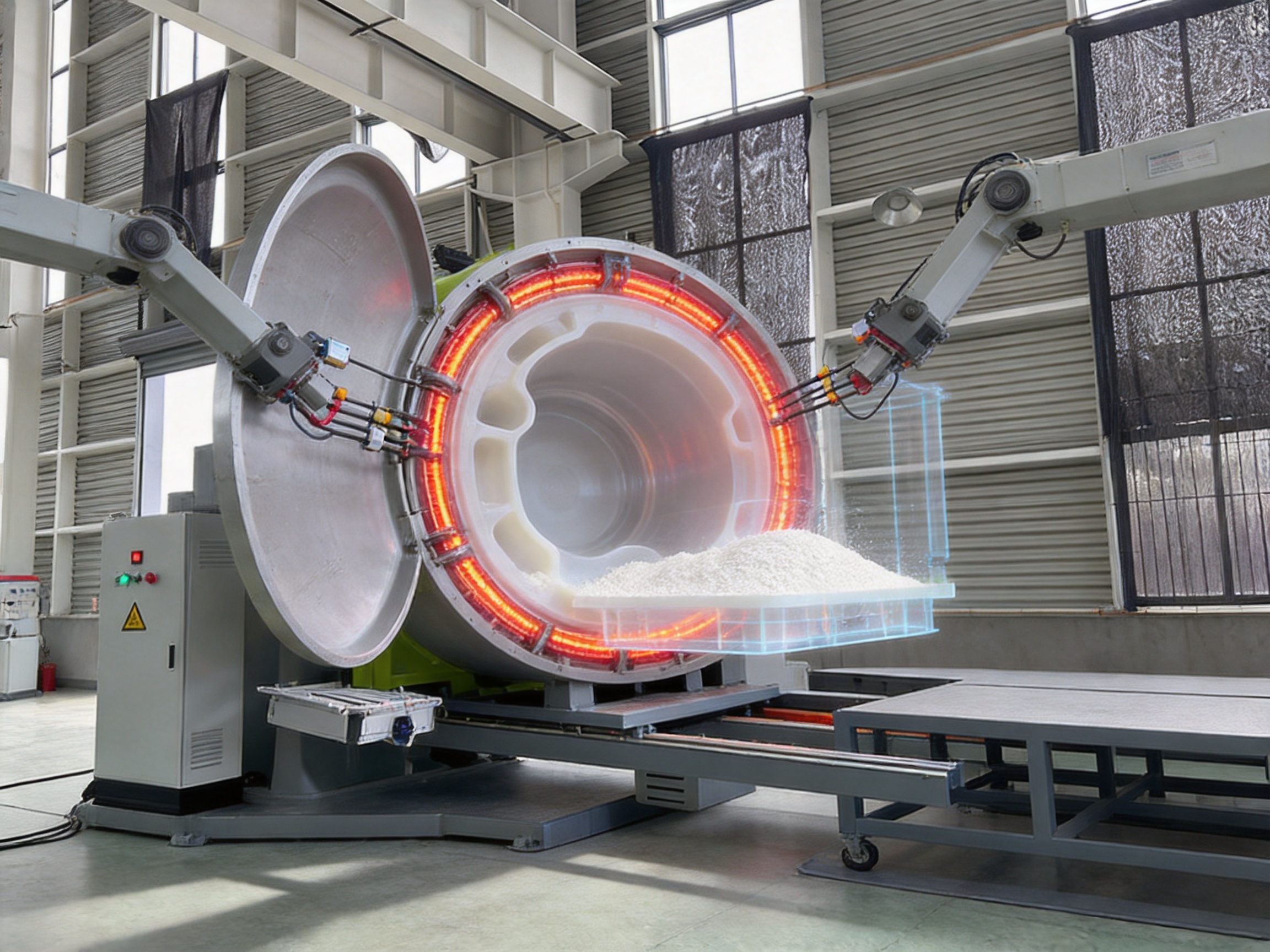
9. Manufacturing Strengths of Jiangsu Zhroto Mould Co., Ltd.
Jiangsu Zhroto Mould Co., Ltd. is a professional enterprise specializing in rotational molding mold design, manufacturing, rotomolded product processing, and integrated technical services. The company was founded in 2015 and moved to a modern facility in Jiangyan District, Taizhou City, in 2021.
The facility covers approximately 18,000 square meters, including more than 12,000 square meters of standardized production workshops. This manufacturing space supports mold engineering, material preparation, machining, assembly, trial production, inspection, and product processing. A standardized workshop environment helps organize production activities and supports the consistent handling of large mold components.
The company has an annual mold production capacity of more than 800 sets. This capacity provides experience in handling different mold sizes, product geometries, material requirements, and production schedules. It also allows customers to work with a manufacturer that understands both individual customized projects and larger-volume tooling requirements.
Jiangsu Zhroto Mould Co., Ltd. provides a one-stop process that includes:
- Product design evaluation.
- Mold structure development.
- Three-dimensional modeling.
- Heating-system planning.
- Precision CNC machining.
- Mold assembly.
- Trial molding and sample validation.
- Quality inspection.
- Delivery and installation support.
- Production parameter assistance.
- Maintenance recommendations and technical service.
This integrated workflow is a significant advantage for electrically heated molds because the mold structure and the heating system must be designed together. A supplier that only manufactures the cavity may not be able to optimize electrical control, thermal distribution, and production compatibility as effectively as a company with broader technical capabilities.
The company also manufactures rotomolded plastic products, giving its engineers practical knowledge of polymer behavior, wall-thickness development, demolding, surface finish, and production-cycle optimization. Experience in both mold manufacturing and finished-product production can help shorten communication cycles during project development.
Its products are used in hydrogen energy storage and transportation, automotive parts, industrial equipment, agricultural machinery, water treatment, outdoor facilities, and other fields. The company has obtained ISO 9001:2015, ISO 14001:2015, and ISO 45001:2018 certifications. These certifications reflect its quality-management, environmental-management, and occupational-health-and-safety systems.
10. Quality, Safety, and Reliability Considerations
Electric heating introduces additional technical requirements compared with a passive conventional mold. The heating elements, sensors, cables, connectors, control units, and insulation must be designed for the operating environment. Mechanical rotation and repeated heating cycles create stress that must be addressed from the beginning of the project.
10.1 Electrical Safety
Electrical connections must be protected against heat, vibration, moisture, accidental contact, and mechanical damage. Grounding, insulation, protective devices, and control-system compatibility should be verified before the mold enters production.
Operators should follow the supplier’s procedures for inspection, shutdown, troubleshooting, and component replacement. Electrical safety should be treated as part of the complete mold system rather than as a separate accessory.
10.2 Thermal Safety
Accurate temperature monitoring helps prevent overheating and protects both the mold and polymer material. Control limits, alarms, sensor checks, and emergency shutoff procedures should be included in the operating plan.
Because electric heating can respond quickly, the control system must be correctly tuned. Rapid heating without suitable monitoring may cause temperature overshoot. A well-engineered system balances heating power with sensor feedback and production-cycle requirements.
10.3 Mechanical Reliability
The mold frame, cavity, fasteners, and electrical supports must tolerate continuous rotation. Reinforced structures and proper alignment reduce vibration and mechanical fatigue. The mold should also be designed to prevent excessive deformation when heated to operating temperature.
10.4 Maintenance Accessibility
Routine maintenance may include checking electrical connections, inspecting heating elements, verifying sensor operation, cleaning the cavity, examining fasteners, and checking the frame. Replaceable heating components can reduce downtime and lower long-term maintenance expenses.
Maintenance planning should be considered during the design stage. Easy access to inspection points and service components helps preserve stable performance throughout the mold’s working life.
11. Comparison with Other Electric and Gas-Heated Solutions
Not all electric molds offer the same performance. The quality of the heating layout, thermal materials, sensors, controls, insulation, and mechanical design has a direct influence on the production result. A basic electric mold may provide direct heating but limited flexibility, while a zoned precision mold can offer more advanced control for complex products.
| Solution Type | Strengths | Potential Limitations | Best-Suited Applications |
|---|---|---|---|
| Conventional external oven mold | Established technology and broad equipment familiarity | Greater heat loss and less localized control | General hollow products and standard production |
| Basic integrated electric mold | Direct heating, compact arrangement, cleaner operation | Less flexible if the mold has only one heating circuit | Tanks, bins, and products with relatively uniform requirements |
| Zoned electric mold | Independent temperature adjustment and localized energy delivery | Higher design complexity and control requirements | Complex products, variable wall thicknesses, and precision applications |
| High-performance custom electric mold | Integrated structure, optimized thermal design, automation potential | Requires careful engineering and validation | Large, demanding, or high-volume production programs |
The most appropriate solution depends on the product and production objectives. A manufacturer seeking lower energy use and cleaner operation may benefit from basic electric integration. A manufacturer producing complicated industrial housings or large tanks may obtain greater value from zoned heating and advanced monitoring.
12. Customization Capabilities
Rotational molding projects often involve customized product designs, and the mold must be adapted accordingly. Jiangsu Zhroto Mould Co., Ltd. can support customization in several areas.
- Custom mold dimensions based on the product size and machine capacity.
- Customized cavity shapes for tanks, containers, housings, bins, and specialty products.
- Heating-zone layouts based on wall-thickness requirements and product geometry.
- Electrical control integration for digital temperature monitoring.
- Surface treatments and coatings that support mold release and wear resistance.
- Reinforced frames for large or heavy molds.
- Special arrangements for inserts, openings, ribs, handles, and mounting features.
- Control-system configurations compatible with existing production equipment.
Customization should begin with a complete technical review rather than with cavity dimensions alone. Product function, polymer grade, expected cycle time, production quantity, operating environment, machine interface, and future expansion plans can all influence the best mold configuration.
13. Selecting the Right Electrically Heated Mold
Manufacturers should consider several questions before selecting an electrically heated rotational molding mold. The first is the product geometry. A simple, evenly shaped part may require a straightforward integrated system, while a product with deep corners, ribs, and variable thickness may require independent zones.
The second consideration is the polymer material. Polyethylene is one of the most common materials used in rotational molding, but other thermoplastics may have different melting, processing, and cooling requirements. The heating system must be designed around the actual processing window of the chosen material.
The third consideration is production volume. A mold used for occasional production may have different cost priorities from a mold used continuously on an automated line. For high-volume work, cycle-time reduction, repeatability, maintenance accessibility, and data monitoring may provide greater long-term value than the lowest initial purchase price.
The fourth consideration is machine compatibility. Electrical power requirements, control interfaces, available space, rotation capacity, safety systems, and connection arrangements must be confirmed before final design approval.
The fifth consideration is future flexibility. If the manufacturer expects product modifications or additional product sizes, a modular heating and control concept may make future adaptation easier.
14. Process Control and Production Optimization
A high-quality mold can only produce consistent parts when it is operated with appropriate process parameters. These may include material quantity, material preparation, heating temperature, heating time, rotation speed, rotation ratio, cooling method, demolding time, and inspection criteria.
Electric heating improves the operator’s ability to control the thermal part of the process, but other variables still matter. Material loading must be consistent. Rotation must provide adequate coverage of the cavity. Cooling must be controlled to prevent excessive shrinkage or deformation. Venting must allow air and gases to escape without creating defects.
Data recording can support continuous improvement. Operators can monitor temperature curves, heating duration, zone settings, cycle time, and product inspection results. If a defect appears, the recorded information can help identify whether the cause is thermal, mechanical, material-related, or operational.
For automated lines, electric heating is particularly suitable for programmable recipes. Different products can be assigned different zone settings and cycle profiles. This reduces dependence on manual adjustment and helps standardize production between shifts.
15. Environmental and Workplace Benefits
Electric heating can contribute to a cleaner production environment by eliminating combustion gases from the mold-heating process. This may simplify ventilation requirements and reduce the risks associated with open flames or gas supply systems.
External ovens can also increase the temperature of the surrounding factory area. By concentrating more heat near the mold, an integrated electric system may reduce unnecessary heat release into the workplace. The actual improvement depends on insulation, factory ventilation, ambient conditions, and equipment layout, but direct heating provides a practical basis for better thermal management.
Energy efficiency and emissions reduction are increasingly important for manufacturers serving international customers. A controllable electric heating system can support corporate sustainability goals while maintaining the production performance required for commercial applications.
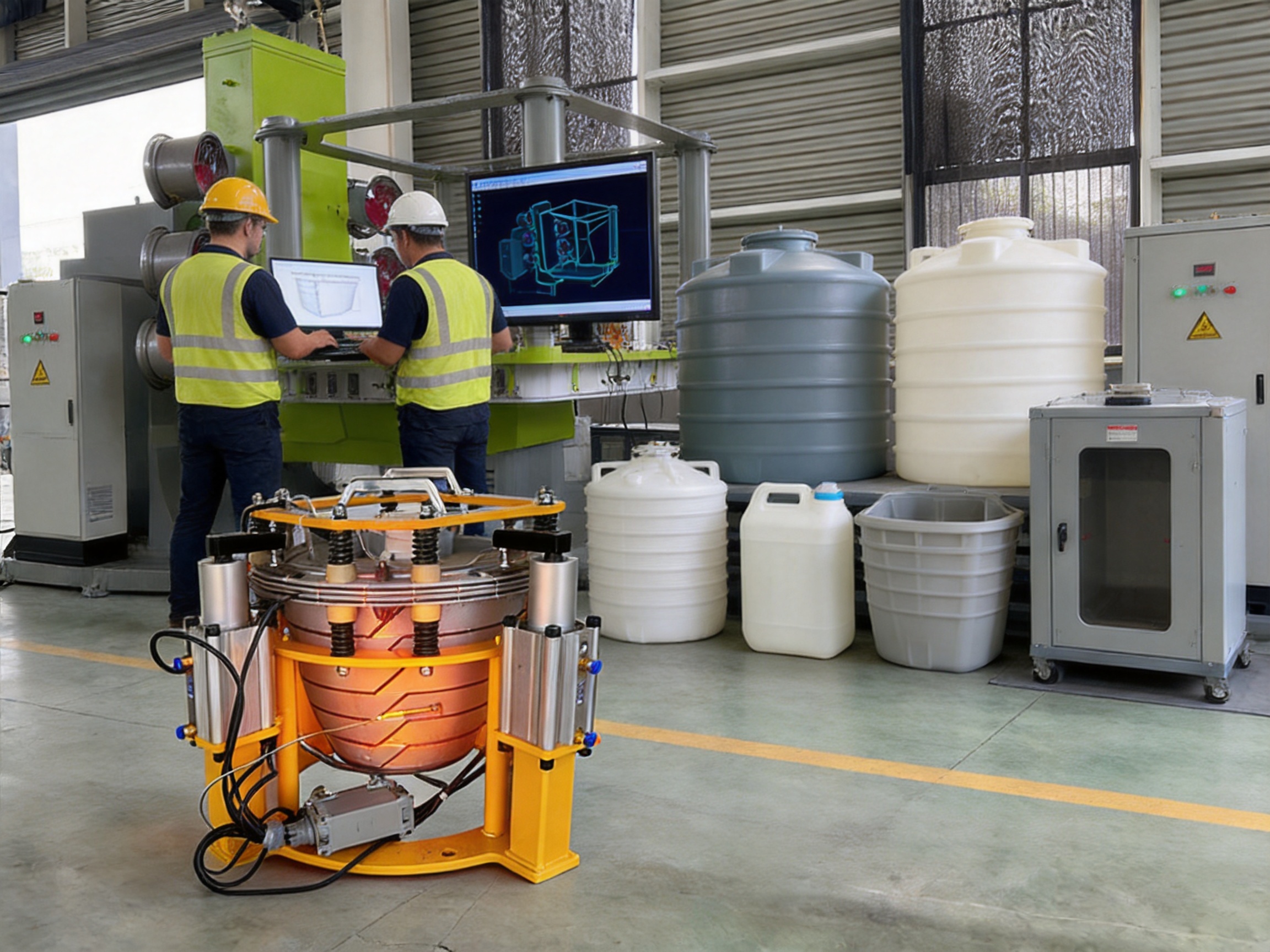
16. Service Life and Long-Term Value
The service life of an electrically heated rotational molding mold depends on design quality, operating conditions, material selection, maintenance, and production discipline. Properly engineered molds can provide a service life comparable to or exceeding that of conventional rotational molding molds.
Repeated thermal cycling is one of the main factors affecting mold life. The cavity and frame expand and contract during every production cycle. If the structure is not properly designed, repeated stress may lead to deformation, cracking, loose connections, or dimensional changes. Robust construction and suitable materials reduce these risks.
Heating elements and sensors are service components and may eventually require replacement. A modular design with accessible components helps minimize downtime. Routine inspection can identify loose connections, insulation deterioration, sensor drift, or abnormal heating before these issues affect product quality.
Long-term value should be evaluated through total production cost rather than purchase price alone. Energy consumption, cycle time, rejected parts, maintenance, floor-space requirements, ventilation, labor, and product consistency all influence the economic result. An electrically heated mold may provide stronger value when these factors are considered over several years of production.
17. Why Choose an Integrated Mold Manufacturer?
Electrically heated rotational molding requires coordination between mold engineering, thermal design, electrical control, machining, assembly, and product validation. Working with an integrated manufacturer reduces the risk of communication gaps between separate suppliers.
A manufacturer with experience in both molds and rotomolded products can evaluate whether the mold will produce the required part, not merely whether the cavity can be manufactured. This practical perspective helps identify problems involving material distribution, wall thickness, demolding, inserts, cooling, and cycle time before the project reaches full production.
Jiangsu Zhroto Mould Co., Ltd. combines mold design and manufacturing with rotomolded product processing and technical support. Its facility, machining capabilities, quality systems, annual mold capacity, and experience in multiple industrial sectors provide a foundation for customized electric-heated projects.
The company’s one-stop service model also supports communication after delivery. Production assistance, maintenance advice, and parameter optimization can help customers make better use of the mold throughout its working life.
18. Frequently Asked Questions
Q1: What is the main advantage of an electrically heated rotational molding mold?
The main advantage is direct and controllable heat delivery. Heating elements integrated into the mold can improve thermal consistency, reduce dependence on external ovens, support accurate temperature adjustment, and help create more repeatable molding cycles.
Q2: Can the mold process polyethylene?
Yes. Electrically heated rotational molding molds are suitable for common rotomolding polymers such as polyethylene and other thermoplastics that require controlled and uniform heating. The final configuration should be selected according to the material grade and processing temperature.
Q3: How does electric heating improve wall-thickness consistency?
Stable thermal conditions help the polymer melt and distribute more evenly across the cavity surface. Zoned heating can also compensate for areas with different geometric or heat-transfer requirements. Consistent heating does not work alone, however; material loading, rotation, mold design, and cooling must also be properly controlled.
Q4: Is a zoned heating system necessary for every product?
No. A basic integrated electric system may be sufficient for products with relatively uniform geometry and thermal requirements. Zoned heating is most valuable for products with variable wall thicknesses, deep corners, ribs, complex curves, or other features that require localized thermal adjustment.
Q5: Can an electrically heated mold be installed on an existing rotational molding machine?
In many cases, it can be adapted to existing equipment. Compatibility must be confirmed by reviewing available electrical power, control interfaces, mold dimensions, machine load capacity, rotation requirements, and safety provisions.
Q6: Does electric heating eliminate the need for cooling equipment?
No. Cooling remains an important stage of rotational molding. After the polymer has fused and achieved the required condition, controlled cooling allows the product to solidify. The cooling method must be designed to avoid excessive shrinkage, deformation, or internal stress.
Q7: Is an electrically heated mold safer than a gas-heated system?
Electric heating eliminates open flames and combustion gases from the mold-heating process, which can improve workplace safety and simplify environmental management. Electrical safety procedures are still required, including grounding, insulation, protective devices, and regular inspection.
Q8: What maintenance does the mold require?
Routine maintenance may include inspecting heating elements, sensors, electrical connections, fasteners, frame components, cavity surfaces, and control interfaces. The mold should also be cleaned and checked for deformation or damage after production cycles. Replaceable components can help reduce maintenance downtime.
Q9: What products are suitable for this technology?
Typical applications include water tanks, chemical storage tanks, industrial and agricultural bins, plastic housings, outdoor products, automotive components, transportation parts, water-treatment equipment, and customized hollow plastic products.
Q10: How should energy-saving claims be evaluated?
Energy performance depends on the mold design, product geometry, polymer, operating temperature, cycle time, insulation, factory environment, and equipment configuration. Manufacturers should compare measured energy use under equivalent production conditions rather than relying only on general estimates.
Q11: What information should be provided when requesting a quotation?
Useful information includes product drawings or samples, dimensions, material, wall-thickness targets, annual production quantity, machine specifications, expected cycle time, surface requirements, inserts, openings, heating preferences, and any existing control-system details.
Q12: Can the manufacturer provide technical support after delivery?
Jiangsu Zhroto Mould Co., Ltd. provides production technical support, maintenance advice, and assistance with mold validation and process optimization. This support helps customers integrate the mold into their production system and maintain stable performance.
19. Conclusion
The electrically heated rotational molding mold is a modern solution for manufacturers that need more precise thermal management, improved energy utilization, cleaner operation, and reliable production repeatability. By integrating electric heating elements into the mold structure, the system delivers heat closer to the cavity and provides greater control than many conventional external heating arrangements.
Its advantages are especially clear in the production of large hollow products, complex industrial components, storage tanks, agricultural containers, automotive parts, and customized plastic products. Integrated heating can improve responsiveness and reduce heat loss, while independent heating zones can address local differences in geometry and wall-thickness requirements.
The performance of the product depends on more than the heating elements themselves. Mold materials, cavity design, frame reinforcement, sensor placement, electrical protection, control software, machining accuracy, trial validation, and maintenance planning all contribute to the final result.
Jiangsu Zhroto Mould Co., Ltd. supports these requirements through integrated mold engineering, precision manufacturing, electric-heating technology, trial molding, product processing, inspection, delivery, and technical service. Its modern facility, standardized workshops, annual mold capacity of more than 800 sets, certified management systems, and experience across industrial applications make it a capable partner for customized rotational molding projects.
For manufacturers evaluating a transition from conventional heating to a more controllable and energy-conscious process, an electrically heated rotational molding mold can provide a practical path toward improved product quality, production stability, and long-term manufacturing efficiency.
References
1. ASTM International. Standards and Technical Guidance for Plastic Materials and Rotational Molding Applications.
2. Plastics Industry Association. Rotational Molding Process Principles and Production Considerations.
3. International Organization for Standardization. ISO 9001:2015, Quality Management Systems — Requirements.
4. International Organization for Standardization. ISO 14001:2015, Environmental Management Systems — Requirements with Guidance for Use.
5. International Organization for Standardization. ISO 45001:2018, Occupational Health and Safety Management Systems — Requirements with Guidance for Use.
6. Association of Rotational Molders. Technical Guidance on Mold Design, Heating, Cooling, and Process Control.
7. Technical documentation on electrically heated rotational molding systems, thermal control, and zoned heating practices.
8. Jiangsu Zhroto Mould Co., Ltd. Product information and manufacturing capability materials for rotational molding molds and rotomolded plastic products.
Product: Electrically Heated Rotational Molding Mold


We provide customers with one-stop services ranging from product design, mold manufacturing to finished product production.
-
 +86-18006248936
-
 ricky.t@zhroto.com
-
 No.9 Jiangyuan Road, Luotang Street, Jiangyan District, Taizhou City,Jiangsu Province, China
Copyright © Jiangsu Zhroto Mould Co., Ltd. Rights Reserved.Custom Rotational Plastic Molding Factory
