 en
 中文简体
 русский
 Español
 Deutsch
 Polskie
 REQUEST A QUOTE

 Home / Author / Linnea Qiao — International Sales Manager / Rotational Molding Furniture Molds for Durable Large-Scale Plastic Furniture
Rotational Molding Furniture Molds for Durable Large-Scale Plastic Furniture
Content
- 1 What Is a Rotational Molding Furniture Mold?
- 2 Why Rotational Molding Is Suitable for Furniture
- 3 Furniture Applications for Rotational Molding
- 4 Product Design Requirements for Furniture Molds
- 5 Conventional Rotational Molding Furniture Molds
- 6 Electric-Heated Rotational Molding Furniture Molds
- 7 Aluminum Mold Construction and Its Benefits
- 8 Advanced Manufacturing Process
- 8.1 1. Product Consultation and Requirement Review
- 8.2 2. Three-Dimensional Modeling and Product Optimization
- 8.3 3. Mold Engineering and Structural Design
- 8.4 4. Precision CNC Machining
- 8.5 5. Finishing and Surface Treatment
- 8.6 6. Assembly and Functional Inspection
- 8.7 7. Mold Trial and Sample Validation
- 8.8 8. Delivery, Production Guidance, and Maintenance Support
- 9 Controlling Wall Thickness and Edge Strength
- 10 Surface Finish, Appearance, and Product Quality
- 11 Production Volume and Total Cost of Ownership
- 12 Why Choose an Integrated Mold Manufacturer?
- 13 Quality Assurance for Rotational Molding Furniture Molds
- 14 Maintenance and Service Life
- 15 Environmental and Operational Considerations
- 16 How to Select the Right Furniture Mold Supplier
- 17 Frequently Asked Questions
- 17.1 What is the main advantage of a rotational molding furniture mold?
- 17.2 Is rotational molding suitable for large plastic furniture?
- 17.3 Why is aluminum commonly used for furniture molds?
- 17.4 Can rotational molding produce strong furniture edges?
- 17.5 When should electric-heated tooling be considered?
- 17.6 Are conventional gas-heated molds still practical?
- 17.7 What information is needed to quote a furniture mold?
- 17.8 How long can a rotational molding furniture mold last?
- 17.9 What quality checks should be performed during mold trials?
- 17.10 What services does Jiangsu Zhroto Mould Co., Ltd. provide?
- 18 Conclusion
- 19 References
- 20 Product: Rotational molding furniture mold

Rotational molding furniture molds provide an efficient and adaptable solution for manufacturing large, hollow, seamless plastic furniture. The process is suitable for chairs, tables, cabinets, storage containers, benches, children’s furniture, outdoor equipment, recreational products, and other applications requiring dependable strength and weather resistance. Compared with many high-pressure molding methods, rotational molding offers lower tooling complexity, flexible product dimensions, and excellent possibilities for producing one-piece structures.
A well-engineered rotational molding furniture mold is more than a cavity used to shape plastic. It is a production tool that influences wall thickness, edge strength, surface quality, dimensional stability, cycle time, energy consumption, and the service life of the finished product. Mold design must therefore be developed together with product geometry, polymer selection, heating equipment, production volume, and the intended use of the furniture.
Jiangsu Zhroto Mould Co., Ltd. specializes in rotational molding mold design, mold manufacturing, rotomolded product processing, and integrated technical solutions. Its capabilities cover product design optimization, three-dimensional engineering, precision machining, mold testing, sample validation, inspection, delivery, production guidance, and maintenance advice. The company’s manufacturing experience supports furniture projects that require large dimensions, complex curves, controlled wall thickness, strong edges, and long-term durability.
This article explains the structure, advantages, manufacturing process, cost factors, heating options, material considerations, quality controls, and application value of rotational molding furniture molds. It also explains why professional engineering support is important when developing custom rotomolded furniture tooling for commercial, industrial, residential, and outdoor use.
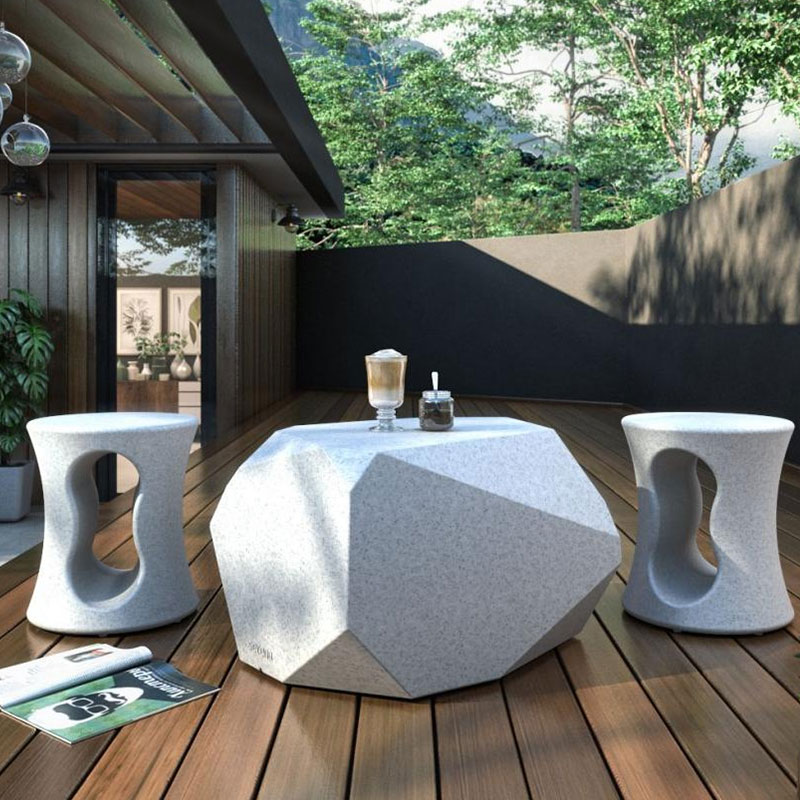
Rotational molding furniture mold
What Is a Rotational Molding Furniture Mold?
A rotational molding furniture mold is a hollow tool used to form plastic furniture through a controlled heating and rotation process. A measured quantity of polymer powder is placed inside the mold. The mold is then closed and rotated around two axes while it is heated. As the polymer melts, it gradually coats the internal surfaces of the mold. After the desired material distribution is achieved, the mold is cooled while rotation continues. Once the plastic has solidified, the mold is opened and the finished part is removed.
This process is different from injection molding because the material is not forced into the cavity under high pressure. It is also different from blow molding, which typically depends on air pressure to expand a heated tube or preform. Rotational molding relies mainly on heat, gravity, rotation, and carefully designed material flow. As a result, the tooling can be relatively simple, even when the finished product is large.
Furniture produced with rotational molding is generally hollow and can be manufactured as a seamless one-piece structure. This construction reduces the need for multiple joints, fasteners, welds, and assembly operations. Fewer joints can help reduce weak points, water entry paths, dirt accumulation areas, and long-term maintenance requirements.
The mold is usually manufactured in aluminum or another material selected according to product size, geometry, heating requirements, production volume, and surface specifications. Aluminum is frequently chosen because it transfers heat efficiently and can be machined into complex ergonomic contours. A suitable mold material also contributes to more consistent heating and better reproduction of the intended product shape.
Why Rotational Molding Is Suitable for Furniture
Furniture products often combine large external surfaces, hollow internal spaces, curved ergonomic forms, reinforced edges, and demanding appearance requirements. These characteristics can make some high-pressure molding processes expensive or technically restrictive. Rotational molding is particularly useful because it can manufacture large hollow products without requiring extremely high clamping force or complicated injection systems.
One of the most important advantages is dimensional flexibility. The process is not strongly limited by product size in the same way as many conventional molding methods. Large chairs, tables, storage cabinets, outdoor benches, bins, and recreational furniture can be developed with tooling that remains comparatively straightforward.
Rotational molding also supports seamless construction. A furniture shell can be formed as a continuous structure, reducing the need to join separate sections. This is valuable for outdoor furniture exposed to rain, sunlight, changing temperatures, moisture, and accidental impact. It is also beneficial for children’s furniture and public-use products that may experience repeated handling.
Wall thickness can be adjusted through material quantity, mold design, heating conditions, rotation speed, and cycle control. This flexibility allows engineers to improve edge strength and reinforce specific functional areas. For suitable furniture designs, edge thickness can exceed 5 millimeters, providing additional resistance where the product must withstand impact, concentrated loads, or frequent use.
The process is also suitable for producing products with smooth transitions and rounded corners. These features improve both appearance and usability. Rounded surfaces are more comfortable for users, easier to clean, and less likely to create sharp contact points. They can also improve the movement of polymer powder during molding and reduce stress concentrations in the finished part.
Key Advantages Compared with Other Molding Processes
Injection molding is highly productive for smaller and moderately sized components, but large furniture parts may require expensive molds, substantial clamping force, and complex equipment. Injection molds can also become costly when the product has large dimensions, deep cavities, or complex undercuts. Rotational molding can often achieve the same general product scale with simpler tooling and lower initial mold investment.
Blow molding is effective for certain hollow containers and large plastic products, but the process may be less suitable for furniture with broad surfaces, complex ergonomic details, integrated ribs, or large flat areas. Rotational molding offers greater flexibility in distributing plastic across irregular internal surfaces and can produce more varied product forms.
Compared with assembled furniture made from multiple plastic parts, a rotomolded design can reduce component count and assembly labor. The resulting product may have better moisture resistance and a cleaner appearance. A one-piece body can also simplify cleaning, transportation preparation, and end-user maintenance.
These advantages do not mean that rotational molding is ideal for every furniture product. Product design, production quantity, cycle time, surface requirements, and dimensional tolerances must be evaluated carefully. However, for large, hollow, durable furniture, rotational molding frequently provides an attractive balance between tooling cost, design freedom, structural performance, and production practicality.
| Evaluation factor | Rotational molding | Injection molding | Blow molding |
| Large product capability | Highly suitable for large hollow products | May require expensive large-scale equipment and tooling | Suitable for selected hollow shapes |
| Tooling complexity | Generally simple and comparatively economical | Often complex, especially for large parts | Moderate and dependent on product geometry |
| One-piece construction | Excellent for seamless hollow furniture | Possible but may involve complex molds and high pressure | Possible for suitable hollow forms |
| Wall-thickness flexibility | Good process-based control with proper design | Highly dependent on flow and injection conditions | Dependent on parison and air-pressure control |
| Typical furniture applications | Chairs, tables, cabinets, benches, bins, outdoor products | Smaller components and high-volume rigid parts | Selected containers and hollow structures |
Furniture Applications for Rotational Molding
Rotational molding furniture molds can be designed for a broad range of products. Indoor applications include seating shells, stools, side tables, storage cabinets, shelving components, decorative furniture, and modular furniture systems. Outdoor applications include garden chairs, patio tables, benches, public seating, poolside products, waste containers, and weather-resistant storage units.
Children’s furniture is another important application. Products for children must combine rounded edges, stable geometry, impact resistance, easy cleaning, and safe material distribution. A rotationally molded shell can be designed with smooth corners and reinforced edges while avoiding exposed fasteners or sharp joints.
Storage products can take advantage of the process’s ability to create large hollow structures. Cabinets, trunks, utility boxes, and equipment housings may be produced with integrated ribs, mounting areas, handles, and other functional features. The design must account for demolding, internal access, polymer movement, and the final load requirements.
Commercial and public furniture often requires higher durability than ordinary residential products. Airport seating, park benches, school furniture, hospitality products, and recreational equipment may be used frequently and exposed to impact, abrasion, moisture, and cleaning chemicals. A suitable mold and stable production process help improve repeatability and service life.
Rotomolded furniture can also be integrated with other materials. Metal brackets, threaded inserts, wheels, cushions, lighting elements, or structural components may be added during or after molding, depending on the product design. Insert locations must be engineered carefully so that they do not interfere with material distribution or create stress concentrations.
Product Design Requirements for Furniture Molds
Successful tooling begins with product design. A mold manufacturer should review the three-dimensional model before machining begins and identify areas that may create uneven wall thickness, trapped powder, difficult demolding, excessive shrinkage, or weak structural transitions.
Draft and release conditions are important even though rotational molding does not use the same ejection system as injection molding. Deep vertical surfaces, narrow openings, undercuts, and reverse angles can make it difficult to remove the finished product. These features may require a split mold, removable inserts, additional parting lines, or design revisions.
Large flat panels should be evaluated for potential distortion. Broad surfaces may require ribs, curved geometry, carefully located reinforcement features, or controlled cooling. A flat surface that appears simple in a digital model may warp if the wall thickness and cooling conditions are not properly balanced.
Corner design also has a major effect on product strength and molding behavior. Sharp internal corners can restrict powder movement and create uneven material accumulation. Rounded transitions generally help the polymer flow more evenly and reduce stress concentration. Ergonomic curves can therefore improve both user comfort and manufacturing performance.
Edges require special attention because furniture is often loaded, moved, stacked, or struck at its perimeter. A properly designed edge can be thicker and stronger than the central wall. The mold geometry, powder charge, heating cycle, and rotation pattern must work together to ensure that the edge receives enough material without causing excessive buildup elsewhere.
Mounting points, hinge areas, handles, feet, and insert locations should be included in the early engineering review. If these areas are added after the mold has already been manufactured, modifications may be expensive or may reduce the consistency of the product. Early coordination reduces the risk of repeated tooling changes.
Design Features That Improve Performance
- Rounded corners to reduce stress concentration and improve safety.
- Gradual transitions between thick and thin areas to support consistent material distribution.
- Reinforcing ribs positioned to improve stiffness without obstructing polymer movement.
- Strong, well-supported edges for frequent handling and impact resistance.
- Appropriate draft and parting lines to simplify demolding.
- Controlled wall thickness based on structural and appearance requirements.
- Integrated mounting areas designed for later assembly operations.
- Surface textures selected according to appearance, grip, cleaning, and maintenance needs.
Conventional Rotational Molding Furniture Molds
Conventional rotomolding molds are widely used for large furniture products and are compatible with many gas-heated rotational molding machines. Their design is generally straightforward, making them a practical choice for new product development, moderate production volumes, and applications where the priority is reliable tooling at a controlled initial cost.
A conventional mold can be manufactured in sections that are bolted or clamped together. The number of sections depends on product geometry, mold size, parting line requirements, and demolding conditions. Simple products may use a two-piece construction, while large cabinets, complex chairs, or products with significant undercuts may require additional sections or removable components.
The mold must be strong enough to maintain its shape during repeated heating and cooling cycles. Although rotational molding operates without high injection pressure, thermal expansion, handling forces, internal fixtures, and repeated production can place stress on the tool. Proper wall construction, reinforcement, fasteners, and lifting arrangements contribute to a longer service life.
Conventional tooling is often selected for outdoor furniture, storage products, tanks, containers, simple tables, and large chair shells. It can provide a good balance of flexibility and cost when the product does not require highly specialized heating zones or extremely tight thermal control.
However, lower initial complexity should not be confused with lower engineering importance. Even a conventional furniture mold requires accurate three-dimensional development, suitable material thickness, reliable sealing, correct venting, practical handling features, and appropriate surface finishing. Poorly designed conventional tooling can produce inconsistent wall thickness, difficult demolding, or frequent maintenance problems.
Electric-Heated Rotational Molding Furniture Molds
Electric-heated rotational molding is an advanced option for manufacturers seeking improved temperature control and energy management. Instead of depending primarily on conventional gas heating, the system uses electrically controlled heating elements and defined heating zones. This approach allows the mold and equipment to be developed as a coordinated system.
Electric heating can support more precise process control, especially when a furniture product contains areas with different thicknesses or complex geometry. Independent zones may be adjusted to provide appropriate heat to large surfaces, edges, corners, or reinforced areas. Better temperature control can contribute to more consistent melting and more repeatable finished products.
Jiangsu Zhroto Mould Co., Ltd. has invested in electric-heated rotational molding technology and related manufacturing capabilities since 2023. Its electric-heated solutions support temperature control accuracy of approximately plus or minus 1 to 2 degrees Celsius, thermal efficiency above 95 percent, zoned heating, and potential energy savings of approximately 30 to 50 percent, depending on the equipment configuration and production conditions.
The initial investment for an electric-heated system may be higher because the mold, heating elements, controls, insulation, sensors, and machine interface require coordinated engineering. Nevertheless, the total value should be assessed over the expected production life rather than by comparing only the purchase price of the mold.
Electric-heated tooling may be particularly useful for furniture manufacturers with continuous production, strict appearance requirements, energy reduction objectives, or products that are difficult to heat uniformly with conventional systems. It can also support improved process documentation because temperature data and zone settings may be recorded and adjusted systematically.
The best heating method depends on the product and production environment. A professional mold supplier should evaluate furniture geometry, polymer type, target output, machine configuration, thermal requirements, local energy conditions, and maintenance capabilities before recommending conventional or electric heating.
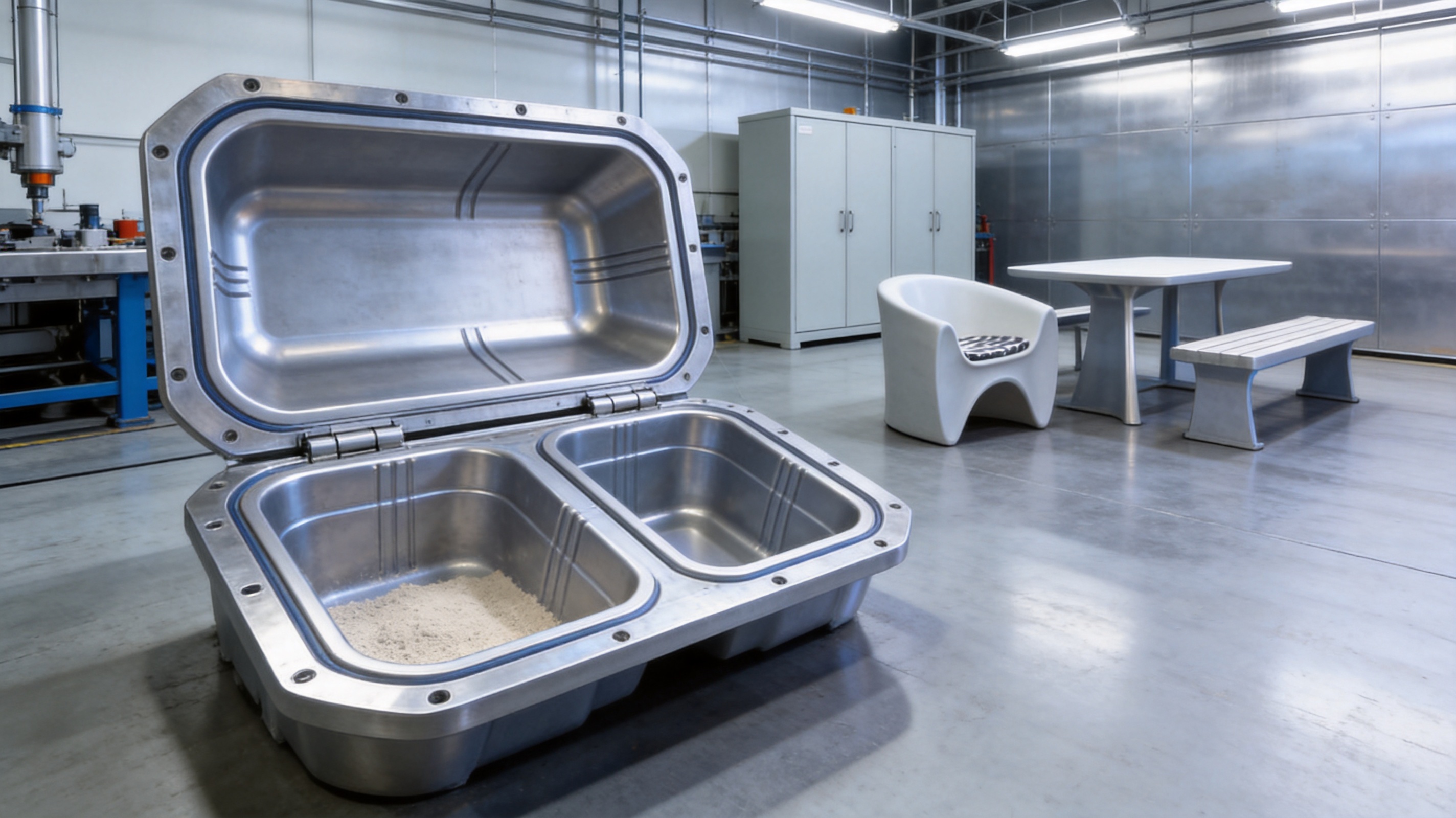
Aluminum Mold Construction and Its Benefits
Aluminum is one of the most widely used materials for rotational molding furniture molds. Its favorable thermal conductivity helps heat move efficiently through the tooling, while its machinability allows manufacturers to reproduce complex curves, ergonomic surfaces, integrated ribs, and decorative details.
For furniture, accurate surface reproduction is important because the mold often determines the visible appearance of the product. Textures, patterns, logos, grip surfaces, and fine transitions must be machined or finished consistently. Aluminum tooling can be processed through precision CNC machining to achieve a high level of geometric accuracy.
The cost of an aluminum mold depends on more than the price of the metal. Important factors include overall dimensions, material thickness, number of sections, machining time, surface complexity, finishing method, reinforcement requirements, inserts, lifting features, and inspection standards.
Large furniture molds require significant raw material and handling capacity. Complex curves may demand extended CNC machining time, while textured surfaces may require specialized tooling or additional finishing. If the furniture includes doors, lids, hinges, internal ribs, or multiple functional areas, each feature can affect the mold construction and validation process.
Aluminum also requires appropriate maintenance. Operators should prevent unnecessary impact, keep parting surfaces clean, inspect fasteners and seals, and follow recommended heating and cooling procedures. Proper maintenance helps preserve the mold’s dimensional accuracy and surface condition throughout repeated production cycles.
When aluminum mold pricing is compared, buyers should request a complete specification. The quotation should identify the proposed alloy or material standard, tooling dimensions, mold sections, surface finish, machining scope, trial requirements, inspection process, modification policy, and technical support. A lower quotation may not represent better value if the tooling requires frequent repair or produces unstable parts.
Advanced Manufacturing Process
The manufacturing process for a rotational molding furniture mold should connect product development, engineering, machining, finishing, testing, and production support. Jiangsu Zhroto Mould Co., Ltd. provides an integrated workflow designed to reduce communication gaps between design and manufacturing.
1. Product Consultation and Requirement Review
The process begins with a review of the product concept. Engineers examine furniture dimensions, intended application, expected loads, polymer selection, production quantity, machine type, appearance requirements, packaging conditions, and target delivery schedule.
This stage is important because a furniture product may look acceptable as a concept but still require changes for rotational molding. The engineering team can identify areas where wall thickness may be difficult to control, where the product may not release easily, or where the mold structure may become unnecessarily complicated.
2. Three-Dimensional Modeling and Product Optimization
The product is developed or reviewed in a three-dimensional environment. Engineers analyze curves, transitions, ribs, openings, handles, mounting features, parting lines, and potential shrinkage. The model can be adjusted to improve polymer distribution, structural strength, demolding, and visual quality.
At this stage, the team can also discuss whether a conventional gas-heated mold or electric-heated tooling is more appropriate. Early decisions about heating, material, surface texture, and mold sectioning help reduce later modifications.
3. Mold Engineering and Structural Design
Once the product model is confirmed, the mold structure is developed. Engineers determine the number of sections, parting line locations, flange design, fasteners, hinges, lifting points, vents, inserts, reinforcement, and cooling considerations.
The mold must be rigid enough to preserve the product geometry while remaining practical to heat, rotate, open, close, transport, and maintain. Furniture tooling can be large and heavy, so handling arrangements should be considered as part of the initial design rather than added later.
4. Precision CNC Machining
Machining converts the engineering model into an accurate physical tool. CNC equipment is used to create complex curved surfaces, functional features, edges, ribs, and other details. Careful machining helps ensure that opposite mold sections align correctly and that the finished furniture matches the approved product geometry.
Large-scale mold machining is particularly valuable for furniture products because they often combine broad surfaces with fine ergonomic details. Jiangsu Zhroto Mould Co., Ltd. has experience with high-precision machining of complex curved surfaces and large tooling components.
5. Finishing and Surface Treatment
After machining, the mold surfaces are inspected and finished according to the product specification. Surface treatment can influence gloss, texture, release behavior, appearance, and ease of cleaning. A polished surface may be suitable for one product, while a matte or textured finish may be preferred for outdoor furniture or products requiring additional grip.
Parting surfaces must be clean and accurately fitted. Poor alignment can create unwanted flash, visible seams, or dimensional variation. Sealing areas also require attention because the mold must remain closed during heating and rotation.
6. Assembly and Functional Inspection
The mold sections are assembled and checked for alignment, opening and closing operation, fastener access, lifting arrangements, venting, and compatibility with the intended machine. Dimensional inspection confirms important product features before the mold enters trial production.
Inspection may include three-dimensional measurement, surface checks, flange verification, section alignment, and review of critical mounting points. The inspection scope should reflect the product’s function and the customer’s quality requirements.
7. Mold Trial and Sample Validation
A mold trial provides practical information that cannot be obtained from digital analysis alone. The trial confirms whether the mold rotates properly, heats uniformly, releases the product effectively, and produces acceptable wall thickness, dimensions, surface quality, and appearance.
Trial samples may be inspected for weight, wall thickness, shrinkage, warpage, edge strength, color consistency, surface defects, and assembly compatibility. If necessary, the mold or process parameters can be adjusted before final acceptance.
8. Delivery, Production Guidance, and Maintenance Support
After validation, the tooling is prepared for delivery. Technical documents may include mold handling instructions, recommended process information, inspection results, maintenance guidance, and notes concerning heating or cooling conditions.
Production support is valuable during the first manufacturing cycles. Operators may need guidance on powder loading, mold closure, rotation settings, heating time, cooling procedure, demolding, and cleaning. Proper operation protects both the tool and the finished furniture.
Controlling Wall Thickness and Edge Strength
Wall thickness is one of the most important performance factors in rotationally molded furniture. The finished thickness is affected by powder quantity, resin characteristics, mold temperature, heating time, rotation ratio, mold geometry, and cooling conditions. A professional tooling design must consider these variables together.
Furniture commonly requires different strength levels in different areas. A chair edge, table perimeter, cabinet corner, or mounting point may need more material than a broad central panel. By adjusting geometry and process conditions, engineers can support stronger functional zones without making the entire product unnecessarily heavy.
Edges that exceed 5 millimeters can provide additional durability in products exposed to frequent impact or concentrated forces. Outdoor furniture, children’s furniture, storage cabinets, and public-use products can benefit from stronger edges. However, thicker areas must be designed carefully because excessive material may increase cycle time, create internal stress, or cause uneven cooling.
Uniformity remains important even when localized reinforcement is required. Large changes in wall thickness can produce shrinkage variation and visible distortion. Gradual transitions, rounded geometry, and appropriate heating control help balance strength with dimensional stability.
Wall-thickness inspection should be based on the actual product function. Critical areas may require measurements at multiple points, especially around edges, corners, ribs, inserts, and mounting locations. Inspection results can be used to adjust powder charge, rotation settings, heating zones, or mold geometry.
Surface Finish, Appearance, and Product Quality
Furniture is often purchased partly for its appearance, so surface quality is a central tooling consideration. The mold surface influences gloss, texture, visual uniformity, parting lines, and the presence of marks. A well-finished mold helps produce a surface that is easier to clean and more consistent from part to part.
Textured surfaces can be used to create a distinctive visual effect, improve grip, reduce the visibility of minor marks, or support a specific brand-independent design language. However, texture increases tooling complexity and may affect release conditions. It should be selected after considering the product’s cleaning requirements, outdoor exposure, tactile characteristics, and production volume.
Color consistency depends mainly on the polymer, pigment, powder preparation, heating cycle, and process control, but the mold also plays a role. Uneven heating or rough internal surfaces can contribute to visual differences. Electric heating with independently controlled zones may be helpful when the product has difficult thermal characteristics.
Parting lines should be positioned where they have minimal effect on appearance and user contact. For furniture, the parting line should not create an uncomfortable edge, interfere with assembly, or compromise the product’s visual quality. In some designs, a visible parting line can be placed beneath the product, along a rear surface, or within a functional transition.
Production Volume and Total Cost of Ownership
The correct furniture mold should be selected according to total production requirements rather than initial price alone. A low-cost mold may be suitable for a limited product launch, prototype program, or moderate production quantity. A high-volume project may require stronger construction, more precise thermal control, improved maintenance access, and greater cycle repeatability.
For low-volume production, conventional aluminum tooling with a simple structure can reduce initial investment. If the product design is still being evaluated, it may be sensible to limit unnecessary decorative details or complex inserts until the market response is confirmed.
For continuous production, durability becomes increasingly important. A mold that remains dimensionally stable, heats consistently, opens efficiently, and requires limited maintenance can reduce downtime and improve production planning. These benefits can offset a higher initial tooling cost.
Energy consumption should also be considered. Electric-heated equipment may require a higher initial investment but can provide improved thermal efficiency and potential energy savings. The actual financial benefit depends on production hours, local energy prices, heating cycle requirements, equipment configuration, and maintenance practices.
Other cost factors include product revisions, prototypes, sample testing, surface treatment, special inserts, packaging, shipping, spare components, and technical service. A complete quotation should make these elements clear so that buyers can compare suppliers fairly.
| Cost factor | How it affects tooling investment | Recommended evaluation approach |
| Mold size | Increases material, machining, handling, and finishing requirements | Confirm dimensions, section count, weight, and machine compatibility |
| Product geometry | Complex curves, ribs, undercuts, and transitions require additional engineering | Review the three-dimensional model before quotation |
| Surface finish | Polishing, texturing, and decorative details affect machining time | Define appearance and cleaning requirements in advance |
| Heating method | Electric heating may increase initial system cost but improve control | Compare total operating cost and production consistency |
| Production volume | Higher output requires stronger construction and repeatability | Estimate lifetime cycles and maintenance expectations |
| Validation requirements | Trials, inspection, samples, and modifications add development cost | Specify acceptance standards and sample quantities |
| Technical support | Engineering assistance can reduce production problems after delivery | Confirm design, trial, training, and maintenance services |
Why Choose an Integrated Mold Manufacturer?
An integrated mold manufacturer can support the complete development path from product concept to stable production. This reduces the risk that a product designer, tooling supplier, and production contractor interpret requirements differently.
Jiangsu Zhroto Mould Co., Ltd. was founded in 2015 and specializes in rotational molding mold design, manufacturing, rotomolded product processing, and technical solutions. In 2021, the company moved to a modern facility in Jiangyan District, Taizhou City. The facility covers approximately 18,000 square meters, including more than 12,000 square meters of standardized workshops.
The company has annual production capacity exceeding 800 mold sets and approximately 3,600 tons of plastic products. Its equipment and engineering capabilities support projects in outdoor facilities, agricultural machinery, industrial equipment, water treatment, automotive components, hydrogen energy storage and transportation, and related fields.
This cross-industry experience is valuable for furniture projects because many design challenges are shared across applications. Large products need reliable handling. Outdoor products need resistance to weather and impact. Industrial products need stable dimensions and functional mounting areas. Storage products need appropriate wall thickness and structural support.
The company’s quality management systems include ISO 9001:2015, ISO 14001:2015, and ISO 45001:2018 certifications. These certifications support structured quality, environmental, and occupational safety practices. While certification does not replace product-specific validation, it indicates that the company operates within documented management systems.
Customers can obtain support in product design optimization, 3D modeling, mold structure, material selection, CNC machining, mold trial, sample inspection, delivery, production guidance, and maintenance advice. This one-stop approach is especially useful for companies that are developing a new furniture line or expanding from small plastic components into large rotomolded products.
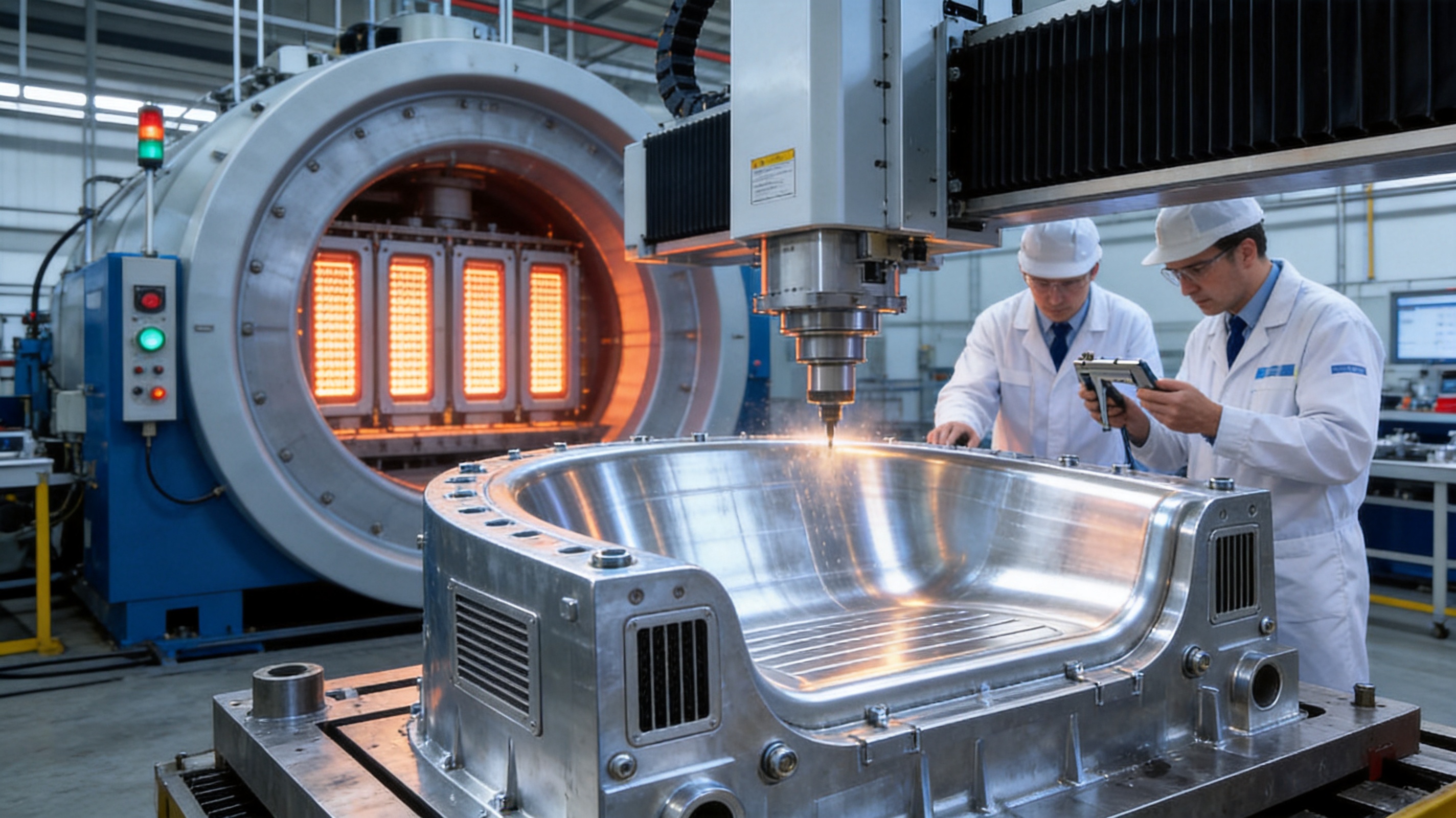
Quality Assurance for Rotational Molding Furniture Molds
Quality assurance should cover both the physical mold and the finished furniture samples. Mold dimensions, surface condition, section alignment, fastener security, venting, lifting points, and heating compatibility should be checked before production release.
Finished samples should be evaluated against approved drawings or digital models. Important characteristics may include overall dimensions, critical openings, edge thickness, wall-thickness distribution, weight, surface appearance, warpage, color, insert position, and assembly fit.
Functional testing may be required depending on the furniture application. A chair may need load and stability testing. A table may require impact and deflection evaluation. A cabinet may need hinge, door, shelf, and storage-load testing. Outdoor furniture may require weathering or environmental exposure assessment.
Inspection standards should be agreed upon before tooling begins. Clear standards reduce disagreement during final acceptance and help the manufacturer focus on the features that matter most to the customer. They also provide a basis for future production audits and process improvement.
Documentation is another important part of quality assurance. Records may include approved models, tooling drawings, material information, inspection reports, trial results, sample approvals, process recommendations, and modification history. These records help maintain consistency if the product is transferred between machines or production locations.
Maintenance and Service Life
Proper maintenance can significantly extend the service life of a rotational molding furniture mold. The mold should be cleaned after production, particularly around parting surfaces, vents, fasteners, and textured areas. Residual polymer can affect sealing, appearance, and demolding if it is allowed to accumulate.
Operators should inspect for dents, scratches, cracks, loose fasteners, damaged seals, blocked vents, and abnormal wear. Aluminum is durable for many applications, but it can be damaged by careless handling or contact with unsuitable tools. Mold sections should be lifted and stored using appropriate equipment.
Heating and cooling procedures should remain within the recommended operating range. Severe thermal shock, uncontrolled cooling, or excessive heating can contribute to distortion and premature deterioration. Electric-heated systems require additional attention to heating elements, sensors, wiring, insulation, and control settings.
Maintenance intervals should reflect production frequency and product requirements. High-volume furniture production may require more frequent inspections than occasional custom production. A maintenance record can help identify gradual changes in cycle time, part weight, wall thickness, or surface quality.
When a mold requires modification, the change should be documented and validated through another trial. Uncontrolled modifications can create new dimensional or thermal problems. Professional technical support can help determine whether a defect is caused by the mold, the material, the machine, or the process parameters.
Environmental and Operational Considerations
Rotational molding can support efficient material use because the product is formed from a measured polymer charge and does not normally create the same type of runner system associated with injection molding. Scrap levels depend on product design, process control, trimming, and quality requirements, but a well-planned rotomolding process can reduce unnecessary material waste.
Durable furniture also has an environmental advantage over products that require frequent replacement. Weather-resistant rotomolded products can remain in service for extended periods when they are correctly designed and maintained. At the end of their useful life, the material selection should be considered in relation to recycling, repair, and disposal practices.
Electric heating may help reduce energy use in suitable production environments. The stated potential energy savings of 30 to 50 percent depend on the equipment design, production cycle, insulation, operating conditions, and comparison baseline. Manufacturers should verify actual savings through production measurements rather than relying only on general estimates.
Environmental performance also includes factory management, emissions control, worker safety, material storage, and process documentation. The company’s ISO 14001:2015 and ISO 45001:2018 certifications reflect structured approaches to environmental and occupational safety management.
How to Select the Right Furniture Mold Supplier
A supplier should be evaluated according to engineering ability, manufacturing capacity, tooling quality, communication, trial support, and after-sales service. Price is important, but it should be considered together with the expected production life and risk of later modifications.
Before placing an order, buyers should provide product drawings or models, dimensions, material requirements, expected annual quantity, intended application, machine information, appearance standards, and delivery expectations. The more complete the information, the more accurately the supplier can recommend mold construction and heating conditions.
Questions should be asked about aluminum selection, mold sectioning, surface treatment, inspection, trial production, sample approval, modifications, packaging, spare parts, and maintenance. Buyers should also confirm whether the supplier can support both conventional gas-heated and electric-heated rotational molding machines if production flexibility is important.
A capable supplier should identify potential design risks rather than simply manufacture the submitted model. Suggestions regarding edge strength, wall thickness, parting lines, ribs, inserts, and demolding can improve the final product and reduce manufacturing problems.
Technical communication should continue after delivery. Production operators may need assistance with process settings, sample evaluation, and troubleshooting. A supplier that provides production guidance and maintenance advice can help the customer achieve more stable output over the life of the tooling.
Frequently Asked Questions
What is the main advantage of a rotational molding furniture mold?
The main advantage is the ability to produce large, hollow, seamless furniture with relatively simple and economical tooling. The process also provides considerable design flexibility and can support strong edges, rounded forms, integrated features, and durable indoor or outdoor products.
Is rotational molding suitable for large plastic furniture?
Yes. Rotational molding is particularly suitable for large hollow furniture such as chairs, tables, benches, cabinets, storage products, and outdoor equipment. The process does not depend on high injection pressure and can produce large one-piece structures with appropriate tooling and process control.
Why is aluminum commonly used for furniture molds?
Aluminum offers good thermal conductivity and can be machined into complex curved surfaces. It is suitable for ergonomic furniture forms, large tooling, textured surfaces, and products requiring controlled heat transfer. The final mold cost depends on size, complexity, machining, finishing, and inspection requirements.
Can rotational molding produce strong furniture edges?
Yes. With suitable product geometry, powder quantity, heating, rotation, and cooling, edge thickness can exceed 5 millimeters in appropriate designs. Stronger edges are useful for outdoor furniture, children’s furniture, storage cabinets, public-use products, and other applications exposed to repeated impact or concentrated loads.
When should electric-heated tooling be considered?
Electric-heated tooling may be considered when a manufacturer requires precise temperature control, independent heating zones, improved thermal efficiency, or energy-management benefits. It can be particularly useful for complex furniture geometry, high production volumes, and products that are difficult to heat uniformly with conventional gas systems.
Are conventional gas-heated molds still practical?
Yes. Conventional molds remain practical for many furniture applications, especially when the product has moderate complexity and the manufacturer uses standard gas-heated rotational molding equipment. They generally provide broad compatibility and a lower initial tooling cost.
What information is needed to quote a furniture mold?
A supplier normally needs the product model or drawings, overall dimensions, material, application, annual production quantity, machine type, surface finish, color requirements, expected wall thickness, insert details, delivery schedule, and inspection standards. Complete information improves quotation accuracy.
How long can a rotational molding furniture mold last?
Service life depends on mold material, construction quality, production frequency, heating and cooling conditions, handling, maintenance, and product complexity. A properly designed and maintained mold can support repeated production over many cycles. Buyers should evaluate expected lifetime output rather than only the initial purchase price.
What quality checks should be performed during mold trials?
Trials should evaluate mold operation, heating uniformity, demolding, wall thickness, product dimensions, surface finish, edge strength, warpage, weight, insert position, and assembly fit. The exact inspection plan should be established according to the furniture’s function and customer requirements.
What services does Jiangsu Zhroto Mould Co., Ltd. provide?
The company provides product consultation, design optimization, three-dimensional engineering, mold design, CNC machining, material and process recommendations, mold testing, sample inspection, delivery, production guidance, and maintenance advice. It also provides rotomolded product processing and integrated technical solutions.
Conclusion
Rotational molding furniture molds offer an effective manufacturing foundation for large, hollow, durable, and visually distinctive plastic furniture. Their advantages include comparatively low tooling complexity, flexible product dimensions, seamless one-piece construction, controlled wall thickness, strong edges, and suitability for indoor and outdoor use.
The performance of the finished furniture depends on more than the molding process alone. Product geometry, mold material, surface treatment, heating method, powder quantity, rotation conditions, cooling, inspection, and maintenance must all be coordinated. A mold that is designed only around the external shape may not provide the best structural or production results.
Conventional molds remain a practical choice for many applications, while electric-heated tooling can provide advanced temperature control and potential energy advantages for demanding production environments. Aluminum tooling supports efficient heat transfer and accurate reproduction of complex ergonomic forms. Precision CNC machining, mold trials, sample inspection, and production guidance further improve the likelihood of stable long-term performance.
Jiangsu Zhroto Mould Co., Ltd. combines rotational molding experience, large-scale machining capabilities, integrated product development, quality management systems, and technical support. With annual production exceeding 800 mold sets and facilities covering approximately 18,000 square meters, the company is equipped to support furniture tooling projects ranging from initial concept development to finished product production.
For companies evaluating a custom rotational molding furniture mold, the most valuable supplier is one that considers total cost of ownership, product strength, process stability, energy use, maintenance, and future production needs. A properly engineered mold can reduce manufacturing risk, improve product quality, and support reliable production of durable plastic furniture for years to come.
References
1. ASTM International. Standard Practices and Test Methods for Rotational Molding and Plastic Product Evaluation.
2. Association of Rotational Molders. Technical Guidance on Rotational Molding Design, Materials, and Process Control.
3. ISO 9001:2015. Quality Management Systems: Requirements.
4. ISO 14001:2015. Environmental Management Systems: Requirements with Guidance for Use.
5. ISO 45001:2018. Occupational Health and Safety Management Systems: Requirements with Guidance for Use.
6. Modern Plastics Encyclopedia. Rotational Molding Materials, Tooling, and Production Methods.
7. Rosato, D. V. and Rosato, M. G. Plastics Processing Technology and Engineering References.
8. Company technical information supplied by Jiangsu Zhroto Mould Co., Ltd., including rotational molding mold design, manufacturing, electric-heated tooling, product processing, and quality management capabilities.
Product: Rotational molding furniture mold


We provide customers with one-stop services ranging from product design, mold manufacturing to finished product production.
-
 +86-18006248936
-
 ricky.t@zhroto.com
-
 No.9 Jiangyuan Road, Luotang Street, Jiangyan District, Taizhou City,Jiangsu Province, China
Copyright © Jiangsu Zhroto Mould Co., Ltd. Rights Reserved.Custom Rotational Plastic Molding Factory
