 en
 中文简体
 русский
 Español
 Deutsch
 Polskie
 REQUEST A QUOTE

 Home / Author / Linnea Qiao — International Sales Manager / Environmentally Friendly Mobile Toilet Molds for Reliable Rotationally Molded Sanitation Units
Environmentally Friendly Mobile Toilet Molds for Reliable Rotationally Molded Sanitation Units
Content
- 1 Why Mobile Toilet Manufacturing Requires Specialized Tooling
- 2 Core Advantages of the Environmentally Friendly Mobile Toilet Mold
- 3 Engineering Design Considerations for Mobile Toilet Molds
- 4 Advanced Rotational Molding Manufacturing Process
- 5 Performance Benefits Compared with Conventional Alternatives
- 6 Environmental and Lifecycle Considerations
- 7 Company Manufacturing Strengths and Integrated Services
- 8 Applications Across Public and Temporary Environments
- 9 Quality Control for Reliable Tooling and Finished Products
- 10 Maintenance of the Mold and Production Equipment
- 11 How to Select the Right Mobile Toilet Mold Supplier
- 12 Customization Options for Different Sanitation Programs
- 13 Economic Value Over the Product Lifecycle
- 14 Recommended Project Development Workflow
- 15 Frequently Asked Questions
- 15.1 What is an environmentally friendly mobile toilet mold?
- 15.2 Why is rotational molding suitable for portable toilets?
- 15.3 Can the mold produce different toilet sizes?
- 15.4 Can color be integrated into the product?
- 15.5 Are rotomolded mobile toilets resistant to cleaning chemicals?
- 15.6 How can wall thickness be controlled?
- 15.7 Can accessible toilet units be manufactured?
- 15.8 What industries can use these mobile toilet molds?
- 15.9 Does the supplier provide only molds?
- 15.10 What certifications does the company have?
- 15.11 What information should be supplied when requesting a quotation?
- 15.12 How long can a rotational molding mold remain in service?
- 16 Conclusion
- 17 References
- 18 Product: Environmentally friendly mobile toilet mold
Portable sanitation has become an essential part of modern public infrastructure. Parks, scenic areas, exhibition grounds, construction sites, temporary event venues, emergency response locations, and remote work areas all require clean and functional toilet facilities, even when permanent buildings and underground utility connections are unavailable. An environmentally friendly mobile toilet mold provides the tooling foundation for manufacturing these units efficiently, consistently, and with the durability required for demanding outdoor service.
Unlike conventional construction methods that depend on multiple materials, extensive assembly, and fixed-site installation, rotational molding enables manufacturers to create robust, seamless plastic toilet enclosures with adaptable designs. The process is especially suitable for portable sanitation products because it can produce large hollow components with uniform wall thickness, rounded corners, integrated reinforcement, and excellent resistance to moisture and cleaning chemicals.
The mobile toilet mold described in this article is engineered for the production of self-contained sanitation units. It supports a broad range of applications while allowing manufacturers to respond to different size, layout, color, and functional requirements. Its value lies not only in the mold itself, but also in the design logic, manufacturing accuracy, material compatibility, process control, and technical support behind the tooling solution.
Jiangsu Zhroto Mould Co., Ltd. specializes in the design and manufacture of rotational molding molds, rotomolded products, and integrated technical solutions. With experience across outdoor facilities, water treatment, industrial equipment, agricultural machinery, automotive components, and hydrogen energy applications, the company applies cross-industry engineering knowledge to the development of portable sanitation tooling.
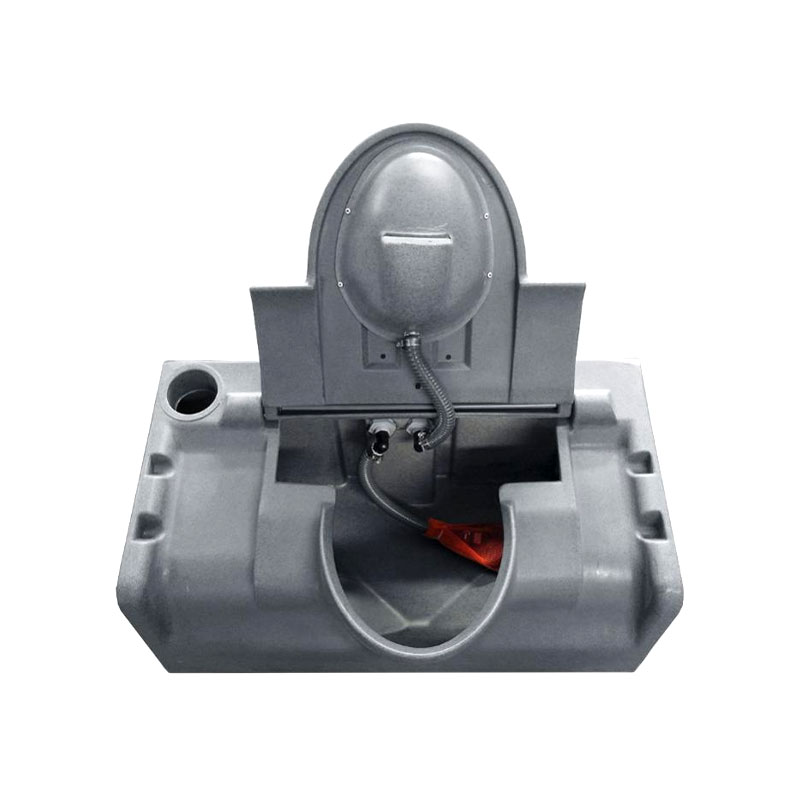
Environmentally friendly mobile toilet mold
Why Mobile Toilet Manufacturing Requires Specialized Tooling
A mobile toilet is more than a simple enclosure. It must provide privacy, structural stability, ventilation, user comfort, drainage compatibility, and resistance to weather and repeated cleaning. In many cases, it must also accommodate a tank, seat assembly, door hardware, ventilation fittings, hand-washing equipment, lighting, lifting points, or other accessories.
These requirements create a challenging manufacturing environment. The enclosure must be large enough for practical use but light enough to transport and install. It must be strong without excessive material consumption. Its external surfaces should be attractive and easy to clean, while internal corners should avoid areas where dirt, water, or disinfectant residue can accumulate.
Traditional fabrication methods may require the cutting, welding, fastening, and sealing of several panels. Every joint introduces a possible point of leakage, corrosion, deformation, or maintenance difficulty. Welded metal structures can also become heavy and vulnerable to rust, particularly in humid environments or locations where cleaning agents are used frequently.
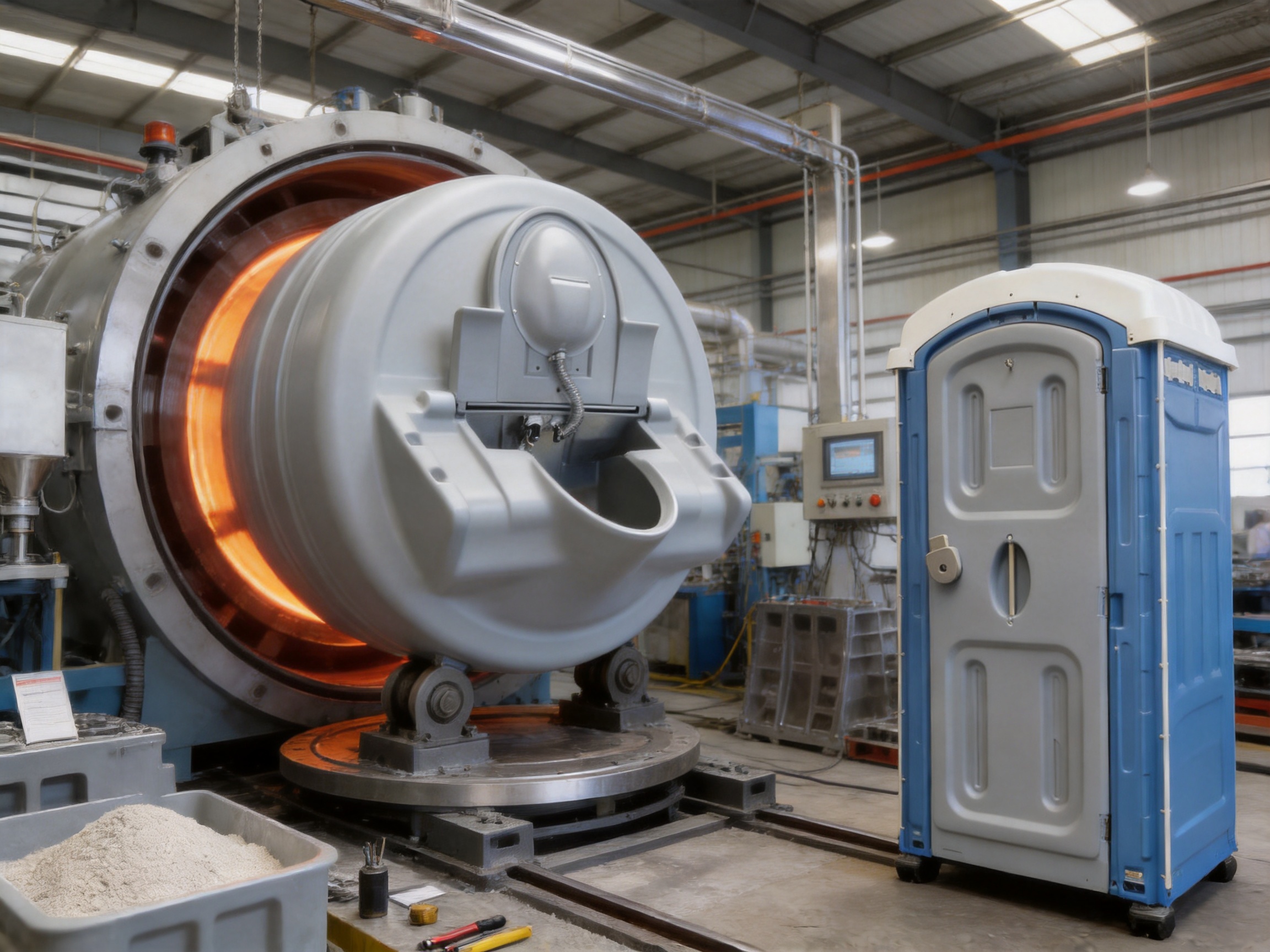
Rotational molding addresses many of these challenges by forming the main enclosure as a single hollow plastic component. During production, polymer powder is placed inside the mold. The mold is then heated and rotated around multiple axes, allowing the softened material to coat the internal surface. After cooling, the finished part is removed from the mold.
This process eliminates many seams and reduces the need for complex assembly. It also allows designers to create curved surfaces, rounded transitions, recessed features, and integrated details that would be difficult or expensive to manufacture using conventional sheet fabrication.
Core Advantages of the Environmentally Friendly Mobile Toilet Mold
Seamless and Durable Enclosure Production
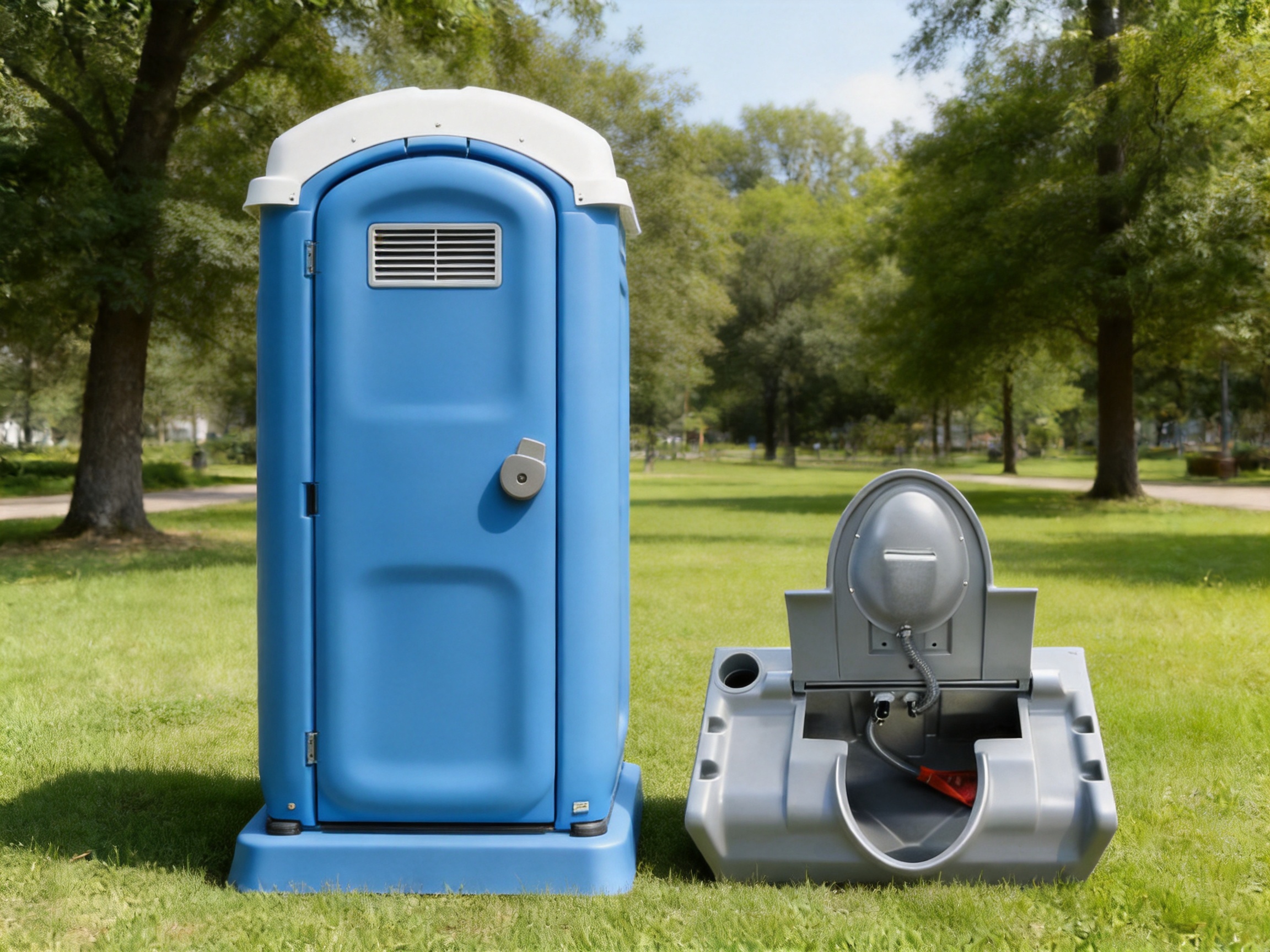
One of the most important advantages of rotational molding is the ability to produce large hollow parts without conventional welded seams. A seamless enclosure improves resistance to water penetration and helps reduce the risk of cracking at joined panels. This is especially beneficial for toilets installed outdoors, where rain, humidity, condensation, and repeated washing can affect the service life of the product.
The resulting enclosure can be designed with rounded external edges and continuous internal surfaces. These features improve safety for users and make routine cleaning more efficient. The absence of numerous fasteners also gives the finished unit a cleaner appearance and reduces the number of components that may loosen during transportation or long-term use.
Uniform Wall Thickness
Correct wall thickness is essential for a portable toilet. Excessively thin areas may deform under impact, wind load, or repeated handling. Excessively thick areas increase weight, material consumption, cycle time, and manufacturing cost. A well-engineered mold supports balanced material distribution throughout the enclosure.
Uniform wall thickness contributes to consistent rigidity and helps reduce deformation during cooling. It also supports predictable performance from one production batch to another. For manufacturers supplying projects with multiple units, this consistency is important because doors, accessories, and connecting components must align reliably across the product series.
Resistance to Outdoor Conditions
Portable toilets may be exposed to sunlight, rain, temperature fluctuations, dust, mud, snow, and wind. The enclosure material and mold design must therefore support a product that remains stable under outdoor conditions. Rotomolded polyethylene is commonly selected for these applications because it offers a useful combination of impact resistance, chemical resistance, low water absorption, and processing flexibility.
Depending on the project requirements, the material formulation can be selected to improve ultraviolet resistance, color stability, low-temperature impact performance, or surface durability. The mold itself must be manufactured with sufficient precision to maintain the required geometry while supporting the selected processing conditions.
Compatibility with Repeated Cleaning
Hygiene is the central function of a mobile toilet. Public and temporary-use units may be cleaned several times per day, and operators may use detergents, disinfectants, pressure washing, or other sanitation procedures. A suitable rotomolded surface resists moisture and can be shaped to minimize dirt-trapping locations.
Rounded corners and smooth transitions improve access for cleaning personnel. A properly designed enclosure also reduces the number of exposed joints and crevices where bacteria, residue, or standing water could collect. This can support more efficient maintenance and contribute to a better user experience.
Adaptable Appearance and Configuration
Portable sanitation units are used by municipalities, event organizers, construction companies, tourism operators, and private facility managers. Their requirements are not always identical. Some projects prioritize compact dimensions, while others require accessibility features, larger internal space, separate washing areas, or special color identification.
Rotational molding supports a wide range of customized geometries and color configurations. A manufacturer can adjust the external profile, roof shape, ventilation arrangement, door opening, base structure, and accessory locations according to the project specification. Color can also be used for visual coordination, wayfinding, brand-neutral zoning, or differentiation between standard and accessible units.
Engineering Design Considerations for Mobile Toilet Molds
Product Geometry and Draft Design
The geometry of the toilet enclosure has a direct influence on mold manufacturability and product release. A suitable design should include appropriate draft angles so that the cooled part can be removed without excessive force or damage. Deep undercuts may complicate demolding and should be evaluated during the early design stage.
Where a particular feature is required, the tooling team can assess whether it should be formed directly in the mold or added during secondary processing. The best solution depends on the feature size, tolerance, production volume, material behavior, and maintenance requirements. Early evaluation helps prevent costly changes after mold fabrication has begun.
Corner Radii and Stress Distribution
Sharp corners can create stress concentrations in both the mold and the finished product. They may also interfere with powder flow and produce areas of inconsistent material coverage. Rounded corners provide smoother transitions, improve cleaning access, and help distribute loads more evenly.
For a mobile toilet enclosure, corner design must balance appearance, usable interior space, mold release, and structural performance. A radius that is too small may be difficult to process consistently, while an excessively large radius may reduce internal clearance. Professional tooling design considers these factors together rather than treating the external appearance as the only priority.
Door Openings and Hardware Interfaces
The door opening is one of the most frequently used sections of a mobile toilet. It must remain dimensionally stable and support hinges, locks, handles, seals, and sometimes accessibility hardware. The surrounding wall requires enough strength to resist repeated opening and closing forces.
Depending on the design, reinforcement may be incorporated into the mold geometry or provided through secondary components. The mold should account for mounting surfaces and clearance requirements so that hardware can be installed accurately. Proper alignment at this stage helps reduce door sagging, rubbing, water intrusion, and premature hardware wear.
Ventilation and Drainage Features
Ventilation is important for odor control, temperature management, and user comfort. Drainage is equally important because water from cleaning, rain, or accidental spills must not remain trapped inside the enclosure. Ventilation outlets, drainage channels, and connection points should be located in ways that preserve structural integrity and simplify installation.
These features require careful coordination between the mold and the final product assembly. Openings may be molded directly, drilled afterward, or formed with removable inserts. Each approach has benefits and limitations. Directly molded openings can improve repeatability, while post-mold machining may provide greater flexibility for different configurations.
Base Stability and Transportation
A mobile toilet must remain stable during use and transportation. The lower structure should support the enclosure without creating unnecessary weight. Depending on the application, the unit may be installed on a concrete pad, a temporary platform, a trailer, or another prepared surface.
The mold design can incorporate a stable base profile, recessed areas, handling provisions, or interfaces for optional ballast and anchoring systems. Transportation requirements should be considered at the beginning of the design process. Features such as lifting points, stackability, and protective packaging may influence both the mold geometry and the final product dimensions.
Advanced Rotational Molding Manufacturing Process
Product Development and Design Review
The manufacturing process begins with a clear understanding of the intended toilet unit. Technical teams review the product dimensions, expected production volume, material choice, surface requirements, assembly method, transportation conditions, and environmental exposure.
Three-dimensional product data can be evaluated for wall thickness, draft, undercuts, corner transitions, access openings, and potential deformation risks. A design review at this stage is more efficient than correcting problems after the mold is completed. It also creates a basis for selecting the appropriate mold structure and manufacturing method.
For a customized mobile toilet, the design review may include discussions about standard and accessible layouts, internal fittings, cleaning equipment, tank placement, ventilation, electrical accessories, and compatibility with local installation practices. The goal is to ensure that the mold supports the complete product rather than only its external shell.
Mold Structure and Material Selection
Rotational molding molds can be manufactured using different materials and construction methods. The choice depends on product size, expected service life, surface finish, production quantity, dimensional requirements, and budget. For larger products such as toilet enclosures, the mold must maintain shape under repeated heating and cooling cycles.
The mold structure should provide suitable rigidity while allowing efficient heat transfer and practical access for inspection and maintenance. It should also be compatible with the rotation equipment used by the manufacturer. Correct positioning of mounting points and balancing features is important because an uneven mold can affect machine performance and material distribution.
Mold material and surface treatment influence the appearance of the finished product. A carefully prepared mold surface can produce a smooth, consistent enclosure that is easier to clean and more attractive in public environments. Surface quality also affects the removal process and the ability to reproduce the same appearance over multiple cycles.
Precision Fabrication
Once the design is approved, the mold components are produced using controlled fabrication procedures. Cutting, forming, welding, machining, grinding, and surface preparation must be coordinated to preserve dimensional accuracy. Large molds are particularly sensitive to distortion, so welding sequences and structural support must be planned carefully.
Accuracy is important around doors, roof interfaces, accessory locations, base connections, and mating surfaces. Even small deviations may become visible on a large enclosure or make secondary assembly more difficult. Quality control during fabrication helps prevent cumulative errors and ensures that the final mold reflects the approved product design.
Heating and Rotation Process
During rotational molding, the mold is charged with a measured quantity of polymer powder and closed securely. It is then placed in the molding machine, where it rotates around two axes while being heated. As the material melts, it gradually coats the internal mold surface.
Heating time, mold temperature, rotation speed, and cooling conditions must be matched to the material, wall thickness, and product geometry. If heating is insufficient, the product may have incomplete fusion or weak areas. If heating is excessive, the polymer may degrade, discolor, or experience unnecessary cycle-time increases.
Balanced rotation supports even coating and helps produce consistent wall thickness. Cooling must also be controlled. Rapid or uneven cooling can cause warpage, shrinkage differences, residual stress, or difficulty during demolding. Process parameters are therefore a critical part of the complete tooling solution.
Inspection and Trial Production
Before a mold is released for regular production, trial molding can be used to evaluate material distribution, demolding behavior, surface quality, dimensional stability, and assembly compatibility. The trial product provides practical information that may not be visible in computer-based design review alone.
Inspection may include visual checks, dimensional measurement, wall-thickness evaluation, door opening verification, hardware fit testing, and functional review of drainage or ventilation interfaces. If adjustments are required, the tooling team can refine the mold or recommend process changes.
A structured trial process reduces the risk of unstable production after delivery. It also helps the customer establish repeatable operating parameters for future batches.
Performance Benefits Compared with Conventional Alternatives
Lower Corrosion Risk than Unprotected Metal
Metal toilet enclosures can provide strength, but their long-term performance depends heavily on coatings, weld quality, drainage design, and maintenance. Scratches or damaged coatings may expose the metal to moisture and accelerate corrosion. In coastal, humid, or chemically demanding locations, corrosion can become a significant maintenance concern.
Rotomolded plastic does not rust in the same way as steel. This can reduce maintenance requirements and support a longer service period in wet environments. While the plastic material still requires proper UV and chemical considerations, the absence of conventional rusting is a major advantage for outdoor sanitation products.
Fewer Seams than Multi-Panel Fabrication
Multi-panel construction often requires fasteners, sealants, overlapping joints, and welded connections. These features can increase assembly time and create additional inspection points. They may also affect cleaning efficiency and visual consistency.
A rotationally molded enclosure can combine large surfaces into one integrated shell. This reduces the number of seams and simplifies the assembly process. Fewer joints may also improve water resistance and reduce the likelihood of loose components during transportation.
Better Design Freedom than Simple Vacuum-Formed Panels
Vacuum forming is useful for certain thin-walled products, but large structural enclosures may require additional framing or reinforcement. Rotational molding can provide a more substantial hollow structure with integrated features and variable geometry.
The process is well suited to rounded profiles and large parts that must withstand impact and outdoor use. It also allows designers to consider the enclosure, base, roof, and functional recesses as a coordinated product rather than a collection of flat panels.
Efficient Customization for Different Projects
Portable toilet projects often require variations in dimensions, colors, internal layout, or accessory placement. A rotational molding tooling program can support these variations through design adjustments, interchangeable components, inserts, or secondary operations, depending on the requirement.
This flexibility is valuable for customers that serve different markets. A manufacturer may produce compact units for construction projects, larger units for public venues, accessible units for municipal applications, or specialized units for remote locations while maintaining a common engineering platform.
Environmental and Lifecycle Considerations
The term environmentally friendly should be understood as a combination of material efficiency, durability, maintenance performance, production control, and end-of-life planning. A product is not environmentally responsible merely because it is made from plastic. Its environmental value depends on how effectively it performs over its entire service life.
Rotational molding can support responsible production because it is suitable for durable products with long operating periods. A well-designed mobile toilet enclosure may remain in service for many years, reducing the need for frequent replacement. Its resistance to moisture and chemicals can also reduce the need for coatings, anti-corrosion treatments, and repeated structural repairs.
Material usage can be managed through appropriate wall-thickness design and accurate powder loading. Using more material than necessary increases weight and cost, while using too little can reduce product life. Engineering the correct balance supports both performance and resource efficiency.
Many rotational molding materials can be recovered or recycled under appropriate conditions. Recycling policies depend on the specific polymer, additives, contamination level, and local facilities. Product designers should consider material identification and responsible disposal when planning the complete lifecycle of the toilet unit.
Durability also has an environmental dimension. A product that withstands repeated use, cleaning, transportation, and changing weather conditions may have a lower replacement frequency than a fragile alternative. This reduces the material, energy, and logistics impacts associated with producing and delivering new units.
Company Manufacturing Strengths and Integrated Services
Jiangsu Zhroto Mould Co., Ltd. was founded in 2015 and focuses on rotational molding mold design, mold manufacturing, rotomolded product processing, and integrated technical services. This specialization allows the company to approach the mobile toilet mold as part of a complete production system rather than as an isolated metal component.
The company moved to a modern facility in Jiangyan District, Taizhou City, in 2021. The site covers approximately 18,000 square meters, including more than 12,000 square meters of standardized production workshops. This manufacturing environment provides space for mold fabrication, product processing, inspection, assembly, and logistics coordination.
Its capabilities cover the full path from product design to mold development and finished product production. This one-stop approach can simplify communication for customers because design decisions, tooling considerations, processing parameters, and final product requirements are reviewed within a coordinated technical framework.
The company reports an annual capacity of more than 800 mold sets and 3,600 tons of plastic products. Such capacity supports both customized tooling and production-scale rotomolded components. For mobile sanitation projects, this can be useful when a customer needs not only a mold but also assistance with initial product production or batch delivery.
Experience in hydrogen energy storage and transportation, automotive parts, industrial equipment, agricultural machinery, water treatment, and outdoor facilities contributes to a broad understanding of material behavior and structural requirements. These industries often demand resistance to impact, chemicals, temperature variation, pressure, or outdoor exposure. That experience can be applied to the development of durable portable toilet products.
The company has obtained ISO 9001:2015, ISO 14001:2015, and ISO 45001:2018 certifications. These standards relate respectively to quality management, environmental management, and occupational health and safety. Certification does not replace product-specific engineering, but it demonstrates the presence of formal management frameworks supporting consistent operations and responsible manufacturing practices.
| Capability Area | Relevance to Mobile Toilet Molds | Customer Benefit |
|---|---|---|
| Product design support | Reviews geometry, draft, wall thickness, openings, and assembly interfaces | Reduces design risks before tooling begins |
| Rotational mold manufacturing | Produces tooling for large hollow plastic enclosures | Supports durable, seamless product structures |
| Rotomolded product processing | Provides practical experience with heating, rotation, cooling, and demolding | Improves the transition from mold design to production |
| Customized configuration | Accommodates different sizes, colors, geometries, and accessory locations | Allows products to match project-specific requirements |
| Quality management | Uses structured procedures for fabrication and inspection | Improves repeatability across production batches |
| Environmental management | Supports controlled manufacturing and lifecycle awareness | Aligns tooling development with responsible production goals |
| Integrated technical service | Connects mold development, product processing, and finished-unit requirements | Reduces coordination effort for customers |
Applications Across Public and Temporary Environments
Parks and Scenic Areas
Parks and scenic areas require sanitation facilities that blend into public surroundings while remaining durable and easy to maintain. Units may be installed near walking paths, picnic areas, visitor centers, parking zones, or remote viewpoints. A rotationally molded enclosure can be produced in colors and profiles that complement the environment.
Outdoor locations may have limited access to repair services. A robust, corrosion-resistant enclosure can therefore reduce maintenance interruptions. The mold can also support the production of units with ventilation, drainage, and accessibility features suited to public use.
Exhibition Grounds and Event Venues
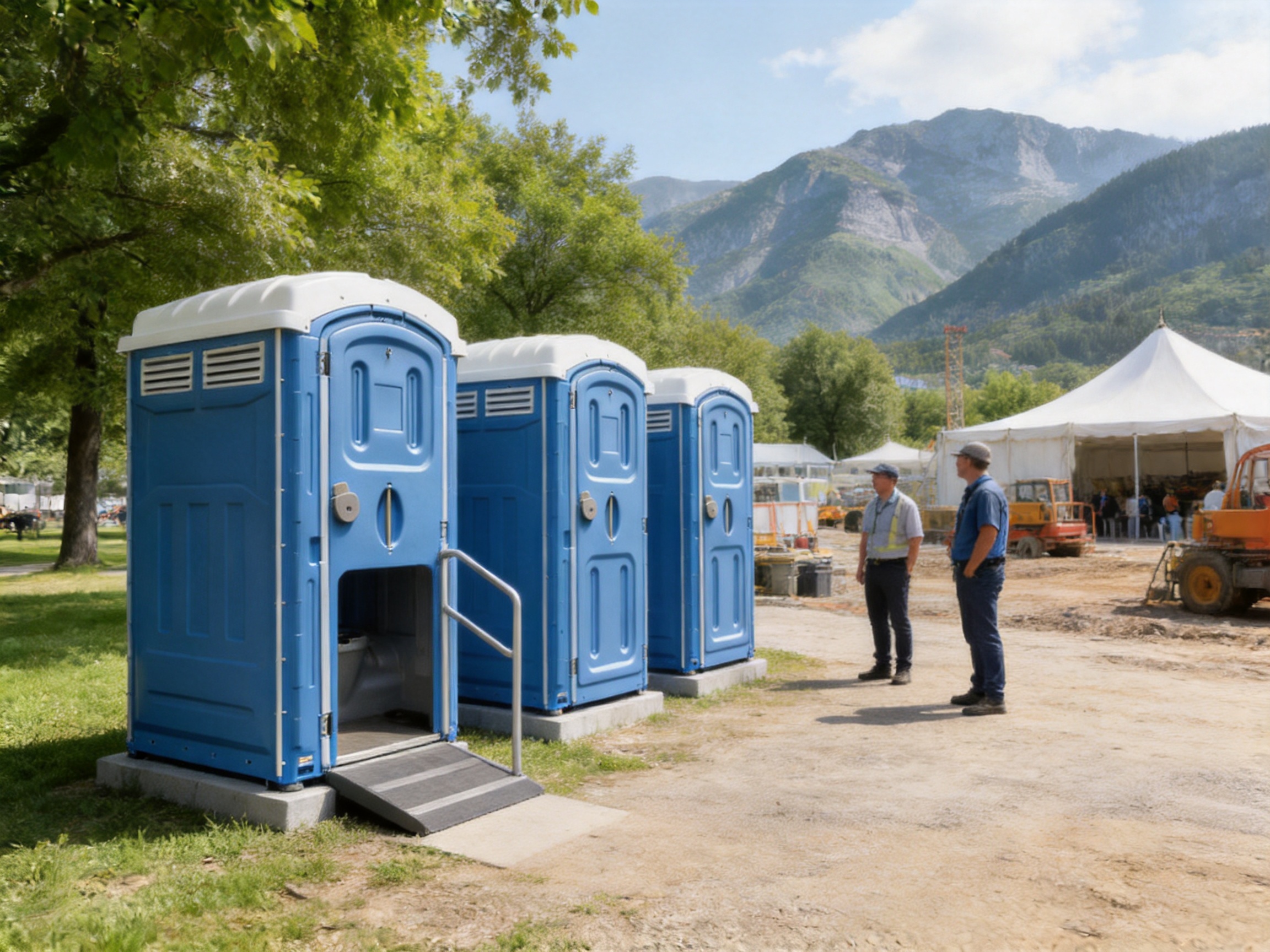
Exhibitions, festivals, sports events, and temporary gatherings can generate a sudden increase in demand for toilet facilities. Mobile units must be delivered quickly, positioned efficiently, and removed or relocated after the event.
Rotomolded units are suitable for this type of deployment because they can be manufactured in repeatable batches and transported to different locations. Custom colors may assist with event organization, visitor guidance, or separation of standard, accessible, and service units.
Construction Sites
Construction projects often operate before permanent plumbing and building facilities are complete. Workers require practical sanitation units that can tolerate dust, mud, impact, frequent relocation, and regular servicing.
The durable surface of a rotomolded enclosure is well suited to these conditions. The mold can be designed for efficient cleaning, stable placement, and compatibility with tanks or service systems used by site operators.
Emergency and Remote Deployment
After natural disasters, infrastructure failures, or emergency evacuations, portable toilets may be needed in locations where permanent sanitation is unavailable. Units for these situations should be simple to transport, quick to install, and reliable under difficult conditions.
A robust mobile toilet mold helps support the production of standardized units that can be stored in advance and deployed when required. The ability to manufacture consistent parts also simplifies spare-part planning and fleet management.
Industrial and Agricultural Locations
Factories, farms, outdoor work zones, and remote industrial facilities may need independent sanitation facilities for employees and visitors. These settings can expose equipment to dust, fertilizers, oils, cleaning agents, and variable temperatures.
Material selection and mold design can be adapted to the expected environment. The final product may include additional ventilation, wash facilities, reinforced mounting areas, or specialized access arrangements.
Quality Control for Reliable Tooling and Finished Products
Quality control begins before fabrication. The approved drawings and three-dimensional data should define critical dimensions, material expectations, surface requirements, and inspection points. Clear documentation helps ensure that the customer, tooling team, and production operators are working toward the same result.
During mold fabrication, inspectors can verify dimensions, alignment, weld quality, surface preparation, mounting points, and the condition of functional features. Particular attention should be given to large flat areas, door openings, corners, base structures, and any location where distortion could affect the finished product.
After trial molding, the enclosure should be evaluated for wall-thickness consistency, visual defects, warpage, shrinkage, demolding marks, and assembly compatibility. If the product includes a door, tank, ventilation system, seat, or accessory package, these components should be checked together rather than individually.
Repeatability is especially important for public sanitation projects involving many units. A single acceptable sample is not enough if later units vary significantly. Stable material preparation, accurate powder weighing, controlled heating, balanced rotation, and consistent cooling all contribute to production repeatability.
Documentation of process parameters can help operators reproduce successful results. It can also assist with troubleshooting if a product later shows unusual distortion, surface variation, or dimensional change. A disciplined quality system supports both immediate production and long-term mold performance.
Maintenance of the Mold and Production Equipment
A rotational molding mold is a production asset that requires regular inspection. Operators should check the mold surface for dents, scratches, contamination, cracks, loose hardware, and signs of distortion. Damage to the mold surface may transfer directly to the finished enclosure.
Parting lines, closures, vents, inserts, mounting points, and lifting features should be inspected at planned intervals. Accumulated residue or damaged release surfaces can affect demolding and product appearance. Maintenance should be performed according to the mold structure and the production environment.
The rotation machine also requires attention. Balanced loading, secure clamping, correct heating, and reliable cooling are necessary for safe and consistent operation. Abnormal vibration or uneven rotation may indicate a problem with the mold balance, mounting system, or machine components.
Proper storage is important when the mold is not in use. It should be protected from impact, excessive moisture, contamination, and unsupported loading that could deform large surfaces. Clear identification of the mold and its associated process settings can make future production more efficient.
How to Select the Right Mobile Toilet Mold Supplier
Customers should evaluate more than the quoted mold price. A reliable supplier should be able to discuss product geometry, material behavior, expected production volume, process parameters, surface requirements, maintenance, and final assembly. The quality of these technical discussions often indicates the supplier’s ability to manage the complete project.
Manufacturing capacity is another important consideration. The supplier should have suitable workshop space, experienced personnel, fabrication equipment, inspection procedures, and the ability to manage large molds. A company with both mold manufacturing and rotomolded product processing capabilities may provide more practical support during trial production and scale-up.
Customers should also ask how design changes are controlled, how trial products are inspected, and what documentation is supplied with the mold. Clear communication about tolerances, material selection, color, wall thickness, demolding, and delivery expectations can prevent misunderstandings.
Experience in related industries is valuable because it demonstrates exposure to different performance requirements. A supplier serving outdoor facilities, water treatment, automotive components, and industrial equipment may be better prepared to address structural and environmental challenges than a supplier with only limited product experience.
Formal certifications, including quality, environmental, and occupational safety standards, can provide additional confidence in the supplier’s management practices. However, certification should be considered together with technical competence, production records, customer communication, and the quality of actual sample products.
Customization Options for Different Sanitation Programs
Dimensions and Interior Layout
The mold can be developed around the required external footprint and internal clearances. Compact units may be appropriate for crowded event locations, while larger layouts may be selected for accessible use or enhanced comfort. Internal space should be evaluated together with door swing, tank position, ventilation, and cleaning access.
Color and Surface Appearance
Color can be incorporated into the polymer material to create an integral appearance rather than relying exclusively on paint. This may improve resistance to minor scratches and reduce repainting requirements. Color selection can also support site organization and visual integration.
Accessibility Features
Accessible mobile toilets may require increased internal clearance, wider doors, handrails, lower thresholds, and appropriate turning space. These features influence the enclosure dimensions and hardware interfaces. They should be incorporated during the initial mold design rather than added as an afterthought.
Ventilation and Service Components
Different operators may use different ventilation systems, holding tanks, wash stations, lighting arrangements, or service access panels. The mold can be adapted to support the necessary openings and mounting interfaces while maintaining structural performance.
Brand-Neutral Fleet Management
For rental fleets or municipal programs, customers may prefer durable, neutral designs that can be used across multiple locations. The mold can support a consistent product platform while allowing differences in color, fittings, and accessories to suit individual deployments.
Economic Value Over the Product Lifecycle
The initial mold investment is only one part of the economic evaluation. Customers should consider the expected production quantity, mold service life, cycle time, material consumption, labor requirements, transportation cost, cleaning effort, and replacement frequency.
A durable mold can support repeated production over many cycles. When combined with a stable product design, this may lower the average tooling cost per unit as production volume increases. The ability to produce consistent enclosures can also reduce assembly time and minimize field repairs.
Lower maintenance requirements may provide additional savings. A corrosion-resistant, seamless plastic enclosure generally does not require the same coating repair program as a painted metal structure. Its smooth surfaces may also reduce cleaning time and simplify sanitation procedures.
Transport economics should not be overlooked. A lighter enclosure can reduce handling effort and vehicle load compared with a heavy metal alternative. However, the product must still meet stability and durability requirements. The best design balances weight reduction with structural reliability.
For fleet operators, standardization can create further value. Consistent units simplify spare-part purchasing, staff training, cleaning procedures, and replacement planning. A well-designed mold is therefore an investment in an entire sanitation program, not simply in one product shell.
Recommended Project Development Workflow
A successful project normally begins with a requirements document. This should identify the intended applications, target dimensions, expected volume, material preferences, environmental conditions, cleaning methods, accessories, color requirements, and delivery schedule.
The next stage is a product design review. Engineers assess the enclosure geometry and identify potential issues with draft, wall thickness, undercuts, openings, reinforcement, and mold release. Necessary revisions should be completed before fabrication starts.
After design approval, the supplier prepares the mold structure and manufacturing plan. Fabrication is followed by inspection, trial molding, sample evaluation, and any required corrections. The customer should be involved in reviewing the trial product because practical use requirements may reveal details that are not obvious in drawings.
Once the mold and process are approved, production parameters can be documented. The final package may include drawings, material information, operating recommendations, inspection records, and maintenance guidance. This documentation supports future production and helps preserve consistency when operators or production locations change.
For large projects, phased production may be appropriate. A pilot batch can be used to validate the unit in actual environments before full-scale manufacturing. Feedback from users, cleaners, transport operators, and maintenance teams can then be incorporated into later production stages.
Frequently Asked Questions
What is an environmentally friendly mobile toilet mold?
It is a rotational molding tool designed to produce portable toilet enclosures and related sanitation components. Its environmental value comes from supporting durable products, efficient material use, reduced corrosion-related maintenance, and potentially recyclable polymer construction when appropriate systems are available.
Why is rotational molding suitable for portable toilets?
Rotational molding is suitable because it can produce large hollow parts with seamless construction, rounded corners, consistent wall thickness, and adaptable geometry. These characteristics are valuable for products exposed to weather, impact, cleaning chemicals, and repeated public use.
Can the mold produce different toilet sizes?
A mold is normally designed around a defined product geometry. Different sizes may require different molds or interchangeable tooling sections, depending on the design. A supplier can evaluate whether a common platform or multiple mold configurations is the most economical approach.
Can color be integrated into the product?
Yes. Color can generally be incorporated into the polymer material during rotational molding. The selection should consider ultraviolet exposure, desired appearance, material compatibility, and the customer’s production requirements.
Are rotomolded mobile toilets resistant to cleaning chemicals?
Many commonly used rotational molding polymers provide good chemical resistance, but performance depends on the specific chemical, concentration, temperature, exposure duration, and material formulation. Cleaning agents should be reviewed during product development.
How can wall thickness be controlled?
Wall thickness is influenced by mold geometry, powder quantity, material properties, heating conditions, and rotation parameters. Proper tooling design and process control help achieve a balanced distribution suitable for the intended application.
Can accessible toilet units be manufactured?
Yes. Accessible units can be developed with increased internal clearance, wider entrances, suitable thresholds, handrail mounting areas, and other required features. These considerations should be included in the initial product and mold design.
What industries can use these mobile toilet molds?
Potential users include municipalities, parks, scenic-area operators, construction companies, exhibition organizers, event service providers, emergency-response agencies, industrial facilities, agricultural operations, and sanitation equipment manufacturers.
Does the supplier provide only molds?
The company provides rotational molding mold design and manufacturing as well as rotomolded product processing and integrated technical solutions. This allows customers to discuss tooling and finished-product production within one coordinated service framework.
What certifications does the company have?
Jiangsu Zhroto Mould Co., Ltd. reports certification to ISO 9001:2015, ISO 14001:2015, and ISO 45001:2018, covering quality management, environmental management, and occupational health and safety management.
What information should be supplied when requesting a quotation?
Useful information includes product drawings or three-dimensional data, dimensions, target material, estimated annual quantity, color, surface requirements, environmental conditions, accessories, delivery schedule, and whether finished-product processing is also required.
How long can a rotational molding mold remain in service?
Service life depends on mold material, construction quality, cycle frequency, heating and cooling conditions, maintenance, handling, and product complexity. Regular inspection and correct operation help extend useful service life.
Conclusion
The environmentally friendly mobile toilet mold is a practical tooling solution for producing durable, hygienic, and customizable portable sanitation units. Its rotational molding process supports seamless enclosure construction, uniform wall thickness, smooth cleanable surfaces, chemical resistance, outdoor durability, and flexible product geometry.
Compared with conventional multi-panel or corrosion-prone structures, rotomolded mobile toilets can offer lower maintenance needs, fewer joints, lighter handling, and greater design freedom. These advantages are particularly valuable in parks, scenic areas, exhibition grounds, construction sites, emergency locations, and other environments where permanent sanitation infrastructure is unavailable.
The performance of the final product depends on more than the mold shape. Product design, material selection, process parameters, mold fabrication accuracy, trial production, inspection, and maintenance must work together. An experienced supplier with integrated mold and product-processing capabilities can help reduce development risk and improve production consistency.
Jiangsu Zhroto Mould Co., Ltd. combines rotational molding specialization, a modern manufacturing facility, cross-industry experience, integrated technical services, and certified management systems. Its capacity for mold production and rotomolded product processing positions it to support both customized mobile toilet projects and larger-scale sanitation programs.
For organizations seeking reliable portable sanitation manufacturing, the right mold can provide lasting value across the entire product lifecycle. By combining thoughtful engineering with controlled rotational molding production, manufacturers can create mobile toilet units that are efficient to produce, simple to maintain, comfortable to use, and suitable for responsible long-term deployment.
References
1. International Organization for Standardization. ISO 9001:2015, Quality Management Systems — Requirements.
2. International Organization for Standardization. ISO 14001:2015, Environmental Management Systems — Requirements with Guidance for Use.
3. International Organization for Standardization. ISO 45001:2018, Occupational Health and Safety Management Systems — Requirements with Guidance for Use.
4. Modern Plastics Handbook. Rotational Molding Materials, Processing Principles, and Product Design Considerations.
5. Plastics Design Guide. Polyethylene Performance in Outdoor, Chemical-Resistance, and Impact-Resistant Applications.
6. Rotational Molding Association. General Guidelines for Mold Design, Heating, Cooling, Demolding, and Process Control.
7. Portable Sanitation Industry Practices. Hygiene, Cleaning, Maintenance, and Deployment Considerations for Temporary Toilet Facilities.
Product: Environmentally friendly mobile toilet mold


We provide customers with one-stop services ranging from product design, mold manufacturing to finished product production.
-
 +86-18006248936
-
 ricky.t@zhroto.com
-
 No.9 Jiangyuan Road, Luotang Street, Jiangyan District, Taizhou City,Jiangsu Province, China
Copyright © Jiangsu Zhroto Mould Co., Ltd. Rights Reserved.Custom Rotational Plastic Molding Factory
