 en
 中文简体
 русский
 Español
 Deutsch
 Polskie
 REQUEST A QUOTE

 Home / Author / Saskia Wen — Regional Sales Executive / Advanced Agricultural Machinery Parts Molds for Durable, High-Performance Equipment
Advanced Agricultural Machinery Parts Molds for Durable, High-Performance Equipment
Content
- 1 Why Agricultural Machinery Components Require Specialized Molds
- 2 One-Piece Rotational Molding Construction
- 3 Key Product Advantages Over Less Suitable Tooling Solutions
- 4 Applications of Agricultural Machinery Parts Molds
- 5 Advanced Design and Engineering Process
- 6 Heating Technology and Process Control
- 7 Materials, Surface Quality, and Finished-Part Performance
- 8 Quality Assurance and Manufacturing Strengths
- 9 Maintenance and Service-Life Management
- 10 How the Mold Supports Sustainable and Cost-Efficient Production
- 11 Selection Guide for Agricultural Machinery Parts Molds
- 12 Why Choose Jiangsu Zhuohe Mould Co., Ltd.
- 13 Frequently Asked Questions
- 13.1 What is an agricultural machinery parts mold?
- 13.2 Why is rotational molding suitable for agricultural equipment?
- 13.3 What is the advantage of a one-piece rotational mold?
- 13.4 Can the molds be customized for different tractor or harvester components?
- 13.5 Can the mold include ribs, logos, textures, or mounting points?
- 13.6 How does electric heating differ from gas heating?
- 13.7 How can mold service life be extended?
- 13.8 What quality checks should be completed before mold delivery?
- 13.9 Does Jiangsu Zhuohe Mould Co., Ltd. provide technical support after delivery?
- 13.10 What information should a customer provide when requesting a quotation?
- 14 Conclusion
- 15 References
- 16 Product: Agricultural machinery parts mold
Agricultural machinery operates in some of the most demanding working environments in modern manufacturing. Tractors, harvesters, seeders, irrigation systems, sprayers, and material-handling machines are exposed to dust, mud, moisture, vibration, impact, chemicals, ultraviolet radiation, and repeated temperature changes. Every cover, tank, housing, guard, fender, and protective panel must therefore deliver dependable performance throughout long operating cycles. The quality of the mold used to manufacture these components has a direct effect on their dimensional accuracy, surface finish, strength, service life, and production cost.
Agricultural machinery parts molds manufactured by Jiangsu Zhuohe Mould Co., Ltd. are developed for these demanding requirements. The company specializes in rotational molding molds, rotomolded product processing, and integrated technical solutions. Its approach combines three-dimensional engineering, precision CNC machining, trial molding, sample validation, quality inspection, and production support. This integrated process enables manufacturers to obtain tooling that is not only suitable for a specific component, but also optimized for repeatable production and long-term operational stability.
The product is particularly suitable for large hollow or curved agricultural components. Rotational molding allows manufacturers to create seamless structures with consistent wall distribution, complex contours, and excellent resistance to impact and environmental exposure. Compared with tooling approaches that rely on numerous assembled sections or complicated joining arrangements, a well-engineered one-piece rotational mold can reduce weak points, simplify maintenance, and support efficient product changeovers.
This article explains the construction, advantages, applications, manufacturing process, quality controls, maintenance requirements, and selection criteria associated with agricultural machinery parts molds. It also examines why a professionally engineered rotational mold can provide advantages over less suitable tooling solutions when agricultural equipment manufacturers seek reliable, cost-effective, and scalable production.
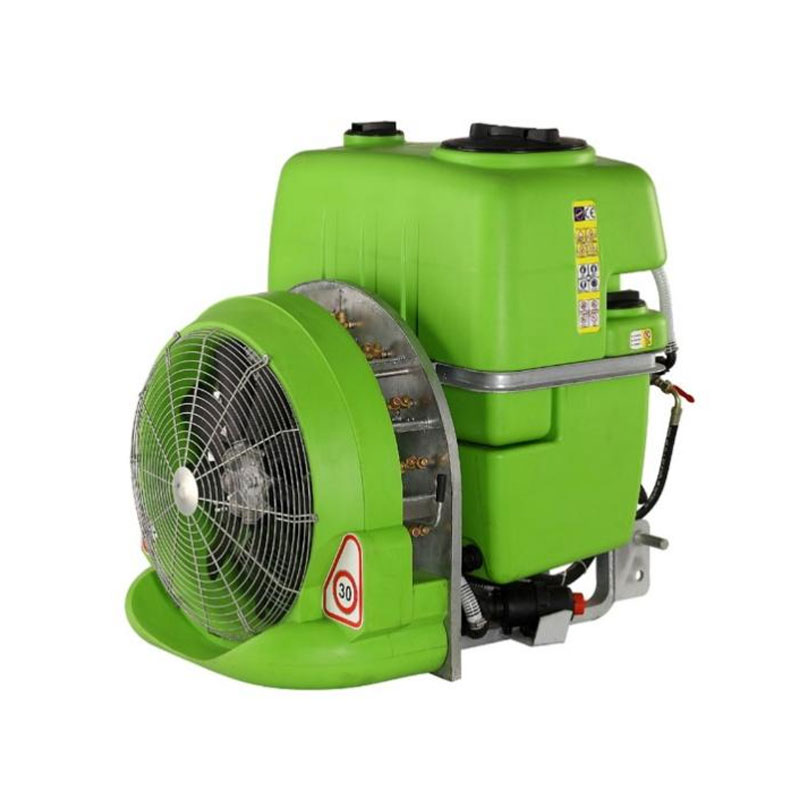
Agricultural machinery parts mold
Why Agricultural Machinery Components Require Specialized Molds
Agricultural equipment components are not ordinary plastic parts. They must often perform outdoors for years while maintaining structural integrity and appearance. A tractor hood may be struck by stones or tools. A harvester housing may experience constant vibration. A chemical tank may come into contact with fertilizers, pesticides, oils, or cleaning agents. A protective guard may need to withstand repeated impacts while remaining lightweight enough for convenient installation.
These conditions place special demands on both the finished component and the mold used to produce it. The tooling must retain its geometry during repeated heating and cooling cycles. It must distribute heat effectively across large surfaces and complex corners. It must provide a suitable surface finish and enable the finished part to be removed without damage. It must also remain stable when used in high-volume production, where small dimensional changes can result in assembly problems, increased scrap, or customer complaints.
Traditional manufacturing methods can be highly effective for certain small or highly detailed parts, but they may become less economical or less flexible when the component is large, hollow, curved, or requires an integrated design. Agricultural machinery parts molds based on rotational molding are well suited to these applications because the process uses controlled rotation and heat to distribute polymer material across the inner surface of the mold.
During production, a measured quantity of polymer powder is placed inside the mold. The closed mold is heated while rotating around multiple axes. As the material melts, it coats the mold cavity and gradually forms the required wall structure. After heating, the mold is cooled while rotation continues, allowing the component to solidify with reduced risk of uneven material accumulation. The result is a hollow part that can contain smooth contours, integrated ribs, mounting areas, and other design features.
The effectiveness of this process depends heavily on the mold. A poorly engineered mold can produce uneven wall thickness, incomplete fusion, excessive distortion, difficult demolding, or inconsistent surface appearance. A precisely designed mold, by contrast, supports stable material distribution and repeatable production. This is why mold engineering should be considered a central part of agricultural component development rather than an afterthought.
One-Piece Rotational Molding Construction
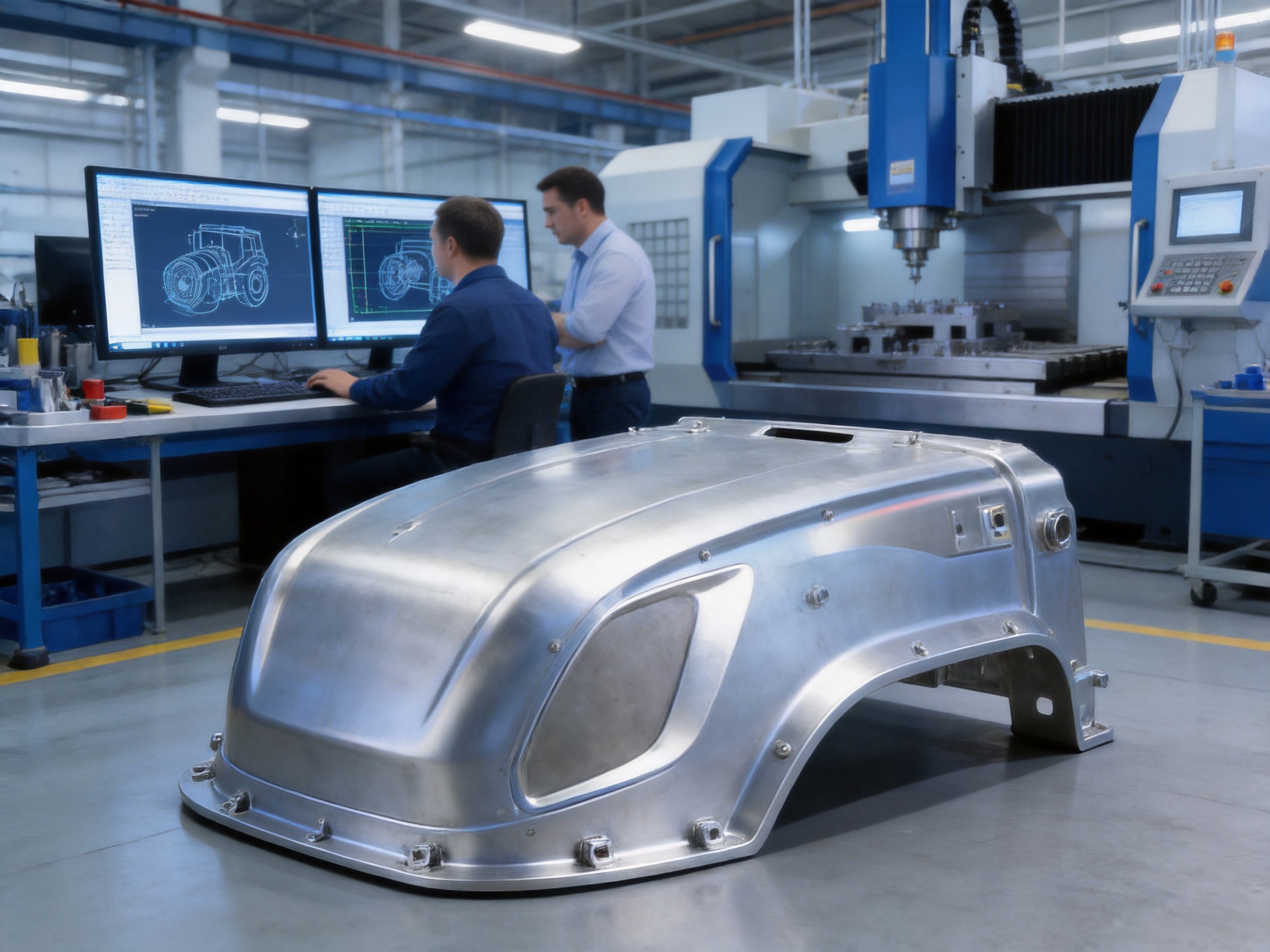
One of the main strengths of the agricultural machinery parts mold is its seamless construction approach. A one-piece mold is designed to reduce unnecessary joints, weak transitions, and poorly integrated tooling sections. This is especially valuable for large agricultural components with broad curved surfaces, deep cavities, or complicated external contours.
A seamless tooling structure can improve rigidity and reduce the risk of local deformation during repeated thermal cycles. Heating and cooling cause every mold to experience expansion and contraction, but a stable structure distributes these changes more consistently. The result is better dimensional repeatability and a lower likelihood of progressive distortion in critical areas.
The one-piece concept also supports a cleaner internal mold surface. A continuous cavity can reduce discontinuities that might otherwise appear at poorly aligned joining areas. This helps the mold produce parts with more consistent surface appearance and fewer unwanted marks. For visible tractor components, equipment housings, and operator protection panels, surface quality is an important part of perceived product value.
Another benefit is reduced stress concentration. Corners, transitions, mounting areas, and parting regions must be carefully designed so that they do not become weak points during operation. Through three-dimensional modeling and design review, the mold structure can be optimized before machining begins. This makes it possible to evaluate draft angles, wall transitions, demolding direction, cavity access, and mounting arrangements in advance.
One-piece construction does not mean that every mold must have a simple shape. On the contrary, rotational molding tooling can support large and complex geometries. The key is to combine a practical mold structure with accurate digital design and appropriate manufacturing methods. This allows complex agricultural components to be produced without introducing unnecessary tooling complexity.
Advantages of a Seamless Mold Structure
- Improved structural stability during repeated heating and cooling.
- Reduced risk of weak tooling areas caused by poorly integrated sections.
- More consistent cavity surfaces for improved part appearance.
- Better support for large curved components and hollow structures.
- Simplified inspection, cleaning, and routine maintenance.
- Reduced risk of dimensional drift during extended production.
- Efficient adaptation to different agricultural component designs.
These advantages are particularly important when the mold is used for covers, guards, housings, tanks, and other parts that combine a large surface area with demanding dimensional requirements.
Key Product Advantages Over Less Suitable Tooling Solutions
Consistent Dimensional Performance
Dimensional accuracy is essential for agricultural machinery components because many parts must fit with metal frames, engines, hydraulic systems, electrical assemblies, or other plastic components. If a housing is distorted, an access cover may not close properly. If a tank changes shape, mounting points may no longer align. If a protective panel is inconsistent, assembly time and rework costs can increase.
A professionally engineered rotational mold supports stable geometry by combining accurate cavity design, suitable mold rigidity, controlled heating, and appropriate cooling procedures. The mold is evaluated through trial production and sample inspection before delivery. This validation process helps confirm that the finished component meets the required shape, wall distribution, surface appearance, and release performance.
Reduced Weak Points in Finished Components
Rotational molding creates hollow parts without requiring a conventional weld seam through the primary body. This is a significant advantage for tanks, containers, guards, and housings that must resist impact, vibration, or fluid leakage. A seamless part structure can distribute loads more evenly than a design that depends on multiple joined sections.
The absence of an internal weld line in the main body can also reduce potential leakage paths and stress concentration. For agricultural fluid tanks or reservoirs, this contributes to more dependable service. For protective covers and housings, it can improve resistance to repeated impact and environmental exposure.
Material behavior is also important. Rotationally molded parts are not normally subjected to the same high pressure as injection-molded parts during formation. When the process is correctly controlled, the finished component can have a low-stress structure with reduced risk of warping or cracking caused by uneven internal stresses. Mold geometry, heating, cooling, and material selection must still be properly controlled, but the process is well suited to durable hollow parts.
Design Flexibility for Large and Complex Components
Agricultural machinery manufacturers frequently require parts with unusual contours, integrated mounting points, recessed areas, ribs, handles, openings, or other functional details. Rotational molding provides considerable design flexibility for large parts because the mold cavity can be engineered around the desired final geometry.
This flexibility is useful for tractor fenders, hoods, fuel tanks, air intake housings, hopper liners, protective guards, seed containers, and equipment enclosures. Product variations can often be developed without the extremely complicated tooling arrangements associated with some alternative processes. The simple rotational mold structure also helps manufacturers manage product changeovers more efficiently.
Lower Tooling Complexity for Large Parts
Large injection molds can require substantial material, high clamping force, complex cooling systems, and expensive machining. Rotational molding molds are generally less complicated because the process does not require high-pressure injection into a closed cavity. This can make rotational molding an attractive option for large agricultural components or products with moderate production volumes.
The economic advantage depends on the design, material, production quantity, and performance requirements. However, when a component is large, hollow, and relatively lightweight, rotational molding can provide a favorable balance between tooling investment, design flexibility, and production efficiency.
Efficient Product Changeovers
Agricultural machinery manufacturers may produce several equipment models or seasonal variations. Tooling must therefore support practical changeovers without causing extended downtime. The relatively simple structure of a rotational mold can make installation, removal, inspection, and replacement more manageable.
When mold geometry and mounting arrangements are planned correctly, operators can switch between different product designs with improved efficiency. This flexibility is particularly valuable for manufacturers serving multiple agricultural equipment brands or producing replacement parts in addition to original equipment components.
Applications of Agricultural Machinery Parts Molds
Tractor Covers, Hoods, and Fenders
Tractor exterior parts must combine impact resistance, low weight, attractive appearance, and accurate fit. Hoods and covers protect internal systems from dust, water, and accidental contact while also contributing to the overall appearance of the machine. Fenders and wheel-related components are exposed to mud, vibration, stones, and repeated cleaning.
Rotational molding can produce large curved surfaces with integrated contours and relatively uniform wall distribution. The mold can include textured regions, logos, recesses, mounting points, and reinforcement features where required. A stable surface finish supports consistent appearance across production batches and helps the part remain easy to clean.
Protective Guards and Machine Housings
Protective guards and housings shield engines, drive systems, control equipment, electrical units, and hydraulic assemblies from agricultural debris and outdoor conditions. These parts may require ventilation openings, access covers, mounting points, and complex curved transitions.
Agricultural machinery parts molds for these applications must support accurate geometry while allowing the finished part to be removed without damage. Draft, corner radii, cavity depth, and parting arrangements should be evaluated during the design stage. Three-dimensional engineering makes it possible to identify interference and demolding problems before the mold is manufactured.
Water Tanks and Agricultural Fluid Containers
Water tanks, chemical containers, reservoirs, and other fluid-handling components require leak resistance, dimensional accuracy, and chemical compatibility. A seamless rotationally molded body is well suited to these requirements because it avoids a conventional welded seam through the main container structure.
The mold must be designed to support consistent wall distribution, especially around corners, outlets, openings, and mounting features. Heating uniformity is critical because uneven thermal conditions can result in thin areas or excessive material accumulation. The use of appropriate process controls helps maintain reliable container performance.
Seed Hoppers and Material-Handling Components
Seed hoppers, fertilizer containers, grain-handling parts, and similar components often require smooth internal surfaces, impact resistance, and easy cleaning. The internal geometry should minimize areas where material can accumulate. Smooth transitions and rounded corners can improve discharge performance and reduce contamination.
Rotational molding provides the design freedom needed to create large hollow containers with integrated contours. The mold can be customized for capacity, mounting arrangement, discharge geometry, and equipment compatibility.
Air Intake Housings and Utility Enclosures
Air intake housings and utility enclosures protect sensitive systems from dust, moisture, and mechanical damage. They may require complex internal and external surfaces, connection points, and accurate openings. The mold must maintain the geometry of these features over repeated production cycles.
When the component is designed for outdoor agricultural use, the material and surface finish should also be selected for resistance to ultraviolet exposure, temperature variation, moisture, and chemicals. Proper engineering at the mold and product stages helps achieve dependable performance.
| Component Type | Primary Function | Important Mold Requirement | Typical Performance Priority |
|---|---|---|---|
| Tractor covers and hoods | Protection and external enclosure | Accurate curved geometry and surface quality | Impact resistance and appearance |
| Fenders and guards | Protection from mud, debris, and contact | Rigid structure and reliable demolding | Durability and low weight |
| Water and chemical tanks | Fluid storage and handling | Uniform wall distribution and leak-resistant design | Chemical resistance and dimensional stability |
| Seed hoppers | Storage and controlled material discharge | Smooth internal transitions and large hollow cavity | Cleanability and impact resistance |
| Equipment housings | Protection of mechanical or electrical systems | Complex geometry and repeatability | Assembly accuracy and environmental protection |
Advanced Design and Engineering Process
The performance of an agricultural machinery parts mold begins long before machining. Jiangsu Zhuohe Mould Co., Ltd. follows an integrated workflow that can include project evaluation, product structure optimization, three-dimensional modeling, mold design confirmation, precision CNC machining, trial production, sample validation, inspection, and delivery.
Project Evaluation and Product Review
Every project should begin with a clear understanding of the finished component. Engineers need to evaluate dimensions, material, expected production volume, wall requirements, operating environment, mounting points, surface expectations, and end-use loads. This information determines whether rotational molding is appropriate and helps establish the correct mold structure.
Product review also considers how the component will be installed and serviced. Access openings, fastener locations, drainage features, handles, ribs, and transitions should be assessed for manufacturability. Identifying these details early helps prevent costly mold modifications later.
Three-Dimensional Parametric Modeling
Three-dimensional CAD modeling provides a visual and technical basis for tooling development. Engineers can analyze the cavity, parting area, draft, corner radii, mounting features, and possible interference. Parametric design also makes it easier to accommodate approved product changes while maintaining control over critical dimensions.
For complex agricultural components, digital modeling helps evaluate material distribution and manufacturing feasibility before the mold is cut. It can also support reverse engineering when a replacement component or existing product must be reproduced or improved.
Mold Structure Confirmation
After the product geometry has been reviewed, the mold structure is confirmed. This stage addresses wall support, mounting arrangements, access points, reinforcing features, demolding direction, heating exposure, and cooling behavior. A good structure must be sufficiently rigid without adding unnecessary weight or complexity.
The design team also considers how operators will handle the mold during production. Practical access for loading, unloading, cleaning, inspection, and maintenance can improve operating efficiency and reduce the possibility of handling damage.
Precision CNC Machining
Precision CNC machining is used to manufacture the mold cavity and other critical surfaces. Jiangsu Zhuohe Mould Co., Ltd. uses CNC equipment and advanced machining capabilities to produce complex contours, detailed surfaces, and accurate dimensions. High-speed five-axis machining can be especially useful for large or irregular cavities because it enables the tool to follow complicated surfaces efficiently.
Accurate machining reduces the need for excessive manual correction and supports consistent cavity quality. It also helps preserve the relationship between mounting areas, parting features, openings, and functional surfaces. The result is a more reliable foundation for trial molding and production validation.
Trial Molding and Sample Validation
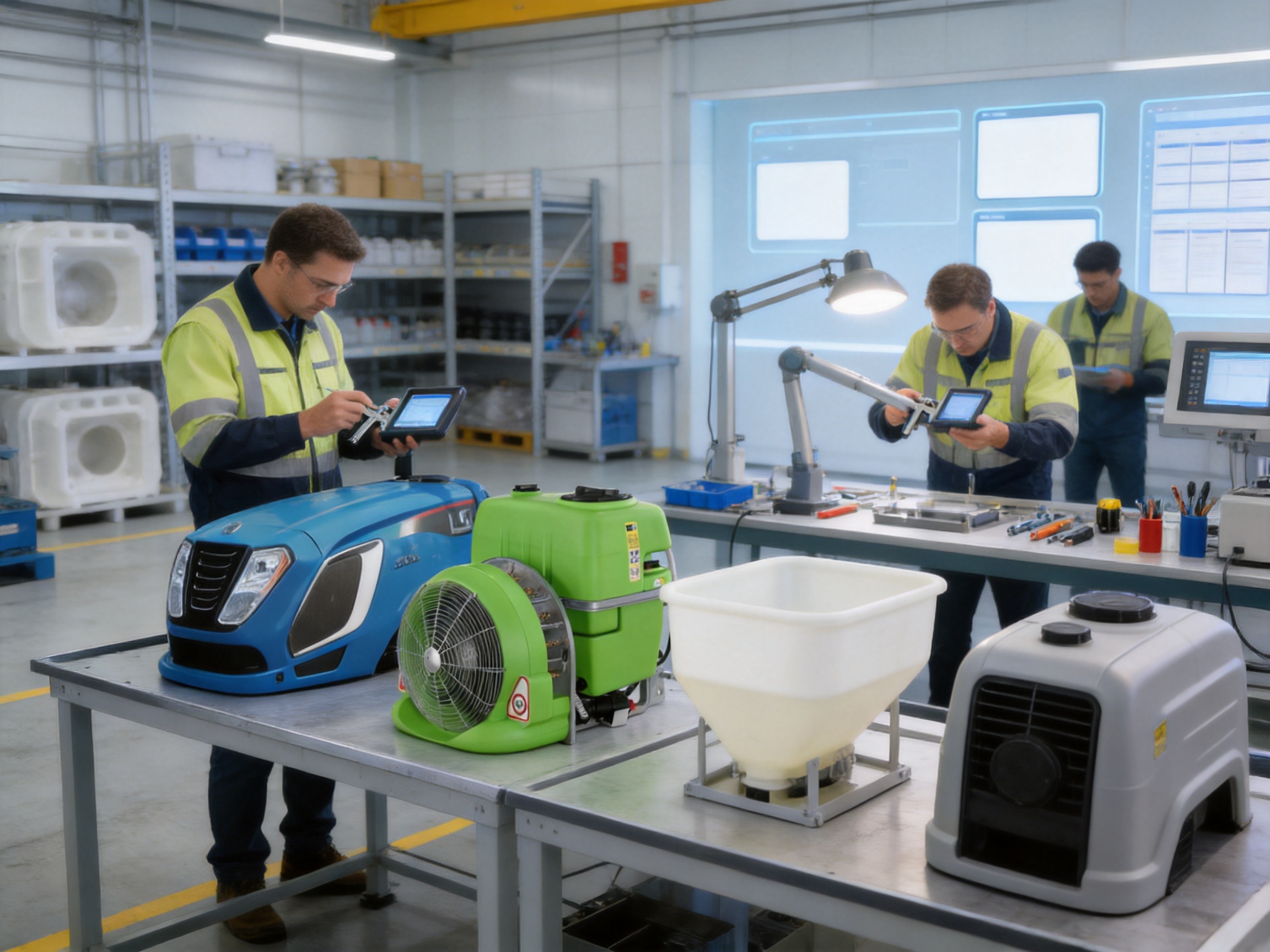
A mold should not be considered complete merely because machining has finished. Trial molding is essential for checking how the tooling behaves under real process conditions. The trial run can reveal issues related to material distribution, heating balance, part release, surface appearance, wall thickness, deformation, and cycle time.
Sample parts are inspected against the agreed requirements. If changes are needed, the tooling can be adjusted before delivery or mass production. This process reduces the risk that an unresolved design issue will affect a large production order.
Heating Technology and Process Control
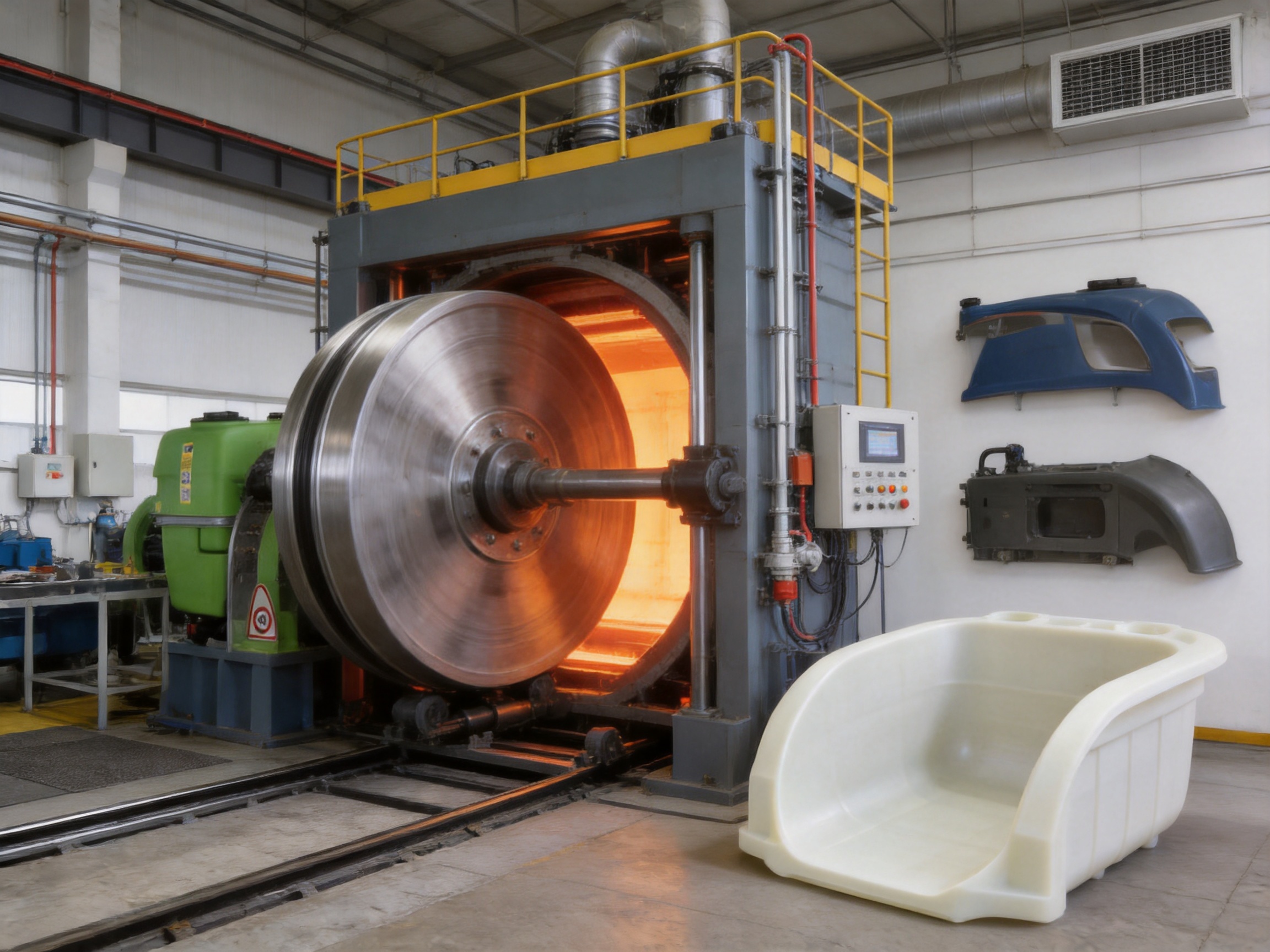
Thermal control is one of the most important factors in rotational molding. The polymer must melt and distribute across the mold surface in a controlled manner. If the mold is heated unevenly, some areas may become too thin while others accumulate excessive material. Large flat regions, deep corners, narrow transitions, and complex contours can all respond differently to heat.
Jiangsu Zhuohe Mould Co., Ltd. develops solutions for both conventional gas-heated and electric-heated rotational molding systems. Gas heating remains widely used because it can accommodate many product types and production environments. Electric heating provides an additional option where precise temperature control, independent heating zones, and improved process monitoring are important.
Electric-heated systems may be particularly beneficial for agricultural tanks, housings, and other components with complicated geometry or demanding wall-thickness requirements. Independent heating zones can help operators manage different areas of the mold more accurately. This may improve process repeatability and reduce the risk of localized overheating or underheating.
Heating technology must be considered together with mold design. Even the most advanced heating equipment cannot compensate for unsuitable cavity geometry, poor mold positioning, or incorrect material loading. Conversely, a well-designed mold can deliver better results when combined with stable temperature control and disciplined operating procedures.
Important Thermal Management Considerations
- Uniform heating across large and small cavity regions.
- Appropriate temperature settings for the selected polymer.
- Controlled heating and cooling rates.
- Accurate mold loading and material distribution.
- Monitoring of cycle conditions for repeatability.
- Protection of mounting points and structural transitions from excessive thermal stress.
Manufacturers should record process settings during trial molding and establish approved operating ranges for production. Consistent records make it easier to identify changes in equipment performance or material behavior.
Materials, Surface Quality, and Finished-Part Performance
The mold material must withstand repeated thermal exposure while retaining its shape and surface condition. Material selection depends on mold size, geometry, production frequency, heating method, surface requirements, and expected service conditions. High-grade aluminum alloy is commonly used for rotational molding molds because it offers a useful balance of thermal conductivity, machinability, weight, and dimensional performance.
A suitable mold surface supports the appearance and function of the finished part. Agricultural components may require smooth surfaces for cleaning, textured surfaces for appearance or grip, or specific finish levels for painting, labeling, or assembly. Surface quality must be controlled during machining and maintained through proper handling.
Rotational molding can produce relatively uniform walls when the mold design and process conditions are appropriate. Uniformity contributes to strength, impact performance, weight control, and dimensional stability. It can also reduce scrap because fewer areas require correction or rejection.
Material selection for the finished component is equally important. Agricultural parts may need resistance to ultraviolet exposure, fertilizers, pesticides, oils, fuels, detergents, or temperature extremes. The mold manufacturer and product developer should work together to ensure that the selected polymer and process are compatible with the intended application.
Quality Assurance and Manufacturing Strengths
Quality assurance should cover every stage from raw material verification to final mold inspection. Jiangsu Zhuohe Mould Co., Ltd. applies structured quality controls supported by an integrated production facility. The company provides services from design and engineering through mold manufacturing, testing, quality inspection, delivery, and technical support.
Raw Material Verification
Raw materials used for the mold should meet the required grade and specification. Verification helps ensure that the tooling has appropriate strength, machinability, thermal behavior, and surface characteristics. Material records also support traceability throughout the manufacturing process.
Machining Inspection
During machining, critical dimensions and surfaces should be checked at appropriate stages. Early inspection can identify deviations before they affect the complete cavity. This is particularly important for large molds, where correction after extensive machining may be costly and time-consuming.
Dimensional Inspection
Finished mold dimensions are compared with approved drawings and digital models. Inspection may include cavity dimensions, mounting points, parting areas, openings, corner transitions, and other critical features. Accurate inspection supports consistent sample production and reduces the risk of assembly problems.
Trial-Part Inspection
Trial parts are evaluated for wall-thickness distribution, surface appearance, deformation, dimensions, release behavior, and functional features. The trial process confirms that the mold is not only dimensionally correct as a tool, but also capable of producing the required component under practical production conditions.
Management and Certification Systems
The company operates under internationally recognized management systems, including ISO 9001:2015 quality management, ISO 14001:2015 environmental management, and ISO 45001 occupational health and safety certification. These systems support controlled procedures, documented responsibilities, continuous improvement, environmental awareness, and safer production practices.
Jiangsu Zhuohe Mould Co., Ltd. was founded in 2015 and operates a modern facility in Jiangyan District, Taizhou City, Jiangsu Province. Its production site includes more than 12,000 square meters of standardized workshops within a larger facility. The company has capabilities covering mold design, CNC machining, mold testing, rotomolding equipment, assembly, quality inspection, and finished-product production.
Maintenance and Service-Life Management
The service life of an agricultural machinery parts mold depends on more than its initial construction. Production frequency, thermal cycling, material choice, loading practices, demolding methods, cleaning, storage, and preventive inspection all influence long-term performance.
A maintenance program should begin before the first production cycle. Operators should understand the correct installation method, lifting points, heating limits, cooling procedure, and demolding sequence. Improper handling can damage edges, mounting areas, surfaces, and hardware even when the mold itself has been well designed.
Routine Inspection
Routine inspections should look for dents, scratches, distortion, loose fasteners, surface contamination, corrosion, damaged mounting points, and changes in product dimensions. Inspection frequency should reflect production volume and operating conditions. High-volume tooling may require checks after defined cycle intervals, while low-volume tooling can be inspected before and after each production campaign.
Cleaning
Residue, dust, polymer buildup, oil, and other contamination should be removed using methods appropriate for the mold surface. Aggressive tools or unsuitable chemicals can damage the cavity and reduce surface quality. Cleaning should be carried out in a controlled manner, with special attention to corners, openings, parting areas, and mounting features.
Storage
Molds should be stored in a dry, protected environment where they will not be struck by other equipment or exposed unnecessarily to moisture and corrosive substances. Supports should prevent distortion during storage. Large molds should be positioned according to their structural design so that weight is distributed safely.
Demolding Practices
Excessive force during part removal can damage both the component and the mold. Operators should follow the approved cooling and release procedure. If a part repeatedly sticks, the cause should be investigated rather than solved through increasingly forceful handling. Possible causes include insufficient draft, incorrect cooling, material buildup, surface damage, or a process setting outside the approved range.
Preventive maintenance helps identify gradual changes before they affect production. A documented record of cycle counts, inspections, repairs, and process changes can support better decisions about tooling refurbishment or replacement.
How the Mold Supports Sustainable and Cost-Efficient Production
Agricultural machinery manufacturers increasingly evaluate tooling according to total lifecycle cost rather than initial purchase price alone. A mold that costs less initially but produces inconsistent parts, requires frequent repair, or causes extended downtime may be more expensive over its useful life.
A durable rotational molding mold can contribute to cost efficiency in several ways. Stable tooling reduces dimensional variation and scrap. Seamless cavity construction can lower the risk of recurring weak areas. Efficient changeovers can improve equipment utilization. Repairable and accessible tooling can reduce maintenance time. Consistent production can also reduce inspection, rework, and customer-return costs.
Rotational molding can support lightweight agricultural components that use material efficiently while retaining the required strength. Lower component weight may simplify handling, reduce machine mass, and contribute to fuel or energy efficiency. The actual result depends on product design, material selection, and application requirements, but the process provides a useful platform for lightweight hollow structures.
Environmental performance also depends on responsible manufacturing and operating practices. ISO 14001:2015 environmental management certification reflects the importance of controlling production impacts, managing resources, and supporting continuous improvement. Manufacturers should evaluate material waste, energy consumption, process efficiency, and product durability together.
Selection Guide for Agricultural Machinery Parts Molds
Before selecting a mold supplier, agricultural equipment manufacturers should define the product and production requirements clearly. The following questions can help establish the correct tooling solution.
- What are the finished part dimensions and maximum wall depth?
- Is the component hollow, curved, or difficult to produce using conventional tooling?
- What impact, chemical, temperature, and outdoor exposure will the part experience?
- What production volume and cycle frequency are expected?
- Which areas require tight dimensional control?
- Are surface texture, logos, ribs, handles, or mounting points required?
- How will the part be loaded, demolded, inspected, and assembled?
- Would gas heating or electric heating provide the better process solution?
- What inspection and sample-validation procedures will be used?
- What maintenance, repair, and technical support will be available after delivery?
The best supplier is not necessarily the one offering the lowest initial quotation. A capable supplier should be able to discuss product feasibility, tooling structure, materials, process conditions, testing, quality documentation, delivery schedules, and long-term support. Integrated service reduces communication gaps between design, mold construction, and production.
Jiangsu Zhuohe Mould Co., Ltd. provides one-stop support from product design and mold manufacturing to finished-product production. Its annual capacity includes more than 800 mold sets and approximately 3,600 tons of plastic products. This production capability allows the company to support both custom tooling projects and broader rotomolded product programs.
Why Choose Jiangsu Zhuohe Mould Co., Ltd.
Jiangsu Zhuohe Mould Co., Ltd. combines specialized rotational molding knowledge with in-house engineering and manufacturing capabilities. This combination gives customers a single technical partner for mold development, testing, production support, and maintenance advice.
The company’s capabilities include three-dimensional product development, CAD and CAM engineering, reverse engineering, precision CNC machining, mold assembly, trial molding, sample validation, quality inspection, and rotomolded product processing. These capabilities support agricultural applications ranging from tractor components and machinery housings to tanks, guards, hoppers, and protective panels.
Its facility in Jiangyan District, Taizhou City, Jiangsu Province, includes standardized production workshops and equipment for mold and product manufacturing. The company’s experience across agricultural machinery, automotive parts, industrial equipment, water treatment, outdoor facilities, hydrogen energy storage and transportation, and other fields contributes to a broad understanding of large plastic component requirements.
For agricultural machinery manufacturers, the main benefit is process integration. Product design can be reviewed together with mold manufacturability. Tooling can be tested before delivery. Sample parts can be inspected against the required specifications. Production and maintenance advice can be provided after the tooling enters service. This reduces the risk of fragmented responsibility between separate suppliers.
The company’s certifications, manufacturing infrastructure, and technical team provide additional support for customers seeking consistent quality and documented production control. Whether the requirement is a custom mold for a new tractor component or a replacement mold for a harvester, the tooling can be developed around the actual product geometry, volume, environment, and performance objectives.
Frequently Asked Questions
What is an agricultural machinery parts mold?
An agricultural machinery parts mold is a tool used to manufacture components for tractors, harvesters, seeders, sprayers, irrigation equipment, and related machines. It can be used for covers, housings, tanks, guards, hoppers, fenders, panels, and other large plastic parts. The mold defines the shape, surface, openings, transitions, and mounting features of the finished component.
Why is rotational molding suitable for agricultural equipment?
Rotational molding is suitable because it can produce large hollow components with curved surfaces, integrated details, and relatively uniform wall distribution. The process supports seamless part structures and can provide good impact resistance, design flexibility, and chemical durability when the correct material and process conditions are selected.
What is the advantage of a one-piece rotational mold?
A one-piece mold can improve structural stability, reduce unnecessary joints, support consistent cavity surfaces, and simplify cleaning and inspection. It can also reduce the risk of weak tooling areas and help maintain dimensional performance during repeated heating and cooling cycles.
Can the molds be customized for different tractor or harvester components?
Yes. The mold can be developed according to the required product geometry, dimensions, wall requirements, mounting points, surface finish, production volume, and material. Three-dimensional modeling and trial molding allow the tooling to be validated and adjusted for a specific agricultural component.
Can the mold include ribs, logos, textures, or mounting points?
Rotational molding tooling can be designed with a wide range of integrated features, including ribs, recessed areas, logos, surface textures, handles, openings, and mounting points. Each feature should be reviewed for material distribution, demolding, structural performance, and production practicality.
How does electric heating differ from gas heating?
Gas heating is widely used for many rotational molding applications and can accommodate a broad range of products. Electric heating can provide more precise temperature management and independent heating zones. The best option depends on product geometry, wall-thickness requirements, production conditions, energy considerations, and process-control objectives.
How can mold service life be extended?
Service life can be improved through accurate design, suitable mold materials, controlled thermal cycling, correct material loading, careful demolding, regular cleaning, safe storage, and scheduled inspection. Operators should also maintain records of production cycles, repairs, dimensional checks, and process changes.
What quality checks should be completed before mold delivery?
Important checks include raw material verification, cavity and mounting dimensions, surface condition, parting alignment, structural integrity, trial molding, sample-part inspection, wall-thickness evaluation, dimensional measurement, and release performance. The specific inspection plan should be agreed during project development.
Does Jiangsu Zhuohe Mould Co., Ltd. provide technical support after delivery?
Yes. The company provides production technical assistance, maintenance advice, mold testing support, and integrated services related to product development, mold manufacturing, and rotomolded product production. This helps customers manage tooling throughout its operating life.
What information should a customer provide when requesting a quotation?
Customers should provide available product drawings or three-dimensional files, overall dimensions, material requirements, expected production volume, application environment, critical tolerances, surface expectations, machine compatibility, and delivery requirements. Photographs or samples can also assist with reverse engineering and feasibility evaluation.
Conclusion
Agricultural machinery parts molds must support more than basic shape formation. They must enable reliable production of components that withstand impact, vibration, weather, chemicals, temperature variation, and continuous outdoor use. For large hollow and curved agricultural parts, rotational molding offers a practical combination of design flexibility, seamless construction, surface quality, dimensional stability, and production efficiency.
The agricultural machinery parts molds developed by Jiangsu Zhuohe Mould Co., Ltd. are built around these advantages. One-piece tooling construction, three-dimensional engineering, precision CNC machining, controlled heating solutions, trial molding, sample validation, and structured quality assurance work together to improve production reliability. The company’s integrated capabilities also provide manufacturers with technical support from initial product review through mold delivery and ongoing production.
Choosing the right mold requires consideration of the entire lifecycle rather than the initial tooling price alone. Structural design, material selection, heating technology, production volume, maintenance, inspection, and supplier support all influence long-term value. With a professionally engineered rotational mold, agricultural equipment manufacturers can improve part consistency, reduce avoidable downtime, support flexible product development, and achieve more dependable production for demanding agricultural applications.
References
1. ISO 9001:2015, Quality Management Systems — Requirements.
2. ISO 14001:2015, Environmental Management Systems — Requirements with Guidance for Use.
3. ISO 45001:2018, Occupational Health and Safety Management Systems — Requirements with Guidance for Use.
4. Rotational Molding Industry Association, Principles of Rotational Molding and Process Control.
5. Modern Plastics Encyclopedia, Rotational Molding Materials, Tooling, and Applications.
6. Agricultural Machinery Design Engineering, Guidelines for Outdoor Equipment Housings and Protective Components.
7. Polymer Processing Technology, Thermal Management and Wall-Thickness Control in Rotational Molding.
8. Jiangsu Zhuohe Mould Co., Ltd., Product Engineering, Manufacturing, Quality Assurance, and Technical Service Information.
Product: Agricultural machinery parts mold


We provide customers with one-stop services ranging from product design, mold manufacturing to finished product production.
-
 +86-18006248936
-
 ricky.t@zhroto.com
-
 No.9 Jiangyuan Road, Luotang Street, Jiangyan District, Taizhou City,Jiangsu Province, China
Copyright © Jiangsu Zhroto Mould Co., Ltd. Rights Reserved.Custom Rotational Plastic Molding Factory
