 en
 中文简体
 русский
 Español
 Deutsch
 Polskie
 REQUEST A QUOTE

 Home / Author / Mei-Rong Alvarado — Product After-Sales Service Manager / Advanced Flowerpot Gardening Mold for Durable, Decorative Rotomolded Planters
Advanced Flowerpot Gardening Mold for Durable, Decorative Rotomolded Planters
Content
- 1 Why Flowerpot Gardening Mold Technology Matters
- 2 Cast Aluminum Alloy for Flexible Planter Design
- 3 How Rotational Molding Produces Flowerpots
- 4 Gas-Heated Flowerpot Molds for Reliable Production
- 5 Electric-Heated Rotational Molding Molds
- 6 Custom Molds for Large and Decorative Planters
- 7 Comparison of Flowerpot Mold Categories
- 8 Surface Texture Engineering for Decorative Flowerpots
- 9 Manufacturing Strengths and Quality Control
- 10 Engineering Support from Product Concept to Production
- 11 Applications for Flowerpot Gardening Molds
- 12 Environmental and Operational Considerations
- 13 Choosing the Right Mold Manufacturer
- 14 Maintenance and Service Life of Flowerpot Molds
- 15 Frequently Asked Questions
- 15.1 Q1: What is a flowerpot gardening mold?
- 15.2 Q2: Why is rotational molding suitable for large planters?
- 15.3 Q3: What textures can be created on a flowerpot mold?
- 15.4 Q4: What is the difference between a gas-heated and electric-heated mold?
- 15.5 Q5: Is cast aluminum suitable for decorative planter molds?
- 15.6 Q6: Can a custom logo be incorporated into the mold?
- 15.7 Q7: What should be considered when designing a large plastic planter?
- 15.8 Q8: Can the mold manufacturer help optimize an existing product design?
- 15.9 Q9: How is mold quality checked before delivery?
- 15.10 Q10: What services does Jiangsu Zhroto Mould Co., Ltd. provide?
- 16 Conclusion
- 17 References
- 18 Product: Flowerpot gardening mold
Modern landscaping projects require more than ordinary containers for holding plants. Flowerpots used in gardens, parks, hotels, commercial entrances, public spaces, nurseries, and residential developments must combine attractive appearance, structural stability, weather resistance, efficient production, and reliable long-term performance. As planter designs become larger and more decorative, the manufacturing method and mold technology used to produce them become increasingly important.
A flowerpot gardening mold designed for rotational molding provides an effective solution for producing seamless, hollow, lightweight, and highly customizable planters. Through carefully engineered mold geometry and controlled heating and cooling, manufacturers can produce products with consistent wall formation, rounded profiles, integrated details, and distinctive surface textures. The internal surface of the mold determines the external appearance of the finished planter, allowing manufacturers to create smooth, textured, sand-surfaced, patterned, wave-like, logo-based, stone-like, or gypsum-inspired finishes.
Cast aluminum alloy is especially suitable for this type of mold. It offers excellent moldability, supports complex shapes, and allows manufacturers to develop detailed surface effects without sacrificing practical production performance. Compared with conventional molds made for simpler container forms, an advanced aluminum flowerpot mold can provide greater freedom in product design while maintaining the dimensional stability required for repeat manufacturing.
Jiangsu Zhroto Mould Co., Ltd. specializes in the design and manufacture of rotational molding molds, rotomolded products, and integrated technical solutions. The company supports customers from early product consultation and three-dimensional design through mold production, testing, sample validation, inspection, delivery, and production assistance. Its capabilities include conventional gas-heated molds, electric-heated rotational molding molds, and custom solutions for large or highly decorative planters.
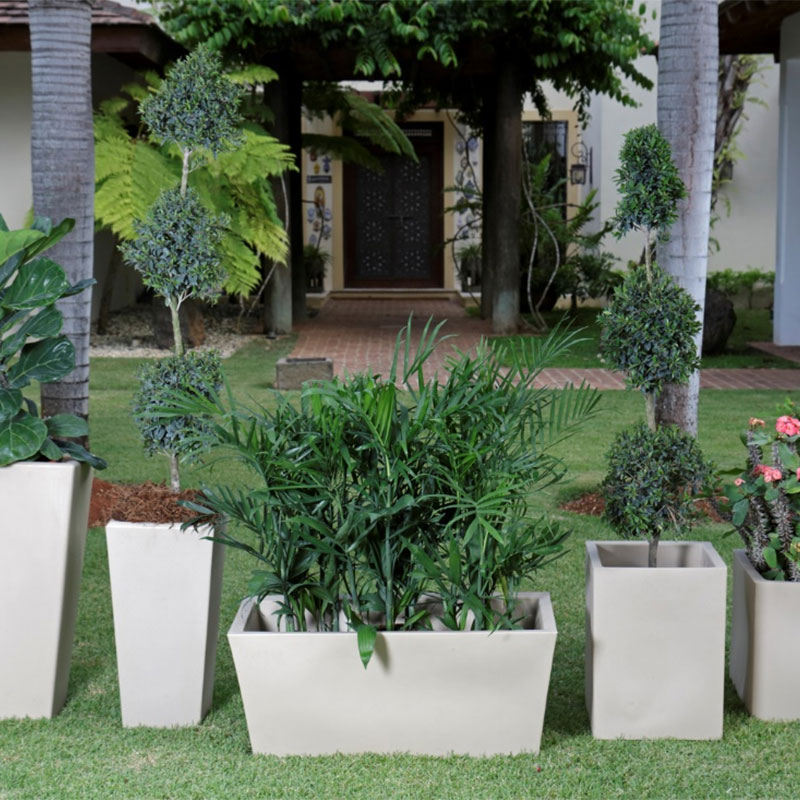
Flowerpot gardening mold
Why Flowerpot Gardening Mold Technology Matters
A planter may appear to be a relatively simple product, but its manufacturing requirements can be complex. A large flowerpot must remain stable when filled with soil and water, withstand repeated exposure to sunlight and rain, and maintain its appearance in changing outdoor conditions. It must also be easy to transport, install, clean, and use with different types of plants. If the product includes a narrow base, deep cavity, decorative ribs, curved walls, or an uneven profile, the mold must be designed around those features from the beginning.
The mold is not merely a tool used to shape plastic. It is a central component of the entire product engineering system. Mold geometry affects wall distribution, heating behavior, cooling speed, demolding, surface appearance, dimensional accuracy, production cycle time, and final product consistency. A poorly developed mold can result in uneven walls, incomplete surface transfer, distortion, difficult demolding, or excessive material consumption.
A professionally designed flowerpot gardening mold addresses these issues before manufacturing begins. Engineers review the planter's overall dimensions, opening size, base structure, wall transitions, draft requirements, decorative details, material selection, and intended production volume. They then develop a mold structure that is suitable for rotational molding equipment and realistic production conditions.
This engineering approach creates several advantages over basic or poorly optimized molds:
- More consistent product dimensions from one production cycle to the next.
- Better control of wall formation in large and deep planter sections.
- Improved transfer of decorative textures and patterns.
- Reduced risk of distortion during heating and cooling.
- Easier demolding and lower risk of product damage.
- Greater compatibility with standard and advanced rotational molding machines.
- More reliable production of large, hollow, and seamless structures.
As buyers increasingly request distinctive planters rather than standard containers, mold quality becomes a direct contributor to product value. A smooth minimalist finish, a natural stone appearance, or a branded wave pattern can all be developed through the inner surface of the mold. This allows decorative features to become part of the manufacturing process rather than requiring separate coating, assembly, or finishing operations.
Cast Aluminum Alloy for Flexible Planter Design
Cast aluminum alloy is widely used in rotational molding because it combines moldability, thermal performance, reasonable weight, and suitability for complex shapes. For flowerpot applications, these characteristics are valuable because planters often require wide openings, deep cavities, curved sides, rounded corners, tapered bases, and decorative surface details.
Aluminum can be cast into a mold structure that closely follows the required product geometry. This makes it suitable for both conventional planters and customized designs with irregular contours. Compared with a simple fabricated mold, a cast aluminum mold can provide a more integrated shape and support more detailed surface treatment.
The material also provides effective heat transfer during the rotational molding process. When plastic powder is placed inside the mold, the mold rotates through controlled heating and cooling stages. Heat must reach the plastic material efficiently and consistently so that it melts and coats the internal mold surface. Stable heat transfer helps reduce areas of incomplete fusion and supports more uniform wall formation.
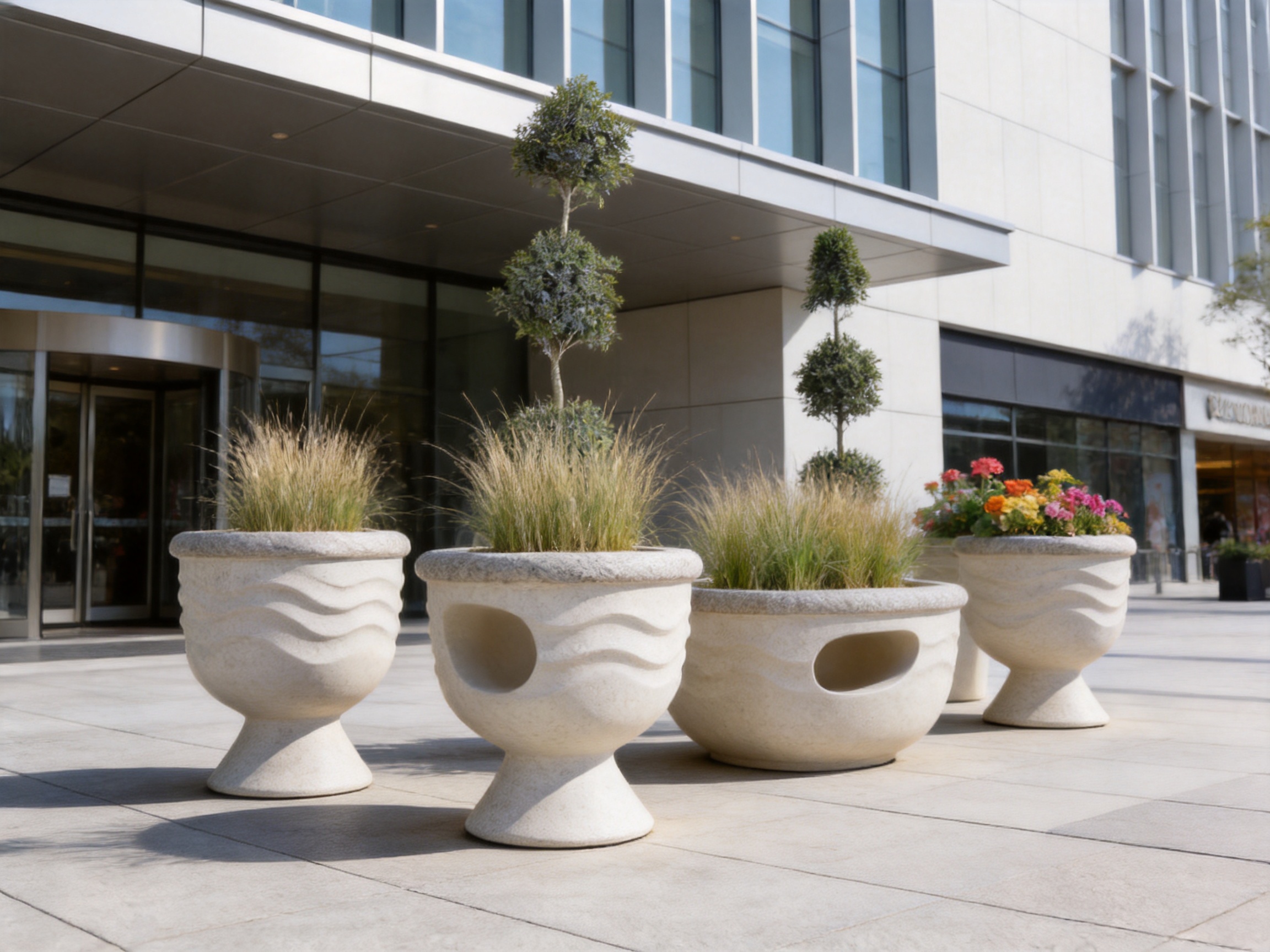
Aluminum mold surfaces can also be machined, polished, textured, sanded, or otherwise treated according to the desired planter appearance. A smooth internal surface can produce a clean and contemporary exterior. A textured finish can create a tactile surface that reduces the visual impact of minor marks. A sand-surfaced mold can produce a natural or architectural appearance. Special patterns, logos, waves, stone effects, and gypsum-inspired details can also be incorporated into the mold.
The choice of surface treatment should be considered together with the product design, plastic material, release behavior, and cleaning requirements. A texture that looks attractive in a sample may need adjustment if it creates excessive resistance during demolding. For this reason, professional mold development balances appearance with production practicality.
Surface Effects Available for Rotomolded Flowerpots
The flowerpot gardening mold can be developed to support a wide range of surface effects. These effects are formed directly through the internal surface of the mold and transferred to the plastic during rotation.
- Smooth surfaces for modern residential and commercial designs.
- Fine textures that provide a refined tactile appearance.
- Sand-surfaced finishes for natural or architectural styles.
- Wave patterns for visually dynamic planter bodies.
- Geometric patterns for contemporary landscaping projects.
- Integrated logos for branded environments and commercial developments.
- Imitation stone effects for gardens, parks, and public spaces.
- Gypsum-inspired surfaces for decorative indoor or outdoor applications.
- Custom reliefs and artistic details for special projects.
Because the decorative effect is integrated into the mold, it can be repeated consistently across large production runs. This provides an advantage over manual finishing methods, which may produce variations in color, texture, thickness, or coverage from one product to another.
How Rotational Molding Produces Flowerpots
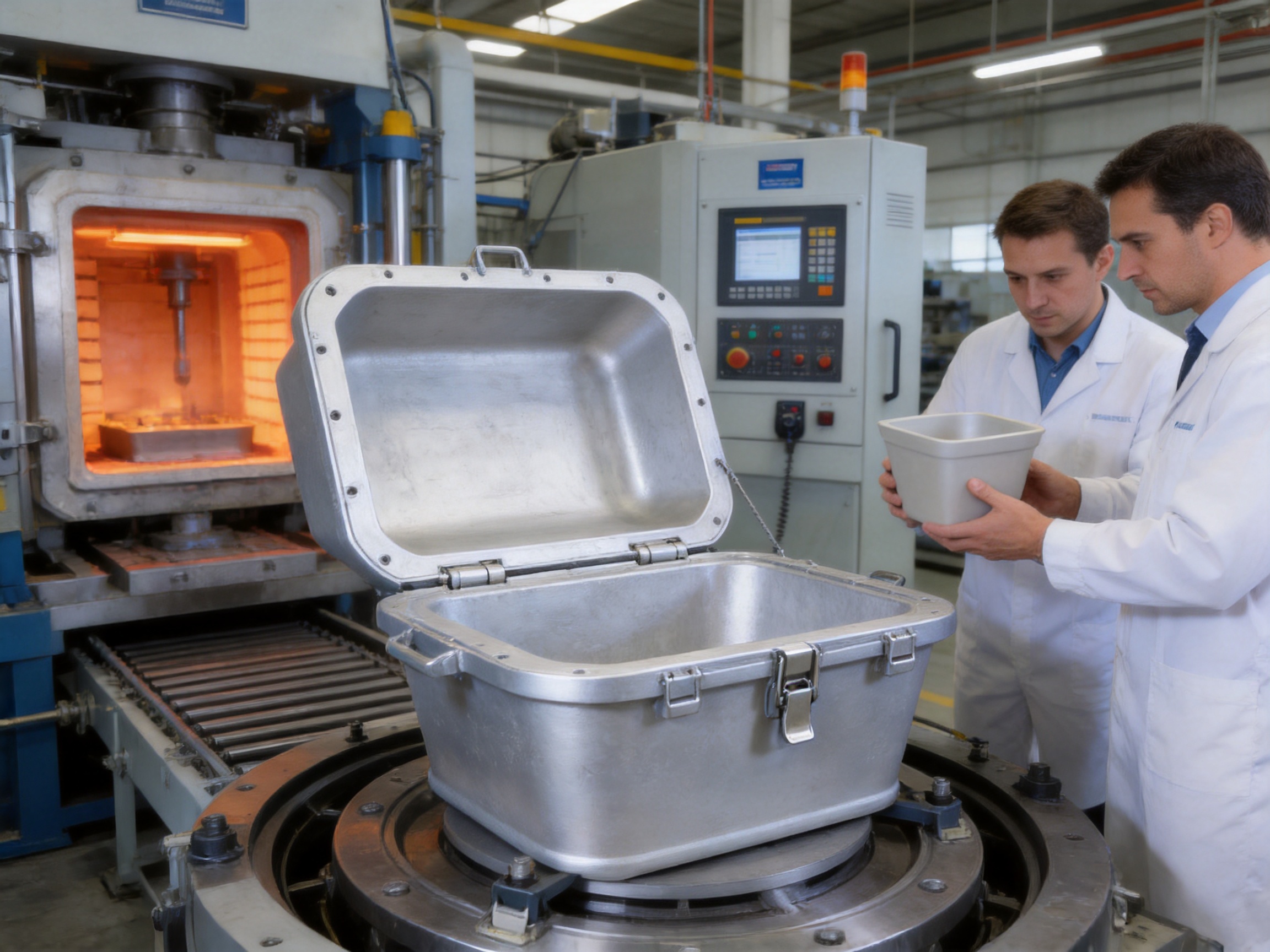
Rotational molding is a manufacturing process used to produce hollow plastic products without requiring high-pressure injection equipment. In a typical cycle, a measured quantity of plastic powder is placed inside the mold. The mold is then closed and mounted on a rotational molding machine. As the mold rotates around one or more axes, it enters a heating chamber.
During heating, the plastic powder melts and gradually coats the internal surface of the mold. Rotation allows the material to reach different areas of the cavity, including curved walls, corners, deep sections, and decorative details. Once the material has formed the required layer, the mold moves into a cooling stage while continuing to rotate. After the plastic solidifies, the mold is opened and the finished flowerpot is removed.
This process is particularly suitable for planters because it naturally supports hollow, seamless structures. A planter can be produced as one integrated body rather than assembled from multiple panels. Fewer joints can simplify production and reduce the risk of leakage or separation. The resulting product can also have a clean appearance and a practical balance between weight and strength.
Rotational molding provides substantial design freedom compared with processes that are limited by fixed opening directions, high injection pressure, or extensive assembly requirements. Large planters, unusual profiles, tapered shapes, and curved decorative surfaces can be produced when the mold and process are properly designed.
Another benefit is the ability to adjust product thickness according to application requirements. The final wall structure depends on the amount of material, mold geometry, heating conditions, rotation speed, and cycle control. For large outdoor planters, engineering attention is required in areas such as the base, rim, corners, and transitions between sections. These areas may experience greater stress during handling, transportation, filling, and use.
Advantages Over Other Planter Manufacturing Approaches
Rotational molding offers several practical advantages for flowerpot production. It is especially competitive when products are large, hollow, customized, or produced in moderate to high volumes.
- Seamless construction can reduce the need for assembly.
- Large hollow products can be produced with relatively low tooling complexity.
- Complex curves and rounded transitions are easier to incorporate.
- Decorative surface effects can be formed directly through the mold.
- Product weight can be controlled through wall design and material quantity.
- Low-pressure processing reduces some of the tooling demands associated with high-pressure molding.
- Custom designs can be developed without redesigning an entire production line.
- One mold can support repeat production of consistent planter forms.
Compared with concrete planters, rotomolded plastic planters are generally easier to move and install. Compared with assembled products, seamless planters can offer cleaner lines and fewer connection points. Compared with some rigid high-pressure molding methods, rotational molding can provide more flexibility for very large and hollow shapes.
The best production method still depends on product requirements, material selection, quantity, size, and target price. However, for large decorative planters that require lightweight construction and extensive design freedom, rotational molding remains a highly practical option.
Gas-Heated Flowerpot Molds for Reliable Production
Gas-heated rotational molding machines remain widely used for standard and large flowerpot production. A gas-heated flowerpot gardening mold is designed to operate within established heating systems and can support a broad range of conventional planter shapes.
These molds are suitable for projects that prioritize reliable production, broad machine compatibility, and practical investment. They can be used for round planters, square planters, tapered designs, deep containers, large landscape pots, and other hollow gardening products. The mold rotates through the heating chamber, allowing the plastic material to melt against the inner surface before cooling and solidifying.
Gas-heated molds are especially appropriate for repeated production of standardized planters. Typical users may include nurseries, landscaping contractors, outdoor furniture suppliers, garden product manufacturers, and companies serving commercial development projects.
The main advantages of gas-heated molds include:
- Compatibility with widely used rotational molding equipment.
- Proven production methods and familiar operating procedures.
- Suitability for standard and large planter designs.
- Support for different mold textures and decorative effects.
- Practical cost management for established product lines.
- Reliable performance in repeated production cycles.
When the planter design is relatively straightforward and the production environment already uses gas-heated equipment, this mold category can provide an efficient balance between tooling investment and manufacturing performance. It is also suitable for products requiring stable output across landscaping projects, retail channels, and commercial orders.
Design Considerations for Gas-Heated Applications
Although gas-heated molding is a mature process, the mold must still be engineered carefully. The designer should consider the heating chamber, expected temperature profile, mold wall thickness, mounting points, ventilation, product release, and cooling conditions.
Large molds may require additional structural reinforcement so that they maintain their shape during repeated heating and cooling. Handles, hinges, parting lines, and locking systems must also be positioned to support safe operation. If the mold contains a large flat area, the design should address possible distortion or uneven heating. If the planter includes an intricate texture, the surface depth and draft should be reviewed to support reliable demolding.
Gas-heated systems can produce excellent results when the mold and machine are properly matched. A professional mold manufacturer does not treat the heating method as an isolated issue. Instead, the mold structure, product geometry, process parameters, and equipment configuration are evaluated together.
Electric-Heated Rotational Molding Molds
Electric-heated rotational molding is an advanced option for customers requiring more precise thermal management. Since 2023, Jiangsu Zhroto Mould Co., Ltd. has invested in electric-heated rotomolding technology and related production capabilities. This development supports applications where temperature accuracy, zoned heating, energy control, and repeatability are especially important.
Electric heating can provide more precise control than conventional heating methods. Depending on the equipment and production conditions, temperature control accuracy may reach approximately 1 to 2 degrees Celsius. Thermal efficiency can exceed 95 percent in suitable systems, while energy consumption may be reduced by approximately 30 to 50 percent compared with conventional processes under appropriate operating conditions.
These figures depend on the machine design, mold structure, product size, material, production cycle, and operating environment. Nevertheless, electric-heated systems can provide a valuable advantage for manufacturers seeking improved process management.
Electric-heated flowerpot molds are particularly useful when the product includes:
- Different wall thickness requirements.
- Deep or narrow sections that are difficult to heat evenly.
- Complex curves and decorative structures.
- High-value textured or patterned surfaces.
- Strict dimensional requirements.
- Frequent product changes or customized production.
- A need for improved energy monitoring and thermal efficiency.
The difference between gas-heated and electric-heated molding is not limited to the energy source. Electric systems require the mold to respond effectively to controlled heating zones. Mold wall thickness, thermal conductivity, surface structure, mounting design, and product geometry must be considered during the engineering stage.
For premium flowerpots, controlled heating can help protect the appearance of decorative surfaces and improve repeatability. When the product has complex geometry, uneven sections, or a demanding surface finish, zoned electric heating may help the manufacturer manage local differences in heat absorption.
Custom Molds for Large and Decorative Planters
Standard planters are only one part of the market. Many customers require products that reflect a specific landscape concept, architectural style, brand identity, or artistic direction. Such products may include irregular profiles, extra-large dimensions, integrated logos, deep cavities, unusual openings, sculptural curves, wave patterns, or natural material effects.
Custom flowerpot gardening molds are developed around the specific product rather than around a standard container shape. This provides greater design freedom but also creates higher engineering requirements. The mold must support the desired appearance while remaining practical for heating, cooling, demolding, handling, and repeated production.
Large plastic planter manufacturing creates particular challenges. As the product becomes larger, the mold may require greater rigidity and improved handling arrangements. Large surface areas can also increase the risk of uneven heating, distortion, or inconsistent wall formation. The product's base must be sufficiently stable, and its rim must withstand handling and use. If the planter is intended for public spaces, the design may also need to account for wind, impact, drainage, and long-term outdoor exposure.
Customization is most successful when product engineering begins before the mold is manufactured. Three-dimensional CAD modeling allows designers to review the full product shape, parting line, wall transitions, opening, base, reinforcement features, and decorative details. Engineering review can identify areas that may cause production difficulties and allow them to be corrected before machining.
Custom Design Workflow
A professional custom mold project commonly follows a structured workflow:
- Review the product concept, intended application, dimensions, material, and production quantity.
- Evaluate whether the product geometry is suitable for rotational molding.
- Optimize wall transitions, corners, draft, openings, and demolding areas.
- Develop a detailed three-dimensional CAD model.
- Confirm the mold structure, parting line, locking method, and mounting design.
- Select a suitable mold material and surface treatment.
- Complete casting, machining, CNC processing, and surface finishing.
- Conduct mold trials and produce initial samples.
- Inspect the sample for dimensions, appearance, wall formation, and release performance.
- Make necessary adjustments before final acceptance and delivery.
This process reduces the risk of costly changes after the mold has entered production. It also helps ensure that the final mold reflects both the visual intent of the product and the realities of rotational molding.
Comparison of Flowerpot Mold Categories
Different projects require different mold and heating strategies. The following table summarizes the main categories used for flowerpot rotational molding.
| Category | Gas-Heated Mold | Electric-Heated Mold | Custom Complex Mold |
|---|---|---|---|
| Main positioning | Reliable conventional production | Precise thermal management | Specialized and highly flexible production |
| Heating control | Conventional process control | Zoned and precise control | Designed around product requirements |
| Typical applications | Standard and large planters | Premium decorative planters | Large, irregular, or artistic designs |
| Primary advantage | Broad equipment compatibility | Improved process precision | Maximum design flexibility |
| Surface options | Smooth, textured, patterned, and decorative | High-detail and controlled decorative surfaces | Custom logos, waves, stone effects, and special textures |
| Best suited for | Established production lines and repeated orders | Manufacturers seeking thermal control and energy management | Unique concepts and demanding product specifications |
The selection should be based on the complete production system rather than on mold price alone. A gas-heated mold may be the most appropriate choice for a conventional planter made in large quantities. An electric-heated mold may be more suitable for a premium product where precise thermal control improves consistency. A custom mold may be necessary when the planter has an unusual structure or decorative identity that cannot be achieved with an existing design.
Surface Texture Engineering for Decorative Flowerpots
Surface texture has become an important product feature in the landscaping and gardening market. Customers often want planters that coordinate with buildings, paving materials, garden walls, outdoor furniture, or natural surroundings. Texture can make a plastic planter appear more architectural, more natural, or more visually substantial.
The internal mold surface is the key to achieving these effects. A polished surface produces a clean finish. A fine textured surface creates subtle visual variation. A sand-surfaced mold can imitate the feel of stone or plaster. Deeper relief can create waves, geometric lines, branded marks, or artistic patterns.
Imitation stone and gypsum effects can be created through carefully prepared mold surfaces and suitable finishing methods. After the texture is formed, sanding or other surface treatment may be used to refine the appearance. The final result depends on the mold design, plastic material, pigment, processing temperature, cooling cycle, and any subsequent finishing applied to the product.
Texture design must be balanced with practical considerations. Excessively deep details may hold material in ways that affect wall formation. Sharp corners may be difficult to release from the mold. Very fine patterns may require precise machining and strict process control. A good design preserves the desired appearance while keeping the product suitable for stable and repeatable manufacturing.
Integrated Logos and Branding Features
For hotels, property developers, garden centers, public authorities, and commercial brands, integrated logos can provide a valuable identity feature. A logo incorporated into the mold can be reproduced directly on each planter. This approach is more consistent than applying individual stickers or manually adding decorative panels after molding.
Logo details should be reviewed for size, depth, readability, location, and demolding. The design must remain visible after the plastic forms against the mold surface, while avoiding shapes that trap material or create unnecessary release resistance. When properly engineered, an integrated logo can become a durable part of the planter rather than a separate attachment.
Manufacturing Strengths and Quality Control
Jiangsu Zhroto Mould Co., Ltd. was founded in 2015 and specializes in rotational molding mold design, mold manufacturing, rotomolded product processing, and integrated technical services. The company operates a modern facility in Jiangyan District, Taizhou City, with an 18,000-square-meter site that includes more than 12,000 square meters of standardized production workshops.
The company has an annual output exceeding 800 sets of molds and experience in large-scale mold machining, complex curved surfaces, rapid prototyping, and mass-production support. Its management systems have obtained ISO 9001:2015, ISO 14001:2015, and ISO 45001:2015 certifications. These certifications support structured quality management, environmental management, and occupational health and safety practices.
The manufacturing process can include product consultation, three-dimensional design, engineering review, material recommendation, CNC machining, surface finishing, assembly, trial production, sample validation, dimensional inspection, and final acceptance. Each stage contributes to the performance of the completed flowerpot gardening mold.
Quality control is especially important for large molds because small errors can become more noticeable across a large product surface. Inspection may include checking the mold dimensions, parting line, alignment, locking system, surface condition, mounting points, and critical decorative areas. Trial production allows engineers to evaluate how the mold performs under actual rotational molding conditions.
Sample validation should examine more than external appearance. It should also consider:
- Overall product dimensions and shape.
- Wall formation in critical areas.
- Rim condition and opening accuracy.
- Base stability and flatness.
- Texture transfer and logo clarity.
- Ease of demolding.
- Surface defects, distortion, or incomplete fusion.
- Compatibility with the customer's production equipment.
This complete approach provides an advantage over suppliers that only manufacture a mold according to a drawing without evaluating the final production process. The goal is not simply to deliver a physical tool. The goal is to deliver a mold that can support stable, repeatable, and commercially useful planter production.
Engineering Support from Product Concept to Production
Customers developing a new planter may begin with a sketch, a physical sample, a three-dimensional file, or a general concept. An experienced mold manufacturer can help transform that concept into a product suitable for rotational molding.
During the consultation stage, engineers review the planter's application environment and expected production conditions. A planter for a private garden may have different requirements from a planter installed in a shopping center, public square, hotel entrance, or roadside landscape. The intended environment affects dimensions, stability, wall requirements, drainage, surface finish, handling, and material selection.
Production quantity is also important. A customer making a limited number of custom architectural planters may prioritize design flexibility and low tooling complexity. A manufacturer supplying large landscaping projects may require faster cycle times, consistent quality, and long-term mold durability. The mold design should be aligned with these commercial goals.
Engineering support may include recommendations for product thickness, mold material, parting line location, reinforcement, texture depth, heating method, cooling procedure, and demolding. These recommendations help prevent common problems before the manufacturing stage.
After the mold is produced, trial production and sample evaluation provide an opportunity to confirm the design. If adjustments are needed, they can be made before the mold is placed into full-scale operation. This process improves confidence for customers launching a new product or entering a new landscaping market.
Applications for Flowerpot Gardening Molds
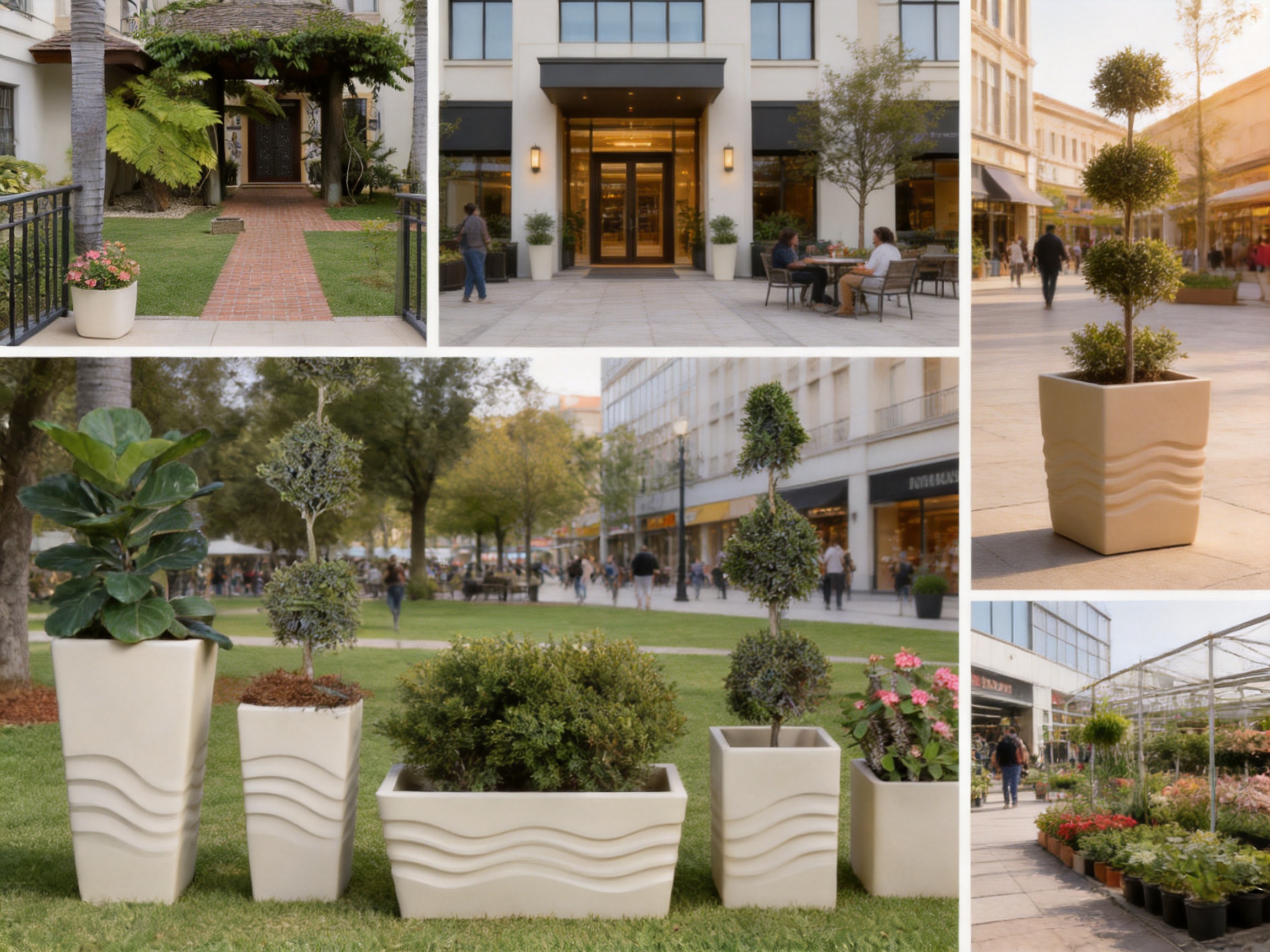
Rotomolded flowerpots can serve a broad range of applications because their dimensions, shapes, colors, and textures can be customized. Their hollow construction can provide a useful balance of appearance, strength, and weight.
Residential Gardens
Residential customers often seek planters that match the design of patios, balconies, entrances, terraces, and private gardens. Smooth or lightly textured surfaces are suitable for contemporary homes, while stone-like or sand-surfaced finishes can complement natural garden settings.
Commercial Landscaping
Commercial entrances, office parks, shopping centers, and mixed-use developments often use large planters to define pedestrian areas, guide traffic, and enhance building surroundings. These projects may require repeated production of planters with consistent dimensions and a coordinated appearance.
Hotels and Hospitality Facilities
Hotels, resorts, restaurants, and event venues may use decorative planters to support a particular architectural theme. Custom textures, integrated logos, and premium finishes can help create a consistent visual identity across entrances, courtyards, terraces, and outdoor seating areas.
Parks and Public Spaces
Public projects often require durable products that can withstand frequent handling and outdoor exposure. Large seamless planters can be used in parks, pedestrian areas, transportation facilities, civic plazas, and community developments. Stable bases, durable surfaces, and appropriate wall structures are important for these applications.
Nurseries and Garden Centers
Nurseries and garden centers may use both standard and decorative planters. A rotational molding solution can support repeated production of practical containers as well as distinctive products intended for retail display. Surface variety can help retailers offer different product levels and styles.
Architectural and Artistic Projects
Architects and landscape designers may require unusual planter shapes that function as visual features as well as plant containers. Custom rotational molds can support oversized forms, sculptural profiles, wave structures, artistic textures, and special branding elements.
Environmental and Operational Considerations
Outdoor planters are exposed to sunlight, rain, temperature changes, wind, soil moisture, fertilizers, and regular handling. Product design and material selection should therefore reflect the intended environment. The mold itself must also withstand repeated thermal cycles without losing its shape or surface quality.
Electric-heated systems can support improved energy management through precise temperature control and zoned heating. Under suitable conditions, this may reduce unnecessary energy use and improve thermal efficiency. Better control can also help reduce rejected products caused by overheating, incomplete fusion, or inconsistent surface formation.
Rotational molding can be efficient for large hollow products because it does not require the same high-pressure tooling structure used by some alternative processes. Material usage can be adjusted according to the required wall structure, although the final product must always be evaluated for strength and performance.
Environmental performance depends on the complete product lifecycle. This includes the chosen plastic material, mold durability, production energy, transportation, product service life, and end-of-life options. A durable planter that remains in service for many years may provide practical value by reducing the need for frequent replacement.
Manufacturers should also consider ventilation, drainage, cleaning, repair, and responsible material handling during the product development stage. These issues may not be determined by the mold alone, but the mold design can support their integration into the final product.
Choosing the Right Mold Manufacturer
Selecting a mold manufacturer should involve more than comparing quotations. The supplier should be able to demonstrate knowledge of rotational molding, mold materials, thermal behavior, product geometry, surface treatment, machining, testing, and production support.
Important evaluation points include:
- Experience with rotational molding molds and large hollow products.
- Ability to design both standard and customized planter shapes.
- Understanding of gas-heated and electric-heated systems.
- Availability of three-dimensional CAD engineering.
- Access to precision CNC machining and surface finishing.
- Ability to conduct mold trials and sample validation.
- Quality management and inspection procedures.
- Capacity to support both prototypes and volume production.
- Technical assistance after delivery.
- Experience with decorative textures, logos, and special finishes.
Jiangsu Zhroto Mould Co., Ltd. provides integrated services from product design and mold engineering to mold manufacturing and finished product production. Its experience in rotational molding allows the company to support customers that require a complete development process rather than a standalone mold.
A capable supplier should also communicate clearly about limitations. Not every shape is equally suitable for rotational molding, and not every surface effect can be transferred with the same level of detail. Honest engineering advice helps customers develop a product that is attractive, manufacturable, and commercially practical.
Maintenance and Service Life of Flowerpot Molds
Proper maintenance helps preserve mold accuracy and surface quality. Before each production cycle, operators should inspect the parting line, clamps, hinges, vents, mounting points, and internal surface. Any accumulation of material or contamination should be removed according to the mold manufacturer's recommendations.
Decorative textures require particular attention. Damage to a textured area may appear repeatedly on every finished planter. Surface repairs should therefore be completed using suitable methods that preserve the original pattern and release performance.
Repeated heating and cooling can place stress on the mold structure. Regular inspection can identify signs of distortion, fatigue, loose hardware, or surface deterioration before they affect product quality. Maintenance records can also help identify changes in cycle performance over time.
The mold should be stored in a clean and dry environment when not in use. It should be protected from impact and supported appropriately so that large sections do not become distorted. If the mold has complex assemblies, operators should follow a clear procedure for opening, closing, cleaning, and mounting it.
Technical support from the mold manufacturer can be valuable throughout the service life of the tool. Advice may include cleaning, storage, surface care, troubleshooting, process adjustment, and repair planning. A strong after-sales relationship can reduce downtime and protect the customer's investment.
Frequently Asked Questions
Q1: What is a flowerpot gardening mold?
A flowerpot gardening mold is a tool used to form plastic planters during the rotational molding process. Plastic material is placed inside the mold, heated while the mold rotates, and cooled after the material forms against the internal surface. The mold determines the planter's shape, dimensions, texture, and decorative details.
Q2: Why is rotational molding suitable for large planters?
Rotational molding is suitable for large planters because it can produce hollow, seamless structures with flexible geometry. It supports wide openings, deep cavities, curved walls, rounded corners, and customized profiles. The process is particularly practical when a product must be large but relatively lightweight.
Q3: What textures can be created on a flowerpot mold?
A mold can be prepared with smooth, textured, sand-surfaced, patterned, wave-like, logo-based, stone-like, or gypsum-inspired finishes. The internal mold surface transfers these effects to the outside of the finished planter.
Q4: What is the difference between a gas-heated and electric-heated mold?
A gas-heated mold is designed for conventional rotational molding equipment and provides reliable production compatibility. An electric-heated system offers more precise thermal management and can support independent heating zones. The best choice depends on product geometry, machine configuration, production volume, energy objectives, and required process accuracy.
Q5: Is cast aluminum suitable for decorative planter molds?
Yes. Cast aluminum offers good moldability and can support complex product shapes and detailed internal surfaces. It can be machined, polished, textured, or sanded to create a wide range of planter appearances. Its thermal behavior also supports the heating and cooling requirements of rotational molding.
Q6: Can a custom logo be incorporated into the mold?
Yes. Logos can be designed into the internal mold surface so that they are transferred directly to the planter during molding. The logo's size, depth, location, and relief structure should be reviewed to ensure clear reproduction and reliable demolding.
Q7: What should be considered when designing a large plastic planter?
Important considerations include overall dimensions, wall structure, base stability, rim strength, cavity depth, drainage, demolding, handling, heating, cooling, material selection, production quantity, and outdoor exposure. The mold should be developed around both the product concept and the rotational molding process.
Q8: Can the mold manufacturer help optimize an existing product design?
Yes. Engineering review can identify areas that may cause uneven wall formation, difficult demolding, distortion, or unnecessary production complexity. The product can then be adjusted before the mold is manufactured.
Q9: How is mold quality checked before delivery?
Quality checks may include dimensional inspection, parting-line alignment, assembly review, surface inspection, locking-system verification, mounting checks, trial production, sample evaluation, and confirmation of texture transfer. These checks help ensure that the mold is suitable for the intended equipment and product requirements.
Q10: What services does Jiangsu Zhroto Mould Co., Ltd. provide?
The company provides product consultation, design optimization, three-dimensional CAD engineering, mold structure development, material recommendations, CNC machining, surface treatment, mold assembly, trial production, sample validation, inspection, delivery, production support, and maintenance advice. It also supports rotomolded product processing and integrated technical solutions.
Conclusion
A high-quality flowerpot gardening mold is the foundation of efficient, attractive, and repeatable planter production. Rotational molding gives manufacturers the ability to create seamless hollow structures, large dimensions, unusual profiles, integrated details, and a wide variety of surface effects. Cast aluminum alloy further expands this potential by supporting complex shapes, effective heat transfer, and detailed internal mold textures.
Gas-heated molds remain a dependable choice for conventional and high-volume planter production, while electric-heated molds provide more precise thermal management for premium and technically demanding products. Custom molds extend the design possibilities further, allowing landscape designers, architects, retailers, and manufacturers to develop planters with distinctive forms, logos, waves, stone-like surfaces, and other decorative features.
The strongest results come from treating mold development as an integrated engineering process. Product geometry, thermal behavior, material selection, surface treatment, demolding, production equipment, and quality inspection must all be considered together. With three-dimensional design, precision machining, trial validation, and production support, a professional mold manufacturer can help convert a product concept into a stable manufacturing solution.
Through its experience in rotational molding mold design, large-scale machining, electric-heated technology, conventional gas-heated systems, and integrated product development, Jiangsu Zhroto Mould Co., Ltd. provides practical support for customers seeking reliable flowerpot and planter production. The result is not simply a mold with a desired shape, but a complete manufacturing foundation for durable, decorative, and commercially competitive gardening products.
References
1. American Society for Testing and Materials. Standards and technical guidance related to rotational molding materials, processing, and plastic product evaluation.
2. Plastics Industry Association. Technical principles and industrial applications of rotational molding.
3. Modern Plastics Encyclopedia. Rotational molding equipment, mold materials, heating methods, and process control.
4. ISO 9001:2015. Quality management systems and requirements.
5. ISO 14001:2015. Environmental management systems and guidance for use.
6. ISO 45001:2018. Occupational health and safety management systems.
7. Industrial design and tooling engineering practices for large hollow polymer products.
8. Technical documentation concerning cast aluminum mold construction, surface treatment, and thermal performance in rotational molding.
Product: Flowerpot gardening mold


We provide customers with one-stop services ranging from product design, mold manufacturing to finished product production.
-
 +86-18006248936
-
 ricky.t@zhroto.com
-
 No.9 Jiangyuan Road, Luotang Street, Jiangyan District, Taizhou City,Jiangsu Province, China
Copyright © Jiangsu Zhroto Mould Co., Ltd. Rights Reserved.Custom Rotational Plastic Molding Factory
